




2026 Electric Scooter Compliance Guide: Texas, New York, Washington & Illinois
The 2026 electric scooter compliance guide you actually need covers four of the most active e-scooter states in the country: Texas, New York, Washington, and Illinois. Rules have shifted, enforcement has tightened, and what was a gray area in 2024 is now clearly written into law. If you ride in any of these states — or plan to — this is the reference you need before your next trip out.

📋 What This Guide Covers
- Why compliance matters more in 2026 than ever before
- How to determine your scooter's legal classification
- Texas (TX): 2026 compliance rules in full
- New York (NY): 2026 compliance rules in full
- Washington (WA): 2026 compliance rules in full
- Illinois (IL): 2026 compliance rules in full
- Side-by-side state comparison table
- When laws apply — and when they don't
- How to stay compliant as laws continue to evolve
- FAQ
Why Compliance Matters More in 2026
Electric scooter adoption has accelerated sharply over the past four years. With more riders on the road, city governments and state legislatures have responded with clearer, stricter, and more actively enforced rules. In 2026, the landscape looks meaningfully different from 2022:
- Enforcement is up. Several major cities — including Chicago and New York — have increased active enforcement of e-scooter violations, particularly sidewalk riding and speed infractions in bike lanes.
- Fines have increased. Penalty amounts in multiple jurisdictions have been revised upward. A $50 fine in 2022 may now be $150 or more for the same offense.
- Insurance exposure is real. As e-scooter accident litigation has grown, riding illegally now carries meaningful personal liability risk beyond just the traffic fine.
- Scooter specs have outpaced old laws. Consumer scooters available today routinely exceed 30, 40, even 50 mph. Laws written for 15 mph shared scooters don't map cleanly onto high-performance personal scooters — and regulators are catching up.
Understanding where your scooter sits legally in 2026 is not a bureaucratic exercise. It's practical risk management.

How to Determine Your Scooter's Legal Classification
Before you can know whether you're compliant, you need to know how your state classifies your specific scooter. Classification typically hinges on two technical specs:
1. Motor Wattage
Most state statutes define the upper wattage limit for a "standard" electric scooter — typically 750W to 1,000W. Scooters above this threshold are often reclassified as mopeds or motor vehicles, triggering registration and licensing requirements.
2. Motor-Assisted Top Speed
This is the speed the motor can propel the scooter, not the speed you can physically reach going downhill. Most states cap this at 20 mph for the standard e-scooter classification. Texas is the notable exception at 35 mph.
If your scooter exceeds either threshold, it likely falls into a higher vehicle class in your state — even if you never ride it at full speed. The hardware capability is what matters legally, not your personal riding habits.
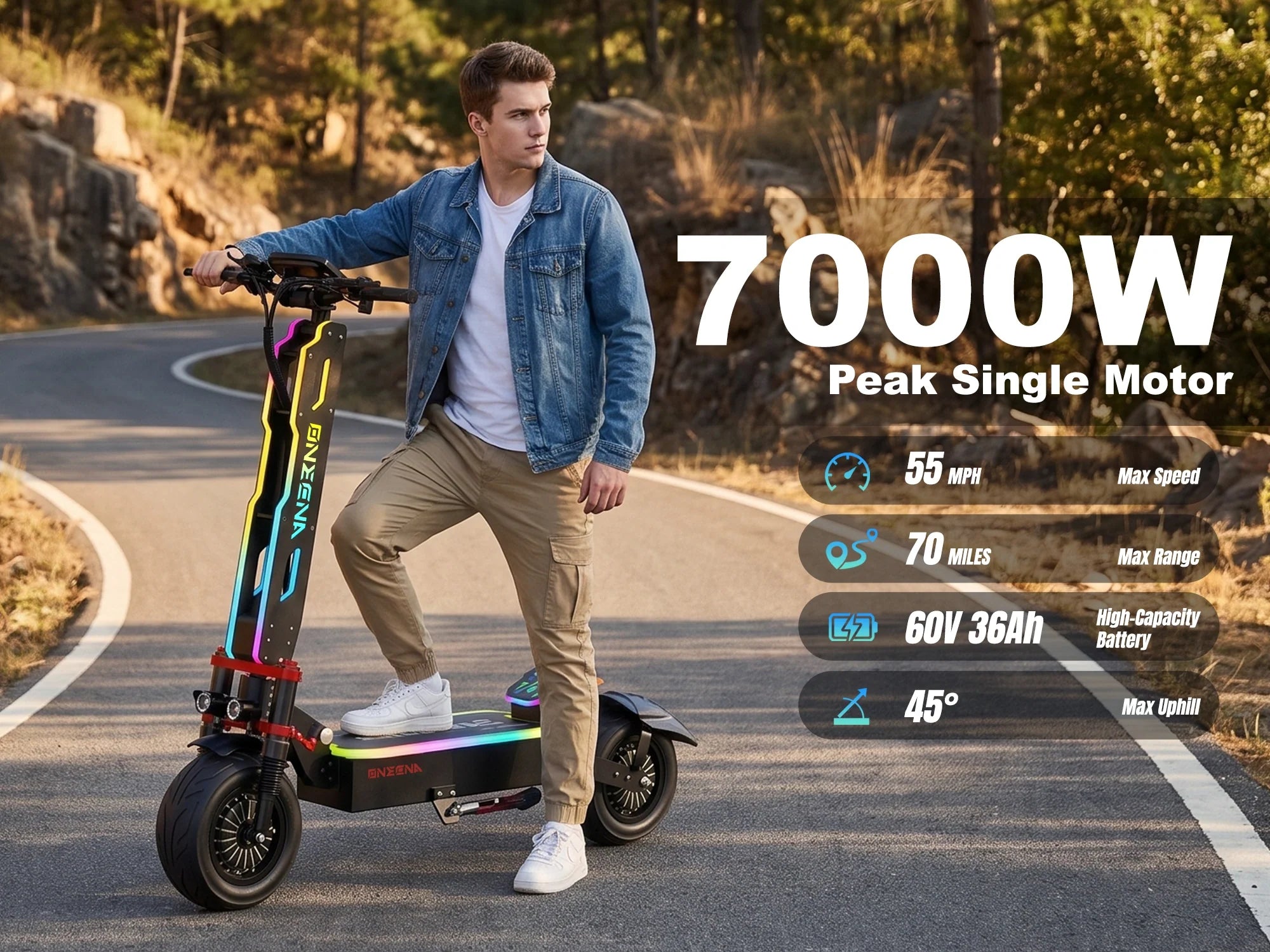
Practical example: A dual-motor performance scooter capable of 45 mph would exceed the motor-assisted speed threshold in NY, WA, and IL, placing it in a moped or motor vehicle category that requires registration and a valid driver's license — regardless of how fast you actually ride it.
🤠 Texas (TX): 2026 Electric Scooter Compliance Rules

Legal Framework
Texas governs electric scooters under Transportation Code Chapter 551-A, classifying them as "motorized scooters" — a distinct category from both electric bicycles and mopeds. This classification has remained stable through 2026, though several Texas cities have updated their local ordinances.
2026 Texas Compliance Checklist
- ✅ Motor-assisted speed: Up to 35 mph permitted on public roads — the highest cap of any state in this guide.
- ✅ Minimum age: 16 years old to operate on public roads without adult supervision.
- ✅ Helmet: Required for riders under 18. Adults are not legally required to wear one under state law, though it is strongly recommended.
- ✅ Where you can ride: Bike lanes, roads with posted speed limits of 35 mph or less, and sidewalks (unless a local ordinance prohibits it). Roads above 35 mph and highways are off-limits.
- ✅ License / registration: Not required for scooters within the standard classification.
- ✅ Lights: Front white light and rear red reflector or light required for nighttime riding.
What Changed in Texas for 2026
Austin updated its shared scooter program rules in late 2025, introducing geofenced slow zones near the Congress Avenue Bridge and Sixth Street entertainment district. These zones cap shared scooter speeds at 8 mph automatically. Private scooter riders are not technically subject to the geofencing, but the slow zones signal where enforcement attention is focused.
Houston has also expanded its designated scooter parking infrastructure, and riding outside designated zones in certain downtown areas now carries a higher fine than in prior years.
Texas Compliance Bottom Line
Texas is one of the more permissive states for e-scooter riders, but "permissive" doesn't mean unregulated. The 35 mph road limit is generous, but local ordinances in major cities add meaningful restrictions on top of state law. Always check your specific city's rules before riding.
🗽 New York (NY): 2026 Electric Scooter Compliance Rules

Legal Framework
New York legalized electric scooters statewide in 2020 under Vehicle and Traffic Law Article 34-D. The law created a dedicated "electric scooter" vehicle class, and its core provisions have remained in place through 2026 — though NYC's local enforcement posture has evolved significantly.
2026 New York Compliance Checklist
- ✅ Motor-assisted speed: Maximum 20 mph. Scooters capable of exceeding this are reclassified and require registration.
- ✅ Minimum age: 16 years old.
- ✅ Helmet: Required for riders under 18. Adults are not legally required to wear one, though NYC's Vision Zero program strongly encourages it.
- ✅ Where you can ride: Bike lanes and roads with posted speed limits of 30 mph or less. Sidewalks are prohibited statewide. Highways are off-limits.
- ✅ License / registration: Not required for compliant scooters under the 20 mph threshold.
- ✅ Lights: Front white light and rear red light required for nighttime riding.
What Changed in New York for 2026
New York City significantly expanded its protected bike lane network through 2025 and into 2026, which is good news for scooter riders who now have more dedicated infrastructure. However, the city has simultaneously increased enforcement of sidewalk riding — NYPD issued substantially more e-scooter sidewalk citations in 2025 than in prior years, and that trend has continued.
NYC's shared scooter program, which operates in the Bronx, Brooklyn, and Queens, has also expanded its service area. Shared program scooters are geofenced and speed-limited; private scooters are not, but riders are still subject to the same 20 mph legal cap.
New York Compliance Bottom Line
New York's 20 mph cap and sidewalk prohibition are the two rules most likely to catch riders off guard. The sidewalk ban is actively enforced in NYC. If you're riding a higher-performance personal scooter, be aware that its hardware capability — not just how fast you ride — determines its legal classification.
🌲 Washington (WA): 2026 Electric Scooter Compliance Rules

Legal Framework
Washington State classifies electric scooters under RCW 46.04.336, which was updated in 2019 and has seen incremental refinements since. Washington's approach is notable for its all-ages helmet mandate — one of the strictest in the country — and its relatively clear road access rules.
2026 Washington Compliance Checklist
- ✅ Motor-assisted speed: Maximum 20 mph. Above this threshold, the scooter requires registration and a license.
- ✅ Minimum age: 16 years old.
- ✅ Helmet: Required for ALL riders regardless of age. This is Washington's most distinctive compliance requirement.
- ✅ Where you can ride: Bike lanes and paths where permitted. Roads with posted speed limits up to 25 mph. Sidewalks are generally prohibited unless a local ordinance specifically allows it.
- ✅ License / registration: Not required for scooters under the 20 mph threshold.
- ✅ Lights: Front white light and rear red reflector or light required for nighttime riding.
What Changed in Washington for 2026
Seattle's shared scooter program, which transitioned to a permanent permitted structure in 2024, has continued to expand its designated parking corral network through 2025 and into 2026. For private scooter owners, the most relevant development is continued active helmet enforcement — Washington State Patrol and Seattle PD have maintained helmet compliance as a primary enforcement priority, not just a secondary citation.
Washington Compliance Bottom Line
Washington's all-ages helmet law is non-negotiable and actively enforced. Beyond that, the state's rules are relatively straightforward. The 20 mph cap and sidewalk prohibition align with most other progressive states. Seattle's local infrastructure is improving, making compliant riding increasingly practical.
🌆 Illinois (IL): 2026 Electric Scooter Compliance Rules

Legal Framework
Illinois defines electric scooters under 625 ILCS 5/1-117.8 as vehicles with a motor of 750 watts or less and a maximum speed of 20 mph. The state framework is relatively permissive, but Chicago — the dominant e-scooter market in the state — has layered significant local rules on top of state law.
2026 Illinois Compliance Checklist
- ✅ Motor-assisted speed: Maximum 20 mph under state law.
- ✅ Minimum age: 16 years old.
- ✅ Helmet: Required for riders under 18. Adults are not legally required to wear one under state law.
- ✅ Where you can ride: Bike lanes and roads where permitted by local ordinance. Sidewalks are prohibited under state law.
- ✅ License / registration: Not required for compliant scooters.
- ✅ Lights: Front white light and rear red reflector or light required for nighttime riding.
What Changed in Illinois for 2026
Chicago's permanent e-scooter program has continued to evolve through 2025 and into 2026. Key developments include expanded no-ride zones along the lakefront trail during peak summer hours, new designated scooter parking zones in the Loop and River North neighborhoods, and updated speed limits in high-pedestrian areas with shared scooters automatically geofenced to 10 mph in these zones.
Outside Chicago, Illinois municipalities vary widely. Some have adopted local e-scooter ordinances; others have none, leaving state law as the only applicable framework. If you're riding in a smaller Illinois city, it's worth a quick check with local authorities to confirm what's in effect.
Illinois Compliance Bottom Line
Illinois state law is among the more straightforward in this guide. The complexity comes from Chicago's layered local rules, which are detailed and actively updated. If you ride in Chicago, treat the city's rules as your primary compliance reference — state law is the floor, not the ceiling.
📊 2026 State-by-State Compliance Comparison
| Rule | Texas (TX) | New York (NY) | Washington (WA) | Illinois (IL) |
|---|---|---|---|---|
| Max Speed | 35 mph | 20 mph | 20 mph | 20 mph |
| Min Age | 16 | 16 | 16 | 16 |
| Helmet (Adults) | Not required | Not required | Required ✅ | Not required |
| Sidewalk Riding | Allowed* | Prohibited ❌ | Generally prohibited ❌ | Prohibited ❌ |
| License Required | No | No | No | No |
| Registration Required | No | No | No | No |
*Texas sidewalk riding is permitted under state law but subject to local ordinance restrictions. Always check your city's rules.
When Do These Compliance Rules Apply?
A question that comes up often: exactly when and where do these rules kick in?
Public Infrastructure = Full Compliance Required
The moment your scooter touches public infrastructure — a road, a bike lane, a shared path, a sidewalk — state and local traffic law applies. There are no exceptions for short distances, low speeds, or "just cutting through."
Private Property = Different Rules
On private property — a parking lot, a private campus, a closed trail on private land — state traffic law generally does not apply. Property owners can set their own rules, but you won't be cited under the state e-scooter statute for riding on private land.
Traveling Between States
If you cross state lines, the law of the state you're currently riding in applies — not your home state. A Texas rider visiting New York must follow New York's 20 mph cap and sidewalk prohibition, even if their home state allows faster riding and sidewalk access. This is particularly relevant for riders who travel with their scooters.
Scooter Specs vs. Riding Behavior
This is the nuance most riders miss: your scooter's legal classification is based on its hardware capabilities, not how you actually ride it. A scooter capable of 40 mph is classified as a higher vehicle class in most states — even if you only ever ride it at 15 mph. The motor's capability determines the classification; your behavior determines the traffic violation risk.

How to Stay Compliant as Laws Continue to Evolve
E-scooter law is one of the fastest-moving areas of traffic regulation in the U.S. right now. Here's a practical system for staying current:
- Bookmark your state DOT's e-scooter page. Most state Departments of Transportation now maintain a dedicated page for electric scooter regulations. Check it once a year at minimum — and after any major election cycle, when new administrations sometimes revisit transportation policy.
- Check your city's municipal code annually. State law sets the floor; cities build on top of it. Your city's code is where the most granular and frequently updated rules live.
- Know your scooter's specs cold. Motor wattage and top speed are the two numbers that determine your legal classification. Have them ready if you're ever stopped. If you're riding a performance model — say, something in the 3,000W–6,000W range — understand that it almost certainly falls outside the standard e-scooter classification in most states.
- Gear up regardless of the law. Washington requires helmets for everyone. The other three states don't require them for adults. But a fall at 20 mph on pavement doesn't care about state statutes. Helmet, gloves, and visible clothing are practical compliance with the laws of physics, if not the laws of your state.
- Use lights every time after dark. All four states require front and rear lighting for nighttime riding. This is also one of the most commonly cited violations — and one of the easiest to avoid.
- When in doubt, ask. Local police non-emergency lines, city transportation departments, and state DMV offices can all answer specific compliance questions. A five-minute call is worth more than an assumption that costs you a fine.

Frequently Asked Questions (FAQ)
What is the 2026 electric scooter compliance rule that changed the most across these four states?
Enforcement intensity is the biggest practical change in 2026 — particularly in New York and Illinois. The underlying statutes haven't changed dramatically, but active enforcement of sidewalk riding, speed violations, and lighting requirements has increased in major cities. Fines that were rarely issued in 2022 are now being written regularly.
Does my electric scooter need to be registered in Texas, New York, Washington, or Illinois?
No — provided your scooter falls within the standard e-scooter classification in each state (generally: motor-assisted speed under 20 mph for NY/WA/IL, under 35 mph for TX, and motor wattage within the state's threshold). If your scooter exceeds these limits, it may be reclassified as a moped or motor vehicle, which does require registration.
I ride a high-performance scooter capable of 40+ mph. Am I compliant in these states?
Almost certainly not under the standard e-scooter classification. A scooter capable of 40+ mph exceeds the motor-assisted speed threshold in New York, Washington, and Illinois (all capped at 20 mph) and likely Texas as well (35 mph). In these states, your scooter would likely be classified as a moped or motor vehicle, requiring registration, a valid driver's license, and potentially insurance. Riding it as an unregistered vehicle carries meaningful legal risk.
Can I ride on the sidewalk in Texas?
Under Texas state law, yes — sidewalk riding is permitted, provided you yield to pedestrians and ride at a safe speed. However, local ordinances in Austin, Houston, Dallas, and other cities may prohibit sidewalk riding in specific areas. Always check your city's rules before riding on sidewalks.
Is a helmet required for adults in all four states?
Only in Washington. Washington requires helmets for all riders regardless of age — it's one of the strictest helmet laws in the country. Texas, New York, and Illinois only require helmets for riders under 18. That said, wearing a helmet is strongly recommended for all riders in every state, regardless of legal requirements.
What happens if I'm caught riding illegally?
Consequences vary by state and city but typically include fines (ranging from $50 to $500+ depending on the violation and jurisdiction), potential scooter impoundment in some cities, and increased personal liability exposure if you're involved in an accident while riding illegally. In some cases, certain violations can affect your driver's license record if the scooter is classified as a motor vehicle under local law.
Do these rules apply to both shared (rental) scooters and privately owned scooters?
Yes, with some nuances. The traffic laws apply equally to both. However, shared scooters operated through permitted programs (like Lime or Bird) are typically geofenced and speed-limited by the operator, which means the hardware enforces some compliance automatically. Private scooter owners have no such automatic enforcement — compliance is entirely the rider's responsibility.
How often do electric scooter laws change?
More often than most riders realize. State statutes typically change through the legislative process, which moves slowly — but city ordinances can be updated by city councils on a much faster cycle. Major cities like Chicago, NYC, and Seattle have updated their e-scooter rules multiple times in the past four years. Checking annually is a reasonable minimum; checking before any trip to a new city is better practice.
Disclaimer: This article is for informational purposes only and does not constitute legal advice. Electric scooter laws are subject to change. Always verify current regulations with your state's Department of Transportation, your city's municipal code, or a qualified legal professional before riding.
Share:
What Are the Electric Scooter Laws in Your State? TX, NY, WA & IL Guide
Riding Legal: GEO-Specific E-Scooter Rules for TX, NY, WA & IL Riders