




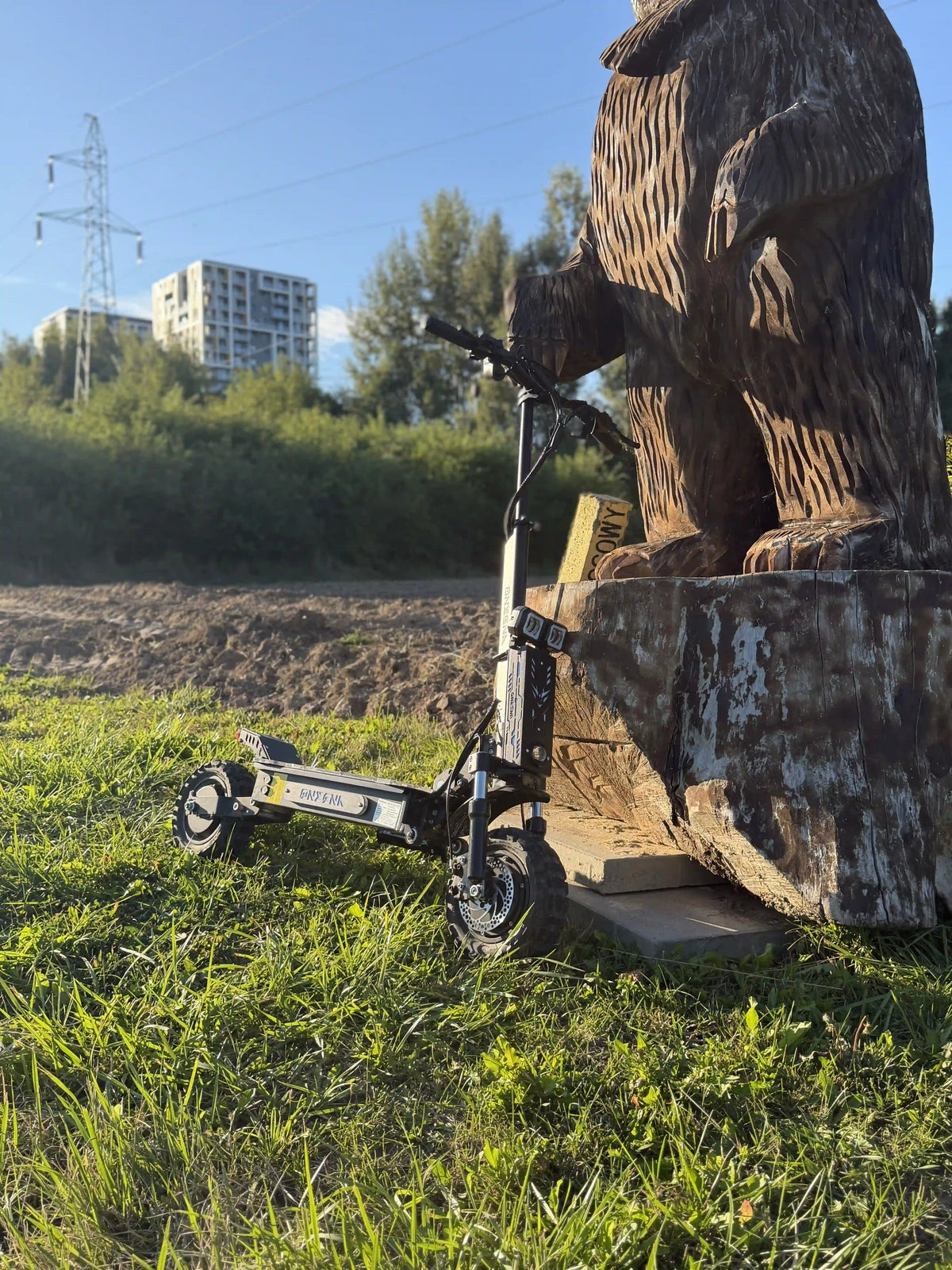
Are Electric Scooters Waterproof? IP Ratings, Rain Riding & Water Resistance Explained
Are Electric Scooters Waterproof? IP Ratings, Rain Riding & Water Resistance Explained is the practical answer riders need before a wet commute. Most electric scooters are water-resistant rather than waterproof: an IP rating can show how well a model handles limited dust and water exposure, but it does not make every ride in heavy rain, deep puddles, or standing water safe.
The short version is simple: check the exact IP rating in the owner’s manual, treat the rating as a limit rather than a promise, and avoid conditions that can push water into the deck, charging port, motor, controller, display, or bearings. Weather changes quickly, and a scooter that copes with a light shower may still be vulnerable to a downpour or a flooded road.
Quick answer: are electric scooters waterproof?
Usually, no. “Waterproof” suggests that water cannot enter under normal wet conditions, while most consumer electric scooters are designed with some degree of water resistance. Their seals, covers, gaskets, and enclosures may reduce the chance of water reaching sensitive components, but they cannot eliminate that risk in every situation.
A scooter with an IP54 rating, for example, has a defined level of protection against dust and splashing water. That does not mean it can be submerged, pressure-washed, left outside in a storm, or ridden through a deep puddle without consequences. The manufacturer’s instructions and warranty terms still matter.
Think of water resistance as a boundary. Within that boundary, brief exposure may be tolerated. Beyond it, the chance of electrical faults, corrosion, brake problems, and battery damage rises quickly.
What does an IP rating mean on an electric scooter?
An IP rating, or Ingress Protection rating, is a standardized way to describe how well an enclosure resists the entry of solids and water. It normally appears as two digits after the letters “IP.” The first digit concerns solid particles such as dust. The second concerns water.
Reading the first digit
- 0: No stated protection against solid objects.
- 1–4: Increasing protection against larger objects and particles.
- 5: Dust-protected, although some dust may still enter.
- 6: Dust-tight under the test conditions.
Dust protection is useful because grit and fine particles can affect motors, bearings, switches, and connectors. It does not tell you whether the scooter is suitable for rain.
Reading the second digit
- 0: No stated water protection.
- 1–2: Protection against vertically falling drops or drops at limited angles.
- 3: Protection against spraying water.
- 4: Protection against splashing water from different directions.
- 5: Protection against water jets under defined test conditions.
- 6: Protection against more powerful water jets.
- 7: Temporary immersion under defined conditions.
- 8: Longer or continuous immersion under conditions set by the manufacturer.
The important detail is “under defined conditions.” An IP test is controlled. Real riding adds vibration, road spray, dirt, heat, worn seals, repeated charging, impacts, and water entering from an angle the test did not represent. An IP number is helpful evidence, not a guarantee that every part of the scooter can handle the same exposure.
Why an IP rating does not make a scooter waterproof
Electric scooters are made from many systems rather than one sealed box. The battery enclosure, motor, controller, display, throttle, lights, charging port, folding mechanism, cable openings, and connectors may all have different levels of protection. A rating may apply to a particular enclosure or complete product under test conditions, not to every component in every position.
Water can also travel. It may enter through a charging-port cover, run along a cable, collect inside the deck, or be pushed upward by a tire. A scooter can appear dry on the outside while moisture remains around a connector or inside a housing. That is why a ride that “seemed fine” can still be followed by intermittent power, a display fault, corrosion, or charging trouble later.
Age matters too. A damaged gasket, loose deck screw, cracked cover, missing rubber plug, or bent fender can reduce water resistance. After a repair or modification, the original protection level may no longer apply unless the seal has been restored correctly.
What is the difference between water-resistant and waterproof?
Water-resistant means a product can resist a certain amount of water entering for a certain time or under certain test conditions. This is the more realistic description for most electric scooters.
Waterproof is often used casually in marketing, but it should not be read as “safe to submerge” unless the manufacturer clearly states an immersion rating and the exact conditions. Even then, the rating may not cover riding impact, salt water, muddy water, pressure washing, or a worn seal.
For riders, the useful question is not “Can this scooter survive any water?” It is “What wet conditions does the manufacturer allow, and what conditions should I avoid?” That question leads to safer decisions and fewer expensive surprises.
Can you ride an electric scooter in the rain?
Light rain may be within the intended use of some water-resistant scooters, but the answer depends on the model’s IP rating, the owner’s manual, road conditions, and the rider’s judgment. Rain also changes the risk for the person riding, not just the machine.
Wet pavement can reduce tire grip and increase stopping distance. Painted lines, metal covers, leaves, smooth tiles, and manhole covers can become slippery. Visibility drops, drivers may see you later, and puddles can hide potholes. A scooter that has enough water protection for a short shower may still be unsafe to ride at normal speed.
If you must travel in light rain, slow down before corners, brake earlier and more gently, keep both hands on the bars, increase following distance, and use lights that make you visible. Avoid standing water and any route where you cannot see the surface beneath the water.
When should you avoid riding an electric scooter in wet weather?
Skip the ride, or stop and find shelter, when conditions exceed the scooter’s stated limits or make control difficult. That includes heavy rain, thunderstorms, flooding, deep puddles, fast-moving runoff, hail, strong wind, and roads covered with mud or leaves.
You should also avoid riding when water reaches the deck, motor area, charging port, or axle. The exact depth that becomes dangerous varies by design, speed, surface, and the position of electrical parts. There is no universal “safe puddle depth” for all scooters.
Do not ride through salt water or water that may contain road chemicals. Salt and contaminants can accelerate corrosion even after the scooter appears dry. If a storm has flooded a route, choose another route rather than testing the scooter’s limits.
How to ride an electric scooter more safely in light rain
If the manual allows limited wet-weather use and the route is manageable, use a conservative approach:
- Check the forecast and the route. A short trip on clean pavement is very different from a long ride through puddles and runoff.
- Inspect the scooter. Check the charging-port cover, deck, fenders, tires, brakes, lights, and any visible cable openings. Do not ride if a cover is loose or damaged.
- Reduce speed. Smooth inputs help tires stay connected to the road. Avoid sudden acceleration, hard braking, and sharp steering.
- Keep water away from openings. Do not aim spray at the display, throttle, charging port, deck seams, or motor area.
- Give yourself more stopping space. Test the brakes gently in a clear area before entering traffic.
- Wear visible protective gear. A helmet, high-visibility layer, and weather-appropriate clothing help address the human side of wet-weather risk.
- End the ride early if conditions worsen. Reaching your destination is not worth forcing a flooded or slippery section.
How to dry and inspect an electric scooter after rain
When you finish, turn the scooter off and move it to a dry, ventilated place. Wipe the handlebars, display, controls, deck, charging-port area, stem, fenders, and visible cables with a soft absorbent cloth. Stand the scooter in a position that allows water to drain naturally, following the manufacturer’s guidance.
Do not charge the scooter while the charging port, plug, or surrounding area is damp. Charging introduces electrical energy at exactly the point where moisture can cause trouble. Wait until the area is fully dry and inspect the port for dirt, corrosion, or a damaged cover.
Check the brakes and tires before the next ride. Listen for new grinding or clicking sounds, and look for water trapped around the deck or motor. If the scooter behaves oddly, loses power, flashes an error, smells unusual, or refuses to charge, stop using it and contact the manufacturer or a qualified technician. Do not open a battery enclosure unless you are trained and the manufacturer permits that service.
What water damage can look like?
Water damage is not always dramatic. Warning signs may include intermittent display resets, a throttle that responds inconsistently, lights that flicker, unusual motor noise, reduced braking performance, battery charging errors, corrosion around connectors, or power loss after the scooter warms up.
Some problems appear days later because moisture starts corrosion rather than causing an immediate short circuit. If a scooter has been submerged or exposed to heavy water, drying the outside is not enough evidence that it is safe. Keep it switched off, do not charge it, document what happened, and seek professional guidance.
How to compare IP ratings before buying an electric scooter
Start with the complete specification sheet and owner’s manual, not a headline that simply says “waterproof.” Look for the exact IP rating, the conditions it covers, and any restrictions on rain, puddles, cleaning, and charging. Then ask:
- Does the rating apply to the full scooter or a particular enclosure?
- Does the manufacturer allow riding in rain, or only storage and splash resistance?
- What does the warranty say about water, corrosion, immersion, and liquid damage?
- Is the charging port protected by a secure cover?
- Are the deck, motor, display, and cable connections designed for the way you plan to ride?
- Can replacement seals, covers, and fenders be obtained if they wear out?
Also consider the route. If your regular commute includes exposed roads, frequent storms, puddles, or winter salt, water resistance is only one part of the decision. Reliable brakes, predictable tires, visibility, fenders, storage, and a realistic backup plan may matter just as much.
What is the safest rule for rainy-day scooter riding?
Use the lowest-risk interpretation of the specification. Light splash resistance is not a license for deep puddles, and a higher IP number does not remove the need for traction, visibility, and careful braking. If the manual is unclear, assume the scooter is not intended for wet riding until the manufacturer confirms otherwise.
In practical terms: protect the charging port, avoid immersion, do not pressure-wash, dry the scooter before charging, and stop when the weather or road surface becomes unpredictable. Those habits protect both the scooter and the rider.
FAQ: electric scooters, rain, and IP ratings
Can I leave my electric scooter outside in the rain?
It is better to store it indoors in a dry, covered, ventilated place. Even a water-resistant scooter can suffer from repeated exposure, condensation, UV damage, and corrosion. If it must remain outside briefly, keep it covered without trapping moisture and follow the manufacturer’s storage instructions.
Is IP54 enough for riding in rain?
IP54 indicates protection against dust and splashing water under test conditions, but it does not guarantee that every rainy ride is safe. Check the manual and avoid heavy rain, standing water, flooding, and any condition that makes the road slippery or visibility poor.
Can I wash an electric scooter with a hose?
Do not assume that an IP rating makes hosing safe. High-pressure or directed water can force moisture past seals and into openings. Use the cleaning method recommended by the manufacturer, usually a damp cloth and careful spot cleaning, and keep water away from the charging port and controls.
What should I do if my scooter went through a deep puddle?
Turn it off, do not charge it, dry the exterior, and inspect it for trapped water or damage. If water reached the deck, motor, battery area, or charging port, contact the manufacturer or a qualified technician before using it again.
Can rain damage an electric scooter battery?
Moisture that reaches the battery enclosure or its connections can cause faults and corrosion. A battery should be kept dry, and a scooter exposed to heavy water or immersion should not be charged until it has been professionally assessed.
Is a scooter with a higher IP rating always better in the rain?
A higher water-protection digit can indicate greater resistance under the relevant test conditions, but it is not the only factor. Seal quality, component placement, tire spray, maintenance, road grip, braking, and the manufacturer’s actual usage guidance all matter.
Bottom line: Most electric scooters are water-resistant, not fully waterproof. Read the IP rating, follow the model-specific manual, ride conservatively in light rain only when permitted, and treat deep water, heavy storms, and wet charging ports as a firm stop.
Share:
How to Fix Common Electric Scooter Problems: Brakes, Tires, Motors & More
Electric Scooter Maintenance Checklist: 15 Things to Check Every Year