




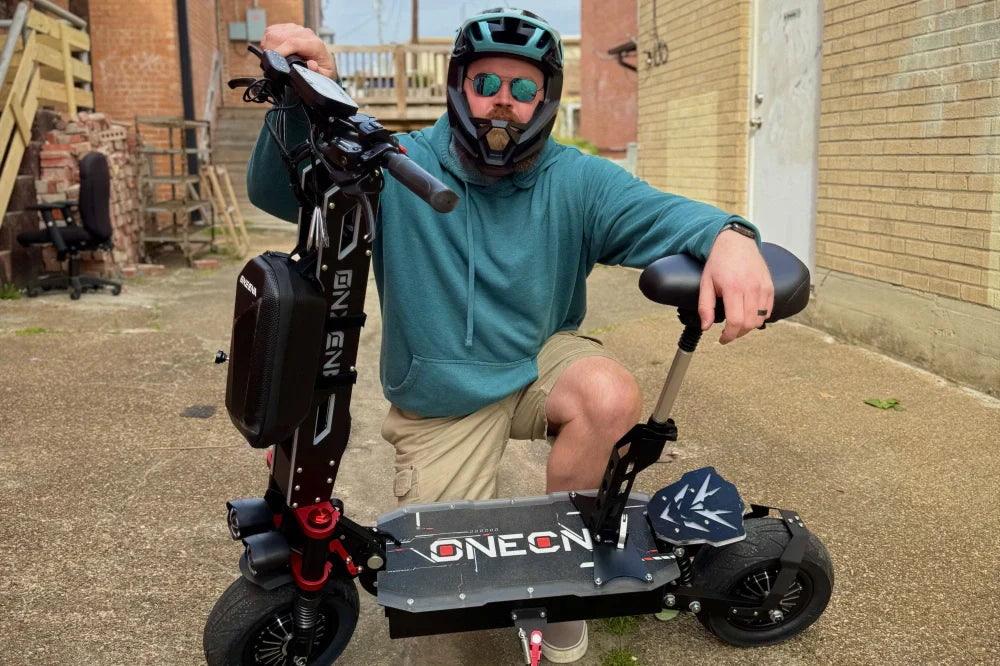
Ever hit a crack in the road and felt it travel straight through your arms and knees?
That uncomfortable jolt is exactly why more riders are choosing a scooter with suspension.
Suspension isn’t just a luxury anymore — it’s a core feature that defines ride quality, control, and long-term comfort.
What Is Scooter Suspension, Really?
Suspension is a system designed to absorb shocks and vibrations from the ground.
Instead of transferring every bump directly to the rider, the suspension compresses and rebounds, keeping the ride smooth and controlled.
On a scooter with suspension, this difference is instantly noticeable.
Why Riding Without Suspension Feels So Harsh
Scooters without suspension rely entirely on tires and rider balance.
On smooth pavement, that’s fine.
But cracks, potholes, gravel, and uneven surfaces quickly turn the ride uncomfortable — and unsafe.
Suspension absorbs those impacts before they reach your body.
The Main Types of Scooter Suspension Systems
Spring Suspension
Spring suspension uses metal coils to compress under impact.
It’s simple, reliable, and commonly found on performance scooters.
Hydraulic Suspension
Hydraulic systems use oil-filled dampers to control compression and rebound.
This offers smoother, more controlled movement — especially at higher speeds.
Rubber Suspension
Rubber suspension relies on elastic materials to absorb vibration.
It’s lightweight and low-maintenance, though less suitable for aggressive riding.
Front vs Rear Suspension: What’s the Difference?
Front suspension handles initial impact.
Rear suspension stabilizes the scooter during acceleration and braking.
A true scooter with suspension performs best when both ends work together.
Full Suspension vs Single Suspension
Single suspension improves comfort.
Full suspension transforms control.
At higher speeds or off-road conditions, full suspension keeps the scooter planted and predictable.
How Suspension Improves Safety
Suspension isn’t just about comfort — it’s about control.
By keeping tires in contact with the ground, suspension improves:
- Braking efficiency
- Steering accuracy
- Stability on uneven surfaces
This makes a scooter with suspension safer, especially at speed.
Suspension for City Riding vs Off-Road Adventures
City riders deal with cracks, curbs, and imperfect pavement.
Off-road riders face dirt, gravel, and unpredictable terrain.
Both benefit from suspension — but off-road riding demands stronger, more responsive systems.
Weight, Speed, and Suspension Performance
Heavier riders compress suspension more.
Higher speeds amplify every imperfection in the road.
That’s why high-performance models like scooter with suspension designs focus on reinforced systems.
Durability and Maintenance
Good suspension should last for years with minimal upkeep.
Periodic inspections and basic cleaning keep components performing properly.
Quality materials make the difference between smooth riding and long-term reliability.
Who Really Needs a Scooter With Suspension?
You’ll benefit from suspension if you:
- Ride daily
- Travel long distances
- Ride at higher speeds
- Encounter rough surfaces
For these riders, a scooter with suspension isn’t optional — it’s essential.
ONECNA’s Approach to Suspension Design
ONECNA builds scooters for riders who demand control and comfort.
Strong frames, dual motors, and advanced suspension systems work together as a single platform.
Models like scooter with suspension deliver confidence across multiple riding conditions.
Choosing the Right Suspension Setup
The best suspension depends on your riding style.
Casual commuting may only require basic shock absorption.
Performance riding benefits from full suspension with controlled damping.
Final Thoughts: Smooth Roads Start Below Your Feet
Once you ride a scooter with suspension, it’s hard to go back.
Comfort improves.
Control increases.
And every ride feels more confident — no matter where the road takes you.
Share:
Snow, Speed & Santa Vibes: Can You Really Ride a Scooter on Snow?
Grip Happens: How the Right Tires for Electric Scooter Change Every Ride