




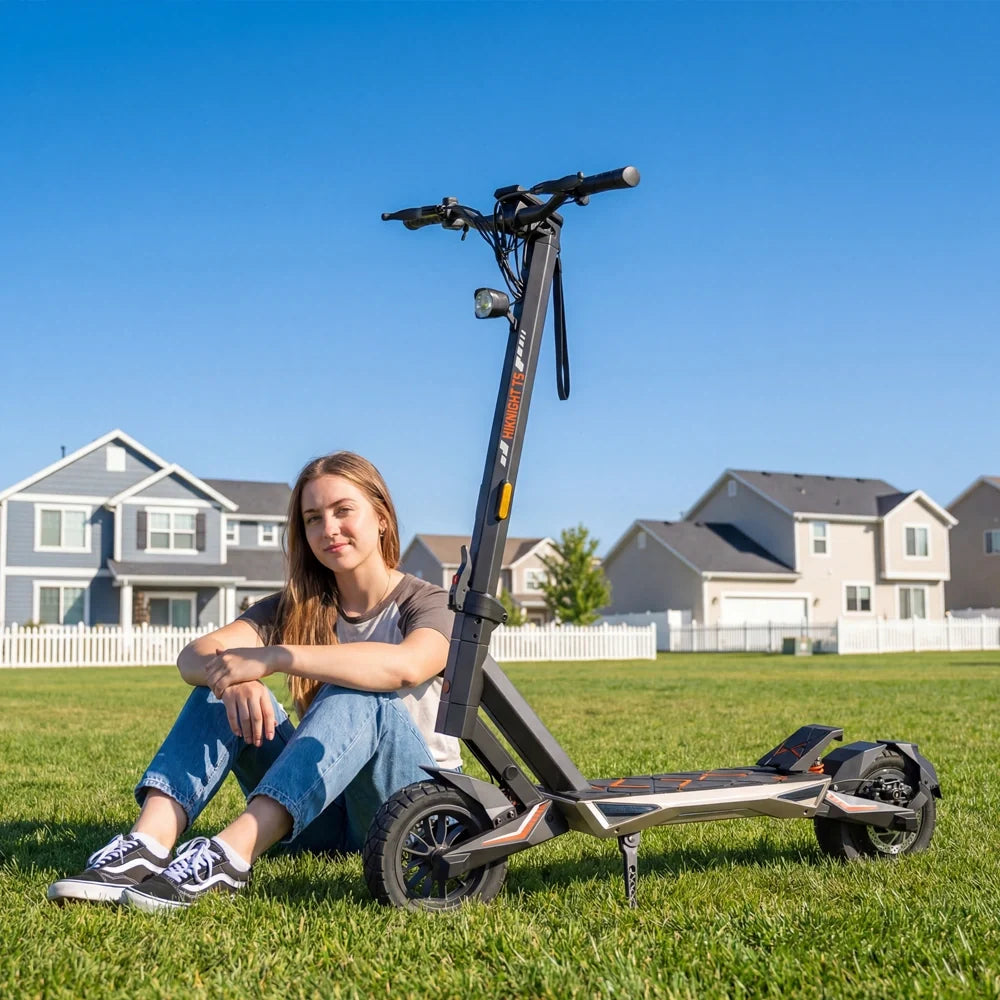
Electric Scooter Speed Limits in Texas, NY, WA & IL: 2026 Guide
Electric scooter speed limits in Texas, NY, WA, and IL are not as simple as a single posted number — they shift depending on where you’re riding, what surface you’re on, and what city you happen to be in. Most riders assume 20 mph is the universal cap and leave it at that. The reality is more layered, and getting it wrong can mean a fine, a confiscated scooter, or worse, a collision you weren’t prepared for. This guide gives you the full 2026 picture, state by state, surface by surface.
📋 Article Outline
- Why Speed Limits for E-Scooters Are More Complex Than You Think
- What “Speed Limit” Actually Means for E-Scooter Riders
- Texas (TX): Speed Rules by Surface and City
- New York (NY): The 20 mph Rule and Its Exceptions
- Washington (WA): The Most Rider-Friendly Speed Framework
- Illinois (IL): State Cap vs. Chicago’s Geofenced Zones
- Side-by-Side Speed Limit Comparison
- How Speed Limits Are Enforced
- What Happens If You Exceed the Limit
- How to Ride at the Right Speed Without Thinking About It
- FAQ
Why Speed Limits for E-Scooters Are More Complex Than You Think
When most people think about speed limits, they picture a sign on a road. For e-scooter riders, it’s not that straightforward. The legal speed for your scooter depends on at least three overlapping factors:
- The surface you’re riding on — roads, bike lanes, shared paths, and sidewalks often have different caps
- The road’s posted speed limit — most states prohibit e-scooters on roads above a certain posted limit (typically 30–35 mph), regardless of how fast your scooter can go
- Local ordinances — cities frequently set lower limits than the state, especially in downtown cores, near schools, or in pedestrian-heavy zones
Add to that the fact that shared scooter programs (Bird, Lime, Spin) use GPS geofencing to enforce speed caps automatically — caps that often don’t apply to personal scooters but set a de facto expectation in those zones. The result is a speed environment that’s genuinely more complex than a single number.
What “Speed Limit” Actually Means for E-Scooter Riders
There are two distinct speed concepts that matter for e-scooter riders, and conflating them is a common mistake:
1. The Scooter’s Maximum Speed Capability
This is the top speed your scooter can physically reach. It’s determined by motor power, battery output, and controller settings. A scooter capable of 35 mph is not illegal to own — but riding it at 35 mph on a public road almost certainly is.
2. The Legal Operating Speed Limit
This is the maximum speed at which you can legally operate your scooter on a given surface in a given jurisdiction. This is the number that matters for compliance. In most of the four states covered here, that number is 20 mph on public roads — but with important surface-specific and location-specific exceptions.
The key principle: your scooter’s capability is irrelevant to the law. What matters is how fast you’re actually going, where you’re going it, and whether that speed is legal in that specific location.
🤠 Texas (TX): Speed Rules by Surface and City
State Speed Cap
Texas Transportation Code §551.351 sets the maximum operating speed for electric scooters at 20 mph on public roads. This applies statewide and is the baseline for all Texas riders.
Road Access Rule
Texas allows e-scooters on roads with a posted speed limit of 35 mph or less. This is slightly more permissive than most states (which cap at 30 mph). On these roads, you must still stay at or below 20 mph regardless of traffic flow.
Bike Lanes
E-scooters are permitted in bike lanes statewide. The 20 mph cap applies. In practice, most urban bike lanes have lower practical speeds due to traffic density and pedestrian crossings.
Shared Paths and Trails
Texas state law doesn’t set a specific lower limit for shared paths, but riders are expected to yield to pedestrians and maintain a “reasonable and prudent” speed — a legal standard that courts interpret contextually. In crowded trail conditions, that typically means 10–15 mph or less.
City-Specific Rules
- Austin: The downtown core has informal enforcement of lower speeds near 6th Street and Congress Avenue. No formal lower cap is posted for personal scooters, but police have discretion to cite for reckless operation.
- Houston: Follows state law. No additional city-level speed cap for personal scooters as of 2026.
- Dallas: Follows state law. The shared scooter program uses geofenced 10 mph zones near Klyde Warren Park and the Arts District — personal scooters are not technically subject to these, but riders should be aware of the environment.
Enforcement Reality in Texas
Texas enforcement of e-scooter speed limits is relatively light compared to states like California or New York. Most citations arise from reckless operation complaints rather than speed gun enforcement. That said, “light enforcement” is not the same as “no enforcement,” and the legal exposure is real.
🗽 New York (NY): The 20 mph Rule and Its Exceptions
State Speed Cap
New York Vehicle and Traffic Law §114-d sets the maximum speed for electric scooters at 20 mph statewide. This is a hard cap — there is no provision for higher speeds in any zone for personal scooters.
Road Access Rule
E-scooters are permitted on roads with a posted speed limit of 30 mph or less. In New York City, where most roads are posted at 25 mph or less, this effectively means most city streets are accessible. On roads above 30 mph, e-scooters are prohibited regardless of the rider’s speed.
Bike Lanes
New York law requires e-scooter riders to use bike lanes where available. The 20 mph cap applies in bike lanes. NYC’s protected bike lane network is extensive, making this the primary riding surface for most city riders.
Shared Paths
New York does not set a specific lower speed limit for shared paths in state law, but NYC Parks Department rules require cyclists and scooter riders to yield to pedestrians and maintain safe speeds on multi-use paths. The Hudson River Greenway, for example, has informal enforcement of slower speeds in crowded sections.
NYC-Specific Context
New York City is where the 20 mph cap matters most in practice. The density of pedestrians, cyclists, delivery workers, and vehicles means that riding at 20 mph in many NYC contexts is genuinely fast — and potentially dangerous. The city’s Vision Zero initiative has pushed for lower practical speeds in high-pedestrian zones, and police have discretion to cite for reckless operation even below the legal cap.
Night Riding Speed Consideration
New York law requires a white front light and red rear reflector for night riding. At higher speeds after dark, visibility becomes a safety factor that the law doesn’t fully address — riders should self-regulate speed downward when lighting conditions are poor.
🌲 Washington (WA): The Most Rider-Friendly Speed Framework
State Speed Cap
Washington state law (RCW 46.04.1695) sets the maximum operating speed for electric scooters at 20 mph on public roads. The same cap as most states — but Washington’s broader framework makes it more accommodating in practice.
Road Access Rule
Washington allows e-scooters on roads with a posted speed limit of 25 mph or less as the baseline, with some local exceptions allowing access to 30 mph roads where bike infrastructure is present. This is slightly more restrictive on road access than Texas, but the state’s strong bike lane network compensates.
Bike Lanes and Trails
Washington is one of the best-networked states for bike infrastructure. E-scooters are permitted in bike lanes and on most multi-use trails. The 20 mph cap applies on bike lanes; on shared trails, riders are expected to yield to pedestrians and maintain speeds appropriate to conditions — typically 10–15 mph in populated trail sections.
Sidewalks
Unlike most states, Washington permits e-scooter riding on sidewalks in most areas (subject to local ordinance). When riding on sidewalks, riders must yield to pedestrians and maintain a walking-pace speed in crowded areas — practically 5–10 mph.
City-Specific Rules
- Seattle: Has a universal helmet ordinance and active enforcement near Pike Place Market, the waterfront, and Capitol Hill. Shared scooter programs use geofenced slow zones (8–10 mph) in these areas. Personal scooters are not technically subject to geofencing but should match the environment.
- Spokane: Follows state law. Growing bike infrastructure with fewer enforcement resources than Seattle.
- Tacoma: Follows state law. Active shared scooter program with geofenced zones near the waterfront.
Washington’s Higher Motor Ceiling
Washington’s 1,000W motor ceiling (vs. 750W in most states) means more powerful scooters are street-legal here. But the speed cap remains 20 mph — a more powerful motor doesn’t give you a higher legal speed. It does, however, mean better hill-climbing performance and faster acceleration within the legal limit.
🏙️ Illinois (IL): State Cap vs. Chicago’s Geofenced Zones
State Speed Cap
Illinois law (625 ILCS 5/1-117.8) sets the maximum operating speed for electric scooters at 20 mph statewide. This applies to personal scooters on all public roads and bike lanes.
Road Access Rule
Illinois allows e-scooters on roads with a posted speed limit of 30 mph or less. Bike lanes are required where available. Sidewalk riding is prohibited statewide.
Chicago: The Geofencing Complication
Chicago’s shared scooter pilot program uses GPS geofencing to enforce lower speeds in specific zones — typically 10 mph near Millennium Park, the Riverwalk, and Navy Pier. These geofenced limits apply to shared scooters (Bird, Lime) automatically via software. Personal scooters are not subject to geofencing, but riders in these zones should be aware that the environment is managed for lower speeds and enforcement officers are present.
The Practical Chicago Speed Reality
Chicago’s grid street system and dense bike lane network make 20 mph a realistic top speed on many routes. However, the city’s traffic density, frequent intersections, and pedestrian crossings mean that average riding speeds are typically 12–15 mph in practice. The legal cap is 20 mph; the practical safe speed is often lower.
Night Riding in Illinois
Illinois requires a white front light visible from 500 feet and a red rear reflector for night riding. At higher speeds, these lighting requirements become more critical — both for your visibility to others and for your ability to see hazards ahead. Riders should reduce speed in low-light conditions regardless of the legal cap.
📊 Side-by-Side Speed Limit Comparison
| Category | Texas | New York | Washington | Illinois |
|---|---|---|---|---|
| State Speed Cap | 20 mph | 20 mph | 20 mph | 20 mph |
| Max Road Speed Limit (to access road) | ≤35 mph | ≤30 mph | ≤25 mph* | ≤30 mph |
| Bike Lane Speed Cap | 20 mph | 20 mph | 20 mph | 20 mph |
| Shared Path (recommended) | 10–15 mph | 10–15 mph | 10–15 mph | 10–15 mph |
| Sidewalk Speed (where permitted) | Varies by city | N/A (prohibited) | Walking pace | N/A (prohibited) |
| Motor Ceiling | 750W | 750W | 1,000W | 750W |
| Geofenced Slow Zones (shared scooters) | Some cities | NYC zones | Seattle zones | Chicago zones |
*Washington allows access to some 30 mph roads where bike infrastructure is present. Shared path speeds are recommended, not legally mandated in most cases.
How Speed Limits Are Enforced
Enforcement of e-scooter speed limits varies significantly by state and city. Here’s the honest picture:
Speed Gun Enforcement
Rare for personal e-scooters. Police departments in all four states have the authority to use radar or laser speed measurement on e-scooters, but in practice this almost never happens for personal scooters. It’s more common in shared scooter enforcement operations.
Complaint-Based Enforcement
The most common trigger for e-scooter speed citations is a complaint from a pedestrian, cyclist, or business owner. If you’re riding fast enough to frighten or endanger someone, you’re likely to attract attention regardless of your exact speed.
Reckless Operation Citations
All four states have provisions for citing riders for “reckless operation” or “negligent operation” of a vehicle — provisions that apply to e-scooters. These citations don’t require proving you exceeded a specific speed; they require showing your speed was inappropriate for conditions. This is the most common legal exposure for fast riders.
Accident-Triggered Enforcement
If you’re involved in an accident, speed becomes a central factor in any investigation. Exceeding the legal limit at the time of an accident significantly increases your legal liability, regardless of fault.
What Happens If You Exceed the Limit
The consequences of riding above the legal speed cap vary by state and circumstance:
- Texas: Fines for traffic violations involving e-scooters typically range from $25 to $200 depending on the specific citation. Reckless operation can result in higher fines and potential misdemeanor charges.
- New York: NYC has been more active in e-scooter enforcement than most cities. Fines for moving violations involving e-scooters can reach $200+. Repeat violations can result in scooter impoundment.
- Washington: Fines for e-scooter violations are generally in the $50–$150 range. Seattle has been more active in enforcement near high-pedestrian zones.
- Illinois: Chicago fines for e-scooter violations range from $50 to $500 depending on the severity. Riding in prohibited areas or at excessive speeds near pedestrians can result in the higher end of that range.
Beyond fines, the more serious consequence of excessive speed is accident risk. E-scooter-related ER visits have increased in all four states as ridership has grown. Speed is a contributing factor in the majority of serious e-scooter injuries.
How to Ride at the Right Speed Without Thinking About It
The goal isn’t to constantly monitor your speedometer — it’s to develop habits that keep you naturally within legal and safe speeds. A few practical approaches:
- Know your scooter’s speed modes. Most modern e-scooters have multiple speed modes (Eco, Normal, Sport). Setting your scooter to Normal mode in urban environments typically keeps you in the 15–18 mph range — legal everywhere and safe in most conditions.
- Use your speedometer. If your scooter has a display, glance at it periodically the same way you’d check a car’s speedometer. Most riders who exceed limits do so without realizing it on downhill sections.
- Match the environment. If you’re in a zone where shared scooters are geofenced to 10 mph, that’s a signal about the pedestrian density and risk level. Match it.
- Downhill discipline. Gravity can push you above 20 mph on steep descents without any throttle input. Use your brakes proactively on downhill sections rather than reactively.
- Night riding. Reduce your speed by 20–30% after dark regardless of the legal cap. Your reaction time to hazards is longer when visibility is reduced.
❓ FAQ
Is the speed limit for e-scooters the same on roads and bike lanes?
In all four states covered here, the legal speed cap (20 mph) applies to both roads and bike lanes. However, the practical safe speed in a bike lane is often lower due to other cyclists, pedestrians crossing, and lane width. The law sets a ceiling, not a target.
Can I ride faster than 20 mph if traffic is moving faster?
No. The 20 mph cap applies to your scooter regardless of surrounding traffic speed. If traffic is moving at 35 mph and you’re on a road where e-scooters are permitted, you must still stay at or below 20 mph. This is one reason most e-scooter laws restrict access to roads above 30–35 mph — the speed differential becomes dangerous.
Do speed limits apply on private property?
State traffic laws apply to public roads, bike lanes, and public paths. Private property is governed by the property owner’s rules. If you’re riding on private land with the owner’s permission, state speed limits technically don’t apply — though common sense and safety still do.
What’s the speed limit on shared paths and trails?
None of the four states set a specific legal speed cap for shared paths in their e-scooter statutes. However, all four require riders to yield to pedestrians and maintain “reasonable” speeds. In practice, 10–15 mph is the accepted standard in populated trail sections. Some specific trails (like NYC’s Hudson River Greenway) have posted limits enforced by park rangers.
Does my scooter’s top speed affect its legal status?
Not directly. A scooter capable of 40 mph is not illegal to own or ride — as long as you operate it within the legal speed limit. However, if your scooter’s motor exceeds the state’s wattage ceiling (750W in TX, NY, IL; 1,000W in WA), it may be reclassified as a moped regardless of how fast you actually ride it.
Are geofenced speed zones legally binding for personal scooters?
No. Geofenced speed limits enforced via shared scooter apps (Bird, Lime, Spin) apply only to those shared scooters through software. Personal scooters are not subject to geofencing. However, the zones exist because of pedestrian density and safety concerns — riding a personal scooter at 20 mph through a geofenced 10 mph zone is legal but potentially dangerous and complaint-generating.
How do I know if I’m exceeding the speed limit?
Most modern e-scooters include a speedometer on the display. If yours doesn’t, a handlebar-mounted cycling computer or a GPS app (like Strava or Google Maps in navigation mode) can show your current speed. Some riders use their phone’s GPS speed display. The most reliable method is a scooter with a built-in display that shows real-time speed.
Can police use radar guns on e-scooters?
Yes, legally they can. In practice, radar enforcement of personal e-scooters is extremely rare in all four states. Most speed-related citations arise from reckless operation complaints or accident investigations rather than active speed measurement. That said, the legal authority exists and has been used in specific enforcement operations in NYC and Chicago.
Disclaimer: This article is for informational purposes only and does not constitute legal advice. E-scooter laws and enforcement practices change frequently. Always verify current regulations with your state’s DMV or local transportation authority before riding.
Share:
Electric Scooter State Laws Comparison: Speed Limits, Licenses and Helmet Rules
E-Scooter Age Restrictions by State: Texas, New York, Washington & Illinois