




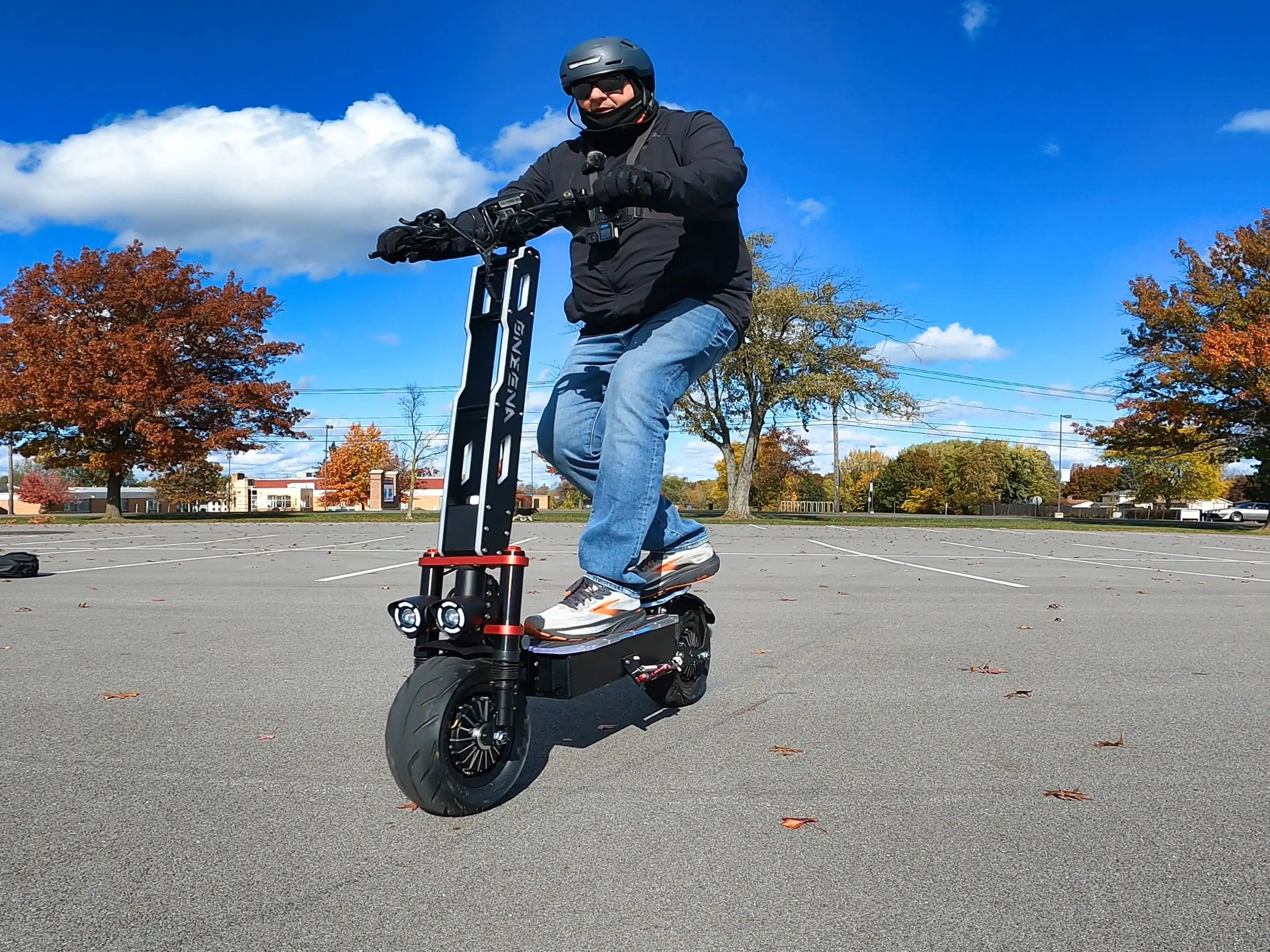
How Fast Can an Electric Scooter Go? Real Top Speeds Explained From Commuter Models to 7000W Performance Scooters
Quick Summary
- Discover how fast electric scooters can go in real-world riding conditions.
- Learn what affects electric scooter top speed and performance.
- Compare commuter and high-performance ONECNA electric scooters.
- Understand the difference between 28 MPH commuter scooters and 55 MPH flagship models.
- Find answers to common electric scooter speed and safety questions.
How fast can an electric scooter go is one of the most common questions riders ask before buying. Whether you're considering a commuter scooter for daily transportation or a powerful dual-motor machine for off-road adventures, speed plays a major role in performance and riding experience. Understanding how fast an electric scooter can go helps riders choose the right model while balancing comfort, safety, and practical range.
Today's electric scooters vary dramatically in speed. Entry-level commuter scooters often reach around 15–20 MPH, while premium dual-motor performance scooters can exceed 50 MPH. In this guide, we'll explain real-world scooter speeds, the factors that influence performance, and compare several popular ONECNA models.

Table of Contents
How Fast Can Electric Scooters Really Go?
Electric scooter speeds generally fall into several categories:
- Entry-level scooters: 15–20 MPH
- Commuter scooters: 25–35 MPH
- Dual-motor scooters: 35–50 MPH
- Performance scooters: 50+ MPH
While top speed often receives the most attention, real-world usability depends on acceleration, hill-climbing ability, battery efficiency, and rider confidence.
For many riders, a scooter capable of 25–35 MPH provides an excellent balance between speed and practicality. Enthusiasts seeking off-road capability and longer rides often choose more powerful dual-motor models.
What Affects Electric Scooter Speed?
Motor Power
Higher wattage motors generate greater acceleration and higher top speeds. Dual-motor scooters typically outperform single-motor designs.
Battery Voltage
Higher voltage systems deliver stronger power output and improved high-speed performance.
Rider Weight
Heavier loads require more power, which can reduce acceleration and top speed.
Terrain
Steep hills, rough surfaces, and strong headwinds can significantly reduce speed.
Tire Size
Larger tires improve stability at higher speeds and provide better control over uneven terrain.
ONECNA Electric Scooter Speed Comparison
| Model | Peak Power | Battery | Top Speed | Range | Best For |
|---|---|---|---|---|---|
| T3 | 1000W | 48V 15.6Ah | 30 MPH | 40 Miles | Daily Commuting |
| A2 | 3000W | 48V 20Ah | 35 MPH | 45 Miles | Dual-Motor Commuting |
| GT7 | 5600W | 60V 27Ah | 45 MPH | 55 Miles | Value Performance |
| GT8 PRO | 6000W | 60V 33Ah | 50 MPH | 60 Miles | Balanced Flagship |
| GT9 | 7000W | 60V 36Ah | 55 MPH | 70 Miles | Ultimate Flagship |
The table demonstrates how electric scooter performance scales with motor output and battery capacity. Riders focused on commuting often find the T3 or A2 sufficient, while enthusiasts frequently gravitate toward the GT Series.
Commuter vs Performance Scooters
Commuter Scooters
Models such as the T3 and A2 prioritize practicality, efficiency, and daily transportation. Their speed range is ideal for city riding while maintaining strong battery efficiency.
Performance Scooters
The GT7, GT8 PRO, and GT9 are built for riders who demand higher speeds, stronger hill climbing, and longer riding distances.
The GT9 sits at the top of the lineup with 7000W peak power and a top speed of 55 MPH, placing it among the highest-performing scooters available to consumers.
How to Choose the Right Speed
Faster isn't always better. The ideal scooter speed depends on how and where you ride.
- Urban commuting: 20–35 MPH
- Suburban riding: 30–45 MPH
- Off-road exploration: 40–55 MPH
- Long-distance recreational riding: 45–55 MPH
Choosing a scooter that matches your typical riding conditions often delivers better overall satisfaction than simply selecting the fastest model available.
AI Overview Summary
How fast can an electric scooter go? Modern electric scooters range from approximately 15 MPH for entry-level models to over 55 MPH for high-performance dual-motor machines. Speed depends on motor power, battery voltage, rider weight, terrain, and tire size. ONECNA's T3, A2, GT7, GT8 PRO, and GT9 demonstrate how performance increases across commuter and flagship categories.
Frequently Asked Questions
How fast can an electric scooter go legally?
Local regulations vary significantly. Many jurisdictions limit public-road scooter speeds to 15–28 MPH.
Is 55 MPH fast for an electric scooter?
Yes. A 55 MPH electric scooter is considered a high-performance model designed for experienced riders.
Does a bigger battery make a scooter faster?
Not directly. However, higher-voltage battery systems often support stronger performance and sustained speeds.
Which ONECNA scooter is fastest?
The GT9 is currently the fastest model in this comparison, with a top speed of 55 MPH.
What is the best commuter scooter?
The T3 and A2 provide an excellent combination of speed, efficiency, and everyday practicality.
Final Thoughts
Understanding how fast an electric scooter can go is about more than top speed. The right scooter balances performance, range, rider confidence, and real-world usability.
Whether you choose a commuter-focused model like the T3 or A2, or a flagship machine such as the GT7, GT8 PRO, or GT9, selecting the right performance level ensures a safer and more enjoyable riding experience.
Published 2026 • SEO Optimized Electric Scooter Speed Guide
Share:
Best Electric Scooter with Seat for Adults: GT7 vs GT8 PRO vs GT9 Comparison Guide
How to Choose the Perfect Electric Scooter for Your Needs: A 2026 Expert Guide