




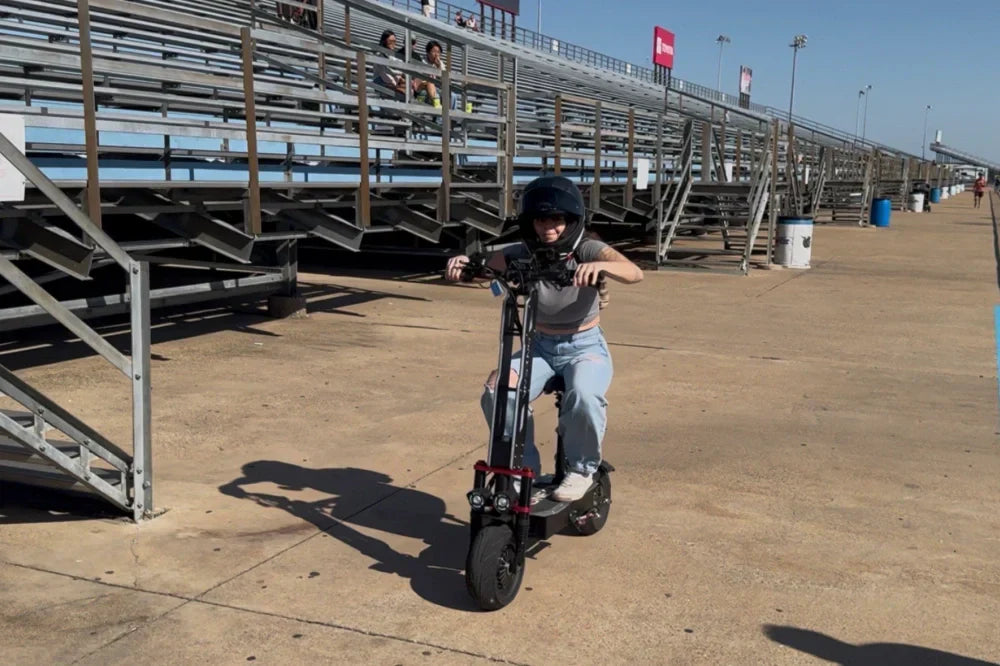
If you have ever watched an electric scooter rush past you on the street and found yourself wondering 'how fast is a scooter,' you are far from alone. Speed is one of the biggest reasons riders fall in love with electric scooters. From daily commuting to weekend adventures, today’s high-performance models have redefined what small personal transportation can actually do.
In this guide, we break down real electric scooter speeds, what affects their performance, and how premium dual-motor scooters—like those from ONECNA—reach levels far beyond the average city model. Whether you are a new rider or someone comparing power levels before your next upgrade, this breakdown will give you a clear and complete picture of what speed really means in 2025.
Understanding the Basics: What Determines Scooter Speed?
Before looking at specific numbers, it’s important to understand that electric scooter speed is influenced by more than just the motor. Yes, motor wattage matters—but so do battery output, controller quality, tires, rider weight, and even weather conditions. When someone asks how fast is a scooter, the answer is rarely just one number.
Here are the most influential factors:
- Motor Power: Single-motor scooters usually stay in lower speed ranges. Dual-motor models with 2000W–5600W total power generate far more acceleration.
- Battery Voltage: Higher voltage allows motors to push harder, especially at high speeds.
- Tire Type: Off-road tires grip differently than city road tires, affecting stability at top speed.
- Controller Tuning: High-end controllers determine how efficiently power is delivered.
- Rider Weight & Terrain: Hills, uneven ground, and heavy loads reduce top speed.
With these factors combined, electric scooter speeds vary widely—and the difference between an entry-level model and a premium dual-motor machine can be dramatic.
Average Electric Scooter Speeds: What Most Riders Experience
Most people’s first electric scooter experience involves compact commuter models designed primarily for city travel. These scooters usually reach:
- 15–20 mph (25–32 km/h) for lightweight commuters
- 20–25 mph (32–40 km/h) for mid-range daily riders
These speeds are comfortable, predictable, and ideal for bike lanes or short urban trips. But if you’re reading this, you may be more interested in what happens when scooters go beyond everyday commuting—when they move into the realm of dual-motor performance.
Performance Scooters: How Fast Do They Really Go?
Once we enter the dual-motor category, speed increases significantly. A scooter with two motors, each pushing 1500W–2800W, delivers torque and acceleration on a completely different level. High-performance models often reach:
- 35–40 mph (56–64 km/h) for sport-tuned 2000W–3000W machines
- 45–55 mph (72–88 km/h) for 4000W–5600W power systems
These speeds create a riding experience much closer to a light motorcycle than a commuter scooter. For riders who want power on open roads, steep hill climbs, or off-road trails, this class offers unmatched excitement.
That’s exactly why ONECNA designs scooters with large-capacity batteries, heavy-duty frames, and advanced dual-motor systems—to allow riders to experience the true potential of electric speed in a stable and controlled way.
Breaking Down Real Speeds Using ONECNA Scooters
To give truly accurate answers to 'how fast is a scooter,' we can look at actual performance from modern scooters built for serious power riders.
1. Mid-High Performance Dual-Motor Scooters
Scooters in this category balance torque, stability, and speed. A well-tuned dual-motor model can easily climb hills and maintain higher speeds even with heavier riders. Performance machines like the ONECNA GT8 Pro show how far technology has advanced. Riders asking how fast is a scooter are often surprised that these compact machines can outperform some small motorcycles.
2. Extreme Power Scooters (The Speed Leaders)
Scooters with 5000W+ of combined motor output represent the top tier. They are built for riders who want maximum acceleration, deep power reserves, and strong off-road capacity. The ONECNA GT7 stands in this category—an aggressive, high-torque dual-motor beast. When riders test machines at this level, the question how fast is a scooter takes on a whole new meaning.
Top-tier scooters like this are powerful enough for long-range road riding, steep mountain climbs, and rugged terrain. It represents the highest performance most riders will ever need—without entering motorcycle licensing territory.
Acceleration vs. Top Speed: What Matters More?
Top speed is not the only factor riders think about. Acceleration—the time it takes to reach that speed—is often even more important in real-world scenarios. Dual-motor scooters shine here, delivering instant torque that single-motor systems cannot match.
In day-to-day riding, this acceleration helps riders:
- Merge into traffic more safely
- Climb hills without losing momentum
- Handle rough ground or sudden stops with more confidence
A scooter that accelerates quickly feels more capable and responsive, even if its top speed isn’t the absolute highest.
Are High-Speed Scooters Safe?
Speed always requires responsibility. Modern high-performance scooters include advanced braking systems, wide deck designs, hydraulic suspensions, and reinforced frames to handle the demands of faster riding. When combined with proper safety gear and rider awareness, fast scooters can be ridden responsibly and securely.
The key is choosing a scooter engineered for high-speed performance—not forcing a low-power commuter model to exceed its limits.
So, How Fast Is a Scooter in 2025?
With technology advancing rapidly, electric scooters now cover a huge range of speeds:
- 15–20 mph – Beginner commuter scooters
- 25–35 mph – Mid-range city scooters
- 40–55+ mph – High-performance dual-motor scooters
For riders who want both speed and versatility, dual-motor machines like those from ONECNA deliver the strongest combination of power, control, and durability. They demonstrate how far electric scooter engineering has come—and how much potential still lies ahead.
So the next time someone asks 'how fast is a scooter,' you can tell them the real answer: as fast as modern engineering, battery technology, and dual-motor torque allow—and in 2025, that means seriously fast.
Whether you ride for commuting, adventure, or pure thrill, high-performance scooters have transformed the meaning of personal electric speed. And this is only the beginning.
Share:
Should Both Feet Be Straight on a Scooter? Tips for a Comfy Ride
What Is the Fastest Motor Scooter in 2025?