




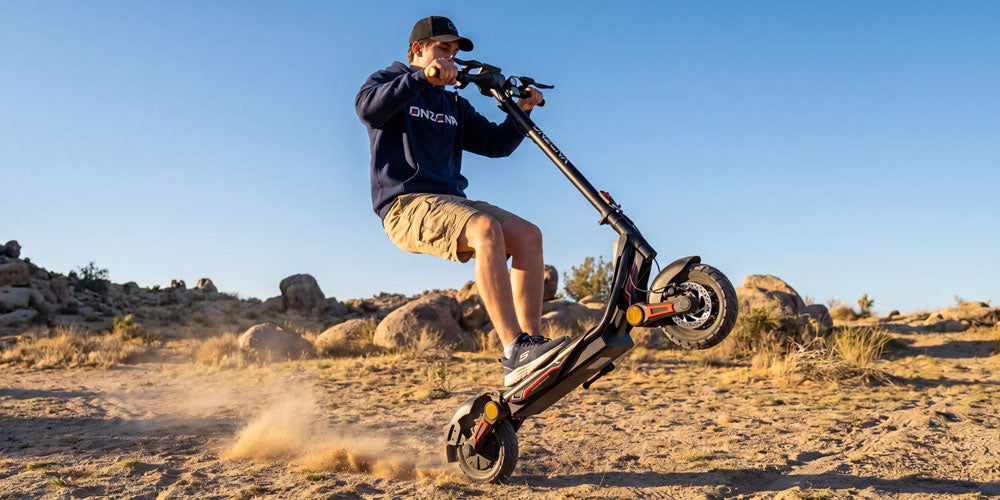
Is Your Electric Scooter Street Legal? A State-by-State Guide (TX/NY/WA/IL)
Is your electric scooter street legal in Texas, New York, Washington, or Illinois? It's a question more riders are asking — and the answer isn't always obvious. Unlike cars or motorcycles, e-scooters don't have a single national standard. What's perfectly legal in one state can get you fined in another. This guide cuts through the confusion: speed limits, age requirements, helmet rules, where you can ride, registration, and insurance — broken down state by state so you know exactly where you stand before you roll out.

What Does "Street Legal" Actually Mean for an Electric Scooter?
"Street legal" is a term borrowed from the automotive world, but for electric scooters it means something more nuanced. A street-legal e-scooter is one that can be operated on public roads, bike lanes, or shared paths without violating state or local law. The criteria typically include:
- Speed capability: Does your scooter's top speed fall within the state's legal threshold?
- Rider age: Are you old enough to legally operate it on public roads?
- Safety equipment: Do you (or your scooter) meet lighting and helmet requirements?
- Allowed zones: Are you riding where the law permits?
- Registration status: Does your scooter need to be registered as a vehicle?
The tricky part: each state answers these questions differently. A scooter that's street legal in Texas may technically be over the speed threshold in New York. Let's go state by state.
Important: State law sets the baseline — but cities can (and often do) impose stricter rules. Always check local ordinances in addition to state law.
Texas: What Makes an Electric Scooter Street Legal?
Speed Threshold
Texas is one of the more permissive states. Under Transportation Code §551.351, electric scooters are legal on public roads as long as they don't exceed 35 mph under motor power. That said, most Texas cities cap shared scooters at 15 mph in dense zones — your privately owned scooter isn't subject to those caps, but local speed limits still apply.
Age Requirement
You must be at least 16 years old to ride an electric scooter on public roads in Texas. Riders under 16 are restricted to private property.
Helmet Law
Texas does not require helmets for adults (18+). Riders aged 16–17 are legally required to wear one. Regardless of the law, wearing a helmet is the single most effective way to reduce injury risk — especially at higher speeds.
Where You Can Ride
- Bike lanes: ✅ Permitted
- Roads (≤35 mph posted limit): ✅ Permitted
- Sidewalks: ❌ Prohibited in most major Texas cities (Austin, Houston, Dallas)
- Highways/freeways: ❌ Prohibited
Registration & License
No registration, license plate, or driver's license is required in Texas — as long as your scooter qualifies as a "motorized scooter" under state law (not a moped or motorcycle).
Insurance
Not legally required. However, if you're riding a high-performance scooter on public roads, personal liability coverage through a homeowners or renters policy is worth reviewing.
Texas verdict: Most standard and performance e-scooters are street legal in Texas, provided you ride on appropriate roads and follow local speed rules.
New York: Stricter Rules, Clearer Bike Lane Access

Speed Threshold
New York legalized e-scooters statewide in 2020 under Vehicle and Traffic Law §114-d, but with a firm cap: 20 mph maximum on motor power. Scooters capable of higher speeds may be reclassified as mopeds, triggering registration and licensing requirements.
Age Requirement
Minimum age is 16 years old. No driver's license is required for riders 16 and older on a standard e-scooter.
Helmet Law
Helmets are legally required for riders under 18. Adults are not legally required to wear one, though NYC's DOT strongly recommends it — and enforcement in certain boroughs can be inconsistent.
Where You Can Ride
- Bike lanes: ✅ Permitted — the preferred and safest option in NYC
- Roads (≤30 mph posted limit): ✅ Permitted
- Sidewalks: ❌ Strictly prohibited — NYC enforces this actively
- Highways: ❌ Prohibited
Registration & License
No registration or license plate required for privately owned e-scooters. No driver's license needed. Shared/rental scooter operators hold separate city permits.
Insurance
Not legally required for private riders. Shared operators carry their own coverage.
New York verdict: Street legal if your scooter tops out at 20 mph or you ride within that limit. The 20 mph cap is the key compliance point — scooters capable of significantly more may face reclassification.
Washington State: The Strictest of the Four
Speed Threshold
Washington classifies e-scooters as "motorized foot scooters" under RCW 46.04.336, with a motor limit of 1,000 watts and a maximum speed of 20 mph on level ground. Scooters exceeding these specs may require registration as a moped.
Age Requirement
Minimum age is 16 years old. Unlike the other three states, Washington also requires a valid driver's license or instruction permit — making it the strictest state in this group on the licensing front.
Helmet Law
Washington has a universal helmet mandate — all riders, regardless of age, must wear a helmet that meets CPSC safety standards. No exceptions. This is the most protective helmet law among the four states covered here.
Where You Can Ride
- Bike lanes: ✅ Permitted
- Roads (≤25 mph posted limit, some cities up to 35 mph): ✅ Permitted
- Sidewalks: ❌ Prohibited statewide — Seattle enforces this strictly
- Highways: ❌ Prohibited
Registration & License
No registration or license plate required. However, a valid driver's license or learner's permit is required — the only state in this guide with that requirement.
Insurance
Not legally required. Given the licensing requirement and universal helmet mandate, Washington takes rider safety seriously — personal liability coverage is a sensible precaution.
Washington verdict: Street legal if you have a valid license/permit, wear a helmet, and stay within the 20 mph threshold. The licensing requirement catches many riders off guard.
Illinois: Chicago's Rules vs. the Rest of the State
Speed Threshold
Illinois defines e-scooters under the Illinois Vehicle Code (625 ILCS 5/1-117.8) with a 20 mph maximum. Chicago adds slow zones of 8 mph near parks, transit hubs, and crowded pedestrian areas.
Age Requirement
Minimum age is 16 years old under state law. Chicago's shared scooter program requires 18+, but that applies only to rental programs — privately owned scooters follow the state's 16+ rule.
Helmet Law
Illinois does not require helmets for adults. Riders under 18 must wear one. Chicago's city safety campaigns strongly encourage helmet use for all ages, even though it's not legally mandated for adults.
Where You Can Ride
- Bike lanes: ✅ Permitted — strongly preferred in Chicago
- Roads (≤30 mph posted limit): ✅ Permitted
- Sidewalks: ❌ Prohibited in Chicago; varies by municipality in the rest of Illinois
- Highways: ❌ Prohibited
Registration & License
No registration, license plate, or driver's license required under Illinois state law.
Insurance
Not legally required for private e-scooter riders in Illinois.
Illinois verdict: Street legal statewide with minimal requirements. Chicago riders should pay attention to the 8 mph slow zones and the bike-lane-first riding culture the city actively promotes.
Side-by-Side: Street Legal Checklist for All 4 States
| Requirement | Texas | New York | Washington | Illinois |
|---|---|---|---|---|
| Max Legal Speed | 35 mph | 20 mph | 20 mph | 20 mph |
| Minimum Age | 16 | 16 | 16 | 16 |
| Helmet Mandatory | Under 18 | Under 18 | All riders ✓ | Under 18 |
| Bike Lane Access | ✅ Yes | ✅ Yes | ✅ Yes | ✅ Yes |
| Sidewalk Riding | ❌ Usually No | ❌ No | ❌ No | ❌ No (Chicago) |
| Registration Required | ❌ No | ❌ No | ❌ No | ❌ No |
| Driver's License | ❌ No | ❌ No | ✅ Yes | ❌ No |
| Insurance Required | ❌ No | ❌ No | ❌ No | ❌ No |
When Does a Street-Legal Scooter Become Illegal?
Even a compliant scooter can cross into illegal territory depending on how and where it's ridden. Here are the most common situations where street-legal status breaks down:
- Riding faster than the posted road speed limit. The state's max speed for e-scooters is a ceiling — not a target. If the road is posted at 25 mph, that's your limit regardless of what your scooter can do.
- Riding on prohibited surfaces. Sidewalks are off-limits in all four states (with limited exceptions). Highways and freeways are universally prohibited.
- Riding at night without lights. All four states require front and rear lighting for nighttime operation. No lights = not street legal after dark.
- Riding in a temporary no-ride zone. Cities like Chicago and NYC regularly establish event-based or seasonal no-ride zones. Check local announcements before riding in urban areas.
- Exceeding the state's motor/speed classification threshold. High-performance scooters capable of 30–50+ mph may be reclassified as mopeds in NY, WA, and IL — triggering registration, insurance, and licensing requirements that don't apply to standard e-scooters.
Practical note: If you own a high-performance scooter, riding it within legal speed limits doesn't automatically make it street legal — the scooter's capability (not just how fast you ride it) can affect its legal classification in some states.
How to Make Sure Your Scooter Stays Street Legal

Staying street legal isn't complicated — it mostly comes down to knowing your state's rules and riding accordingly. Here's a practical checklist:
- ✅ Know your scooter's top speed and how it's classified under your state's law
- ✅ Wear a helmet — required in Washington for all riders; required for under-18 in TX, NY, and IL; recommended everywhere
- ✅ Ride in bike lanes whenever available — it's the legally clearest and safest option in all four states
- ✅ Install front and rear lights if you ride after dark — required in all four states
- ✅ Check your city's local ordinances — NYC, Chicago, Seattle, and Austin all have rules that go beyond state law
- ✅ If you're in Washington, carry your driver's license or learner's permit when riding
- ✅ Stay off sidewalks — universally prohibited or strongly discouraged in all four states
Frequently Asked Questions (FAQ)
Is my electric scooter street legal if it can go faster than 20 mph?
It depends on the state. In Texas, scooters up to 35 mph are generally street legal. In New York, Washington, and Illinois, the legal threshold is 20 mph — scooters capable of significantly higher speeds may be reclassified as mopeds, requiring registration and a license. Riding within the speed limit doesn't always resolve the classification issue; the scooter's rated capability matters too.
Do I need to register my electric scooter in any of these four states?
No — none of the four states (Texas, New York, Washington, or Illinois) require registration or a license plate for standard electric scooters. However, if your scooter is reclassified as a moped due to speed capability, registration requirements may apply.
Is it legal to ride an electric scooter on the sidewalk in Texas?
In most major Texas cities — including Austin, Houston, and Dallas — sidewalk riding is prohibited by local ordinance. State law doesn't explicitly ban it, but city rules almost universally do. Stick to bike lanes and roads with posted speed limits of 35 mph or less.
Does Washington State really require a driver's license to ride an e-scooter?
Yes. Washington is the only state among the four that requires a valid driver's license or instruction permit to legally operate an electric scooter on public roads. This catches many riders off guard — especially younger riders who assume no license is needed.
What happens if I ride my scooter somewhere it's not street legal?
Consequences vary by location and severity. Common outcomes include verbal warnings, fines (ranging from $50 to several hundred dollars depending on the city), and in some cases, scooter impoundment. Repeat violations or riding on prohibited surfaces like highways can result in more serious penalties.
Do I need insurance to ride an electric scooter in these states?
None of the four states legally require insurance for privately owned e-scooters. That said, if you're involved in an accident, you could face personal liability for damages. Checking whether your existing renters or homeowners policy covers e-scooter incidents is a smart move — especially for higher-performance models.
At what age can someone legally ride an electric scooter on public roads?
All four states set the minimum age at 16. Riders under 18 are required to wear helmets in Texas, New York, and Illinois. In Washington, all riders — regardless of age — must wear a helmet, and riders under 16 cannot legally operate an e-scooter on public roads in any of these states.
How do I know if my scooter will be classified as a moped instead of an e-scooter?
The key factors are motor wattage and top speed capability. In New York and Illinois, scooters with a motor-powered top speed above 20 mph may be reclassified. In Washington, the threshold is 1,000 watts and 24 mph. In Texas, the threshold is higher at 35 mph. If your scooter's specs are near or above these limits, check with your state's DMV for the current classification guidance.
Disclaimer: This article is for informational purposes only and does not constitute legal advice. E-scooter laws change frequently. Always verify current regulations with your state's Department of Transportation or a qualified legal professional before riding on public roads.
Share:
Electric Scooter Laws in Texas, New York, Washington & Illinois: What You Need to Know
Electric Scooter Laws in Texas, New York, Washington & Illinois: What You Need to Know