




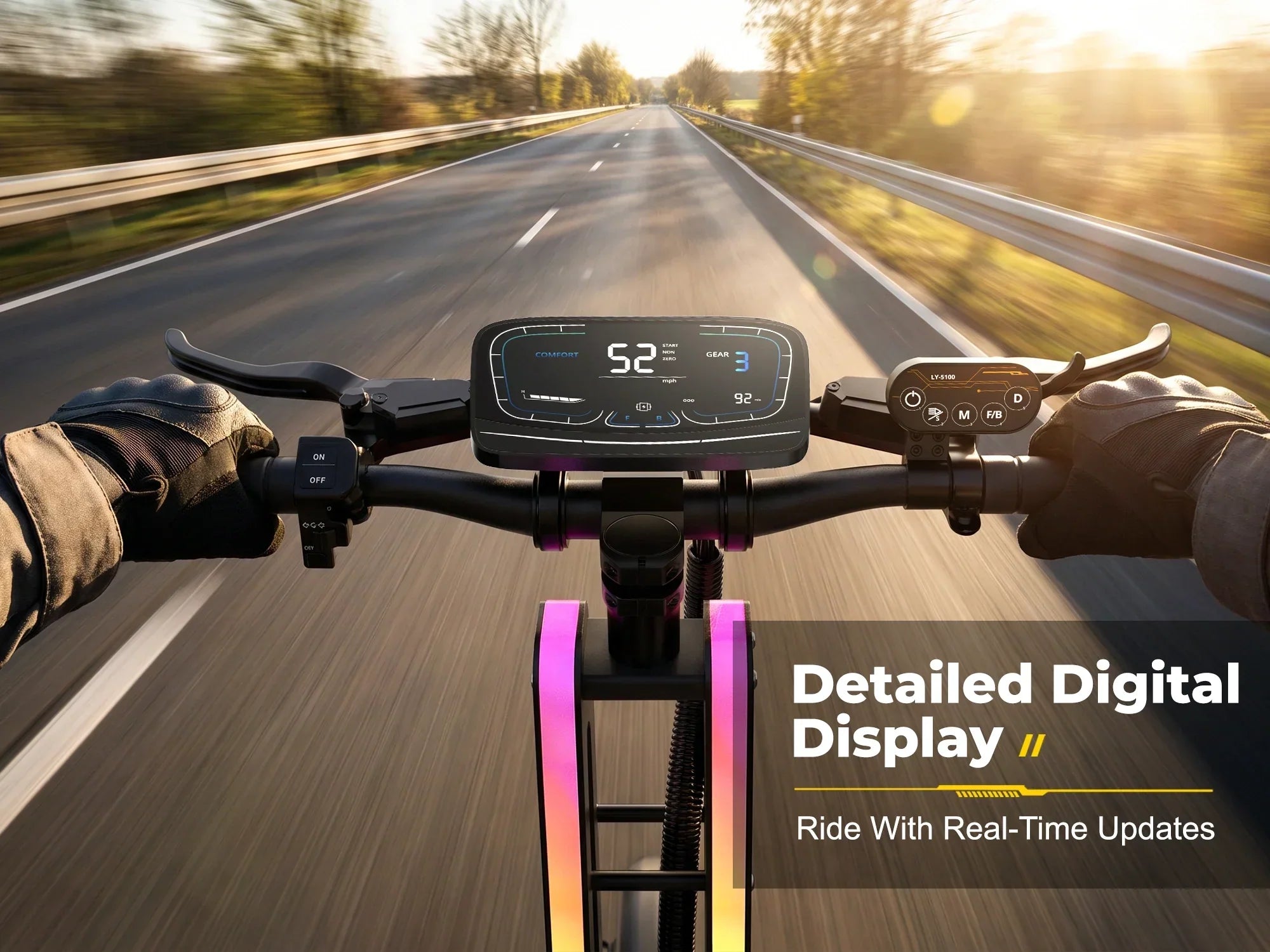
Finding the most reliable e scooter isn't just about picking the highest wattage or the longest claimed range. It's about understanding which components actually determine long-term durability — and matching those to how you actually ride. This guide walks you through what makes an electric scooter reliable, why it matters more than raw specs, how to evaluate models side by side, and when each type of scooter makes sense for your lifestyle.
📋 Article Outline
- What Makes an E Scooter Truly Reliable?
- Why Durability Matters More Than Top Speed
- Key Components to Evaluate
- Commuter vs. Off-Road: Reliability Comparison
- Buying Guide: How to Choose the Right One
- Use Cases: Which Rider Are You?
- Pros & Cons Breakdown
- FAQ
What Makes an E Scooter Truly Reliable?
Reliability in an electric scooter isn't a single feature — it's the sum of engineering decisions made across every major system. A scooter can have a powerful motor but fail within months if the battery management system (BMS) is poorly designed. It can have a premium frame but vibrate apart if the suspension geometry is wrong for the terrain.
The most reliable e scooters share four core traits:
- Consistent motor output under load (hills, headwinds, heavy riders)
- Battery cells with proven chemistry — typically LG, Samsung, or Panasonic 18650/21700 cells
- Frame materials that resist fatigue — aircraft-grade aluminum alloy or reinforced steel
- Waterproofing rated at IP54 or higher for real-world weather exposure
Brands that publish detailed component sourcing and offer replacement parts are almost always more reliable long-term than those that don't — because they're building for repairability, not just first impressions.
Why Durability Matters More Than Top Speed
Most buyers focus on top speed and range when comparing scooters. Those numbers are easy to market. But durability is what determines your actual cost of ownership over 12–36 months.
Consider this: a scooter rated at 40 mph that needs a new controller at month 8 costs you more — in money, time, and frustration — than a 28 mph scooter that runs flawlessly for three years. Speed is a feature. Reliability is a foundation.
Here's what durability actually affects:
- Maintenance frequency — reliable scooters need fewer tune-ups
- Resale value — well-built scooters hold value significantly better
- Safety — brake fade, tire blowouts, and electrical failures are durability failures first
- Total cost of ownership — cheap scooters often cost more over 2 years
"The most expensive scooter you'll ever own is the cheap one you have to replace twice."
Key Components to Evaluate Before You Buy
1. Motor: Hub vs. Mid-Drive
Hub motors (built into the wheel) are the most common and generally more reliable for urban use — fewer moving parts, lower maintenance. Dual hub motors add redundancy and traction. Mid-drive motors offer better torque distribution for off-road but have more mechanical complexity.
What to look for: Rated wattage vs. peak wattage. A motor rated at 1000W continuous is more reliable than one rated at 1000W peak (which may only sustain 500W). Look for motors with thermal protection built in.
2. Battery: Capacity, Chemistry & BMS
Battery degradation is the #1 long-term reliability issue in electric scooters. Key factors:
- Cell brand: LG, Samsung, Panasonic cells degrade more slowly than generic cells
- BMS quality: A good BMS prevents overcharge, over-discharge, and thermal runaway
- Charge cycles: Quality packs maintain 80%+ capacity after 500+ cycles
- Capacity (Wh): Higher Wh = longer range per charge = fewer charge cycles over time
3. Frame & Build Quality
Look for:
- Welded (not bolted) frame joints at stress points
- Aluminum alloy 6061 or 7005 — both are strong and corrosion-resistant
- Folding mechanism with a positive locking system (not just a spring clip)
- Deck width of at least 6 inches for stable footing
4. Suspension
Suspension directly affects both ride comfort and component longevity. Constant vibration without damping accelerates wear on connectors, solder joints, and the battery pack.
- Spring suspension: Simple, reliable, low maintenance
- Hydraulic/air suspension: Better performance, requires occasional servicing
- No suspension: Only acceptable on smooth urban surfaces with pneumatic tires
5. Tires: Pneumatic vs. Solid
- Pneumatic (air-filled): Better grip, shock absorption, and ride quality — but can puncture
- Solid/honeycomb: Zero flats, but harsher ride and less traction on wet surfaces
- Self-sealing pneumatic: Best of both worlds for urban commuters
6. Brakes
Brake reliability is non-negotiable. In order of stopping power and reliability:
- Hydraulic disc brakes (best)
- Mechanical disc brakes (good)
- Drum brakes (acceptable for light use)
- Electronic/regenerative only (not sufficient as primary braking)

Commuter vs. Off-Road E Scooters: Reliability Comparison
The "most reliable" scooter depends heavily on where you ride. A scooter optimized for smooth city streets will wear out faster on gravel trails — and vice versa. Here's how the two categories compare across key reliability dimensions:
| Factor | Urban Commuter | Off-Road / Dual-Terrain |
|---|---|---|
| Motor type | Single hub (500–1000W) | Dual hub (2000–6000W+) |
| Tire type | 10" pneumatic or solid | 11"–13" knobby pneumatic |
| Suspension | Front spring or none | Dual spring or hydraulic |
| Weight | 25–35 lbs (portable) | 55–100+ lbs (stationary) |
| IP rating | IP54 typical | IP54–IP65 |
| Maintenance interval | Every 6–12 months | Every 3–6 months |
| Best for | Flat pavement, short trips | Mixed terrain, longer rides |
| Price range | $300–$900 | $1,200–$4,000+ |
Key takeaway: Off-road scooters are built to absorb more punishment, but they require more active maintenance. Urban commuters are lower-maintenance but less forgiving of rough surfaces. Neither is universally "more reliable" — it depends on fit to use case.
Buying Guide: How to Choose the Most Reliable E Scooter for You
Use this framework to narrow your decision before you spend a dollar:
Step 1: Define Your Primary Use Case
- Daily commute on paved roads → prioritize portability, range, and IP rating
- Weekend off-road riding → prioritize motor power, suspension, and tire size
- Mixed use (both) → look for dual-terrain models with at least 11" tires and dual suspension
Step 2: Set a Realistic Budget (Including Maintenance)
Budget not just for purchase price, but for:
- Replacement tires (every 1,000–2,000 miles): $30–$80 each
- Brake pad replacement (annually): $15–$40
- Battery replacement (every 3–5 years): $200–$600
- Tune-up labor if you're not DIY: $50–$150/year
Step 3: Verify Parts Availability
This is the most overlooked factor. A scooter is only as reliable as your ability to fix it. Before buying, confirm:
- Does the brand sell replacement parts directly?
- Are there third-party parts available?
- Is there a service manual or repair community?
Brands like ONECNA sell individual components — batteries, throttles, bearings, chargers — which significantly extends the usable life of their scooters compared to brands with no parts ecosystem.
Step 4: Check Real-World Reviews (Not Just Specs)
Look for reviews that mention:
- Long-term ownership (6+ months)
- Customer service responsiveness
- How the scooter performs in rain or cold
- Whether the actual range matches the claimed range
Step 5: Confirm Warranty Terms
A meaningful warranty covers:
- Battery: minimum 12 months
- Motor: minimum 12 months
- Frame: minimum 12–24 months
- Electronics: minimum 6 months
Be cautious of warranties that exclude "wear items" broadly — that language can be used to deny legitimate claims.
Use Cases: Which Rider Are You?
🏙️ The Urban Commuter
Profile: Rides 5–15 miles/day on paved roads, needs to carry the scooter on transit or store it in an office.
What matters most: Weight, folded size, range, IP rating, and brake reliability in wet conditions.
Best fit: A scooter in the 25–35 lb range with 10" pneumatic tires, IP54+, and at least 25-mile real-world range.
🌲 The Weekend Off-Roader
Profile: Rides trails, gravel paths, or mixed terrain on weekends. Doesn't need to carry the scooter.
What matters most: Motor power (dual preferred), suspension quality, tire size, and ground clearance.
Best fit: A dual-motor scooter with 11"+ knobby tires, dual suspension, and 60+ Wh/mile efficiency. The ONECNA GT9, for example, runs 12" off-road tires with dual hydraulic suspension — a setup designed for terrain that would destroy a commuter scooter within weeks.
🔄 The Dual-Use Rider
Profile: Commutes during the week, explores trails on weekends. Wants one scooter that does both.
What matters most: Balance of portability and power, versatile tires, and a robust frame.
Best fit: Mid-weight dual-terrain models (45–65 lbs) with at least 11" tires and front+rear suspension. Expect to compromise slightly on both portability and off-road capability — but gain significant versatility.
🏋️ The Heavy Rider (220 lbs+)
Profile: Needs a scooter rated for higher payload without sacrificing reliability.
What matters most: Weight capacity (look for 265–330 lb ratings), reinforced deck, and motor that doesn't overheat under load.
Best fit: Off-road or performance-class scooters with dual motors and reinforced frames. Single-motor commuter scooters rated at 220 lbs will degrade significantly faster under that load.
Pros & Cons: Commuter vs. Off-Road Reliability
Urban Commuter E Scooters
✅ Pros:
- Lightweight and portable — easy to carry on transit
- Lower maintenance on smooth surfaces
- More affordable entry price
- Easier to store in apartments or offices
❌ Cons:
- Degrade quickly on rough or uneven surfaces
- Smaller batteries = more charge cycles over time
- Less suspension = more vibration stress on components
- Often limited parts availability from budget brands
Off-Road / Performance E Scooters
✅ Pros:
- Built to absorb punishment — longer structural lifespan
- Larger batteries degrade more slowly (fewer cycles per mile)
- Better suspension protects internal components
- Higher-quality components throughout (motors, brakes, tires)
❌ Cons:
- Heavy — not practical for transit or stairs
- Higher upfront cost
- More complex maintenance (hydraulic suspension, larger tires)
- Overkill for pure urban use
When Should You Buy a More Expensive, More Reliable Scooter?
The answer is almost always: sooner than you think. If you're riding more than 3 times per week, covering more than 8 miles per trip, or riding on anything other than smooth pavement, a budget scooter will cost you more in the long run.
The inflection point is roughly $800–$1,200. Below that threshold, you're often buying consumer-grade components with limited parts support. Above it, you start getting industrial-grade motors, name-brand battery cells, and brands that actually support their products post-sale.
That doesn't mean you need to spend $3,000. It means you should be honest about your use case and buy one level above your minimum requirement — because real-world riding is always harder on a scooter than the spec sheet assumes.
FAQ: Most Reliable E Scooter
Q: What is the most reliable electric scooter brand?
Reliability varies by use case, but brands that consistently score well for long-term durability are those that: (1) publish component sourcing, (2) sell replacement parts, and (3) have active owner communities. No single brand is universally best — the most reliable brand for a commuter may not be the most reliable for off-road use.
Q: How long should a reliable electric scooter last?
A well-maintained quality scooter should last 3–5 years with regular use. The battery is typically the first component to degrade, usually after 500–800 charge cycles. With a replaceable battery, the scooter's useful life can extend significantly beyond that.
Q: Is a more expensive e scooter always more reliable?
Not always, but there's a strong correlation above the $800 price point. Below that, you're often paying for marketing rather than engineering. Above $1,200, you're generally getting better motors, cells, and build quality — though diminishing returns apply above $2,500 for most riders.
Q: What IP rating do I need for a reliable e scooter?
IP54 is the minimum for real-world use — it protects against splashing water from any direction. If you ride in heavy rain or through puddles regularly, look for IP55 or IP65. No consumer scooter is fully waterproof, so avoid submerging any scooter regardless of rating.
Q: How do I know if an e scooter's battery is reliable?
Ask or research: (1) What cell brand is used? (LG, Samsung, Panasonic are benchmarks), (2) What is the BMS rated for?, (3) How many charge cycles before 80% capacity retention? Brands that can't answer these questions are usually using generic cells.
Q: Are dual-motor scooters more reliable than single-motor?
Dual-motor scooters distribute load across two motors, which can reduce thermal stress on each individual motor. However, they also have more components that can fail. For off-road use, dual motors are generally more reliable under load. For urban commuting, a quality single motor is often more reliable and lower maintenance.
Q: What maintenance does a reliable e scooter need?
At minimum: tire pressure checks monthly, brake adjustment every 3–6 months, bolt torque check every 6 months, and battery storage care (never store below 20% or above 90% charge for extended periods). Off-road scooters need more frequent checks due to higher vibration and impact loads.
Q: Can I use an off-road scooter for daily commuting?
Yes, but with trade-offs. Off-road scooters are heavier (harder to carry), less efficient on flat pavement (larger tires = more rolling resistance), and often louder. They're more durable, but the extra weight and bulk make them impractical for transit-integrated commutes. If you have secure parking at both ends, it's a viable option.
Share:
How to Ride an E Scooter: A Beginner's Guide to Safe Riding in 2026
Can You Drive an E Scooter on the Road? Everything You Need to Know