




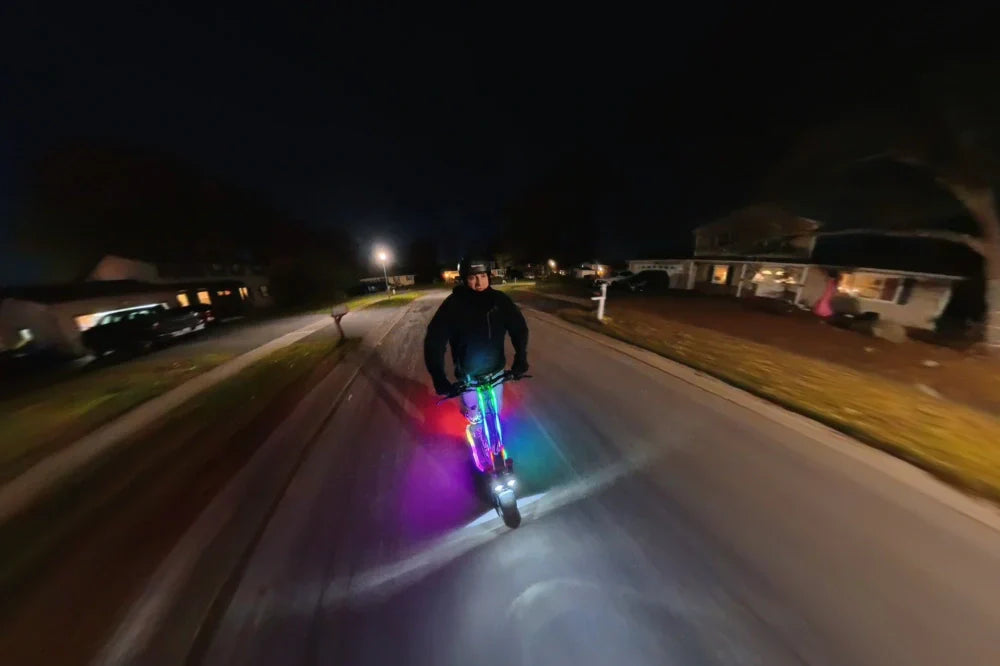
Discussions around the safety of electric scooters often start with fear. Headlines focus on accidents, while conversations rarely explore why those incidents happen in the first place.
Electric scooters themselves are not inherently unsafe. The risk usually comes from mismatched expectations, unfamiliar riding behavior, or a lack of understanding about how a scooter interacts with its environment 🛴.
Why Electric Scooter Safety Is Often Misunderstood
Unlike cars or bicycles, electric scooters sit in an unusual middle ground. They move faster than pedestrians but lack the physical presence of a vehicle.
This creates a psychological gap where riders may underestimate speed while overestimating control.
Understanding this gap is the first step toward safer riding.
Common Accident Scenarios and What They Reveal
Most electric scooter incidents follow predictable patterns. Sudden braking on uneven surfaces, unexpected obstacles, or loss of balance during turns account for a large portion of crashes.
These are not failures of the scooter. They are failures of anticipation.
Protective Gear Is a Decision, Not a Rule
Helmets are often discussed as mandatory or optional, but the more important factor is context.
Riding speed, surface conditions, and traffic density should influence protective choices more than habit.
Gloves improve grip consistency, while knee protection reduces injury severity during low-speed falls.
Riding Posture and Control Awareness
Standing posture directly affects balance. Locked knees reduce shock absorption, while overly relaxed stances delay reaction time.
Maintaining a slight bend in the knees allows the body to act as a natural suspension system.
Throttle and Brake Coordination
Smooth inputs matter more than raw braking power.
Sudden throttle changes disrupt balance, especially at moderate speeds where reaction time feels forgiving but is not.
Gradual deceleration maintains stability and reduces tire slip.
Visibility: Seeing and Being Seen
Urban riding introduces complex visual environments. Reflections, shadows, and moving vehicles compete for attention.
Riders should assume they are less visible than they believe.
Lighting systems and reflective elements reduce uncertainty, especially during low-light conditions.
Surface Awareness and Environmental Conditions
Dry pavement offers predictable grip. Wet surfaces change everything.
Metal plates, painted lines, and loose gravel reduce traction instantly.
Reducing speed in these conditions is not caution—it is physics.
Speed Perception vs Actual Speed
Electric scooters feel slower than they are due to upright posture and compact design.
This illusion encourages riders to exceed safe speeds without realizing it.
Learning to respect perceived speed differences improves overall safety.
Why Rider Experience Matters More Than Specifications
High-performance scooters demand awareness, not bravado.
Riders transitioning from low-power models should allow time to adapt.
The electric scooter experience changes significantly with power and responsiveness.
Routine Checks That Actually Matter
Many riders skip inspections because scooters feel low-maintenance.
Checking tire pressure, brake response, and folding mechanisms prevents the majority of mechanical failures.
These checks take minutes and prevent months of regret.
Weather Is a Variable, Not an Excuse
Cold temperatures reduce battery efficiency and tire grip.
Hot weather increases component stress.
Adjusting riding style based on temperature improves control and longevity.
Traffic Interaction and Predictive Riding
Scooters are most vulnerable at intersections.
Predictive riding means assuming drivers will not see you.
Positioning yourself defensively reduces exposure to sudden maneuvers.
Urban vs Mixed Terrain Riding
Smooth city roads reward consistency.
Mixed terrain demands flexibility.
Scooters designed for stability and suspension adapt better to unpredictable surfaces.
Why Calm Riding Is Safer Than Confident Riding
Overconfidence leads to delayed reactions.
Calm riding maintains mental bandwidth for unexpected events.
This mindset shift improves long-term safety more than any accessory.
Understanding Escooter Safety Tips Beyond Checklists
Most escooter safety tips focus on equipment.
Behavioral awareness, however, reduces risk before equipment becomes relevant.
Good habits outperform good hardware.
Adapting Safety Practices Over Time
Riders evolve. Routes change. Conditions shift.
Safety practices should evolve as well.
Periodic reassessment keeps riding habits aligned with reality.
Final Thoughts on the Safety of Electric Scooters
The safety of electric scooters is not defined by fear or freedom alone.
It is defined by understanding how small decisions compound over every ride.
When awareness becomes routine, safety stops feeling restrictive and starts feeling natural 😊.
Share:
Escooter Brands Explained: How to Choose the Right One for Real Riding
Electric Scooter vs Bike: A Practical Comparison for Real Riders