




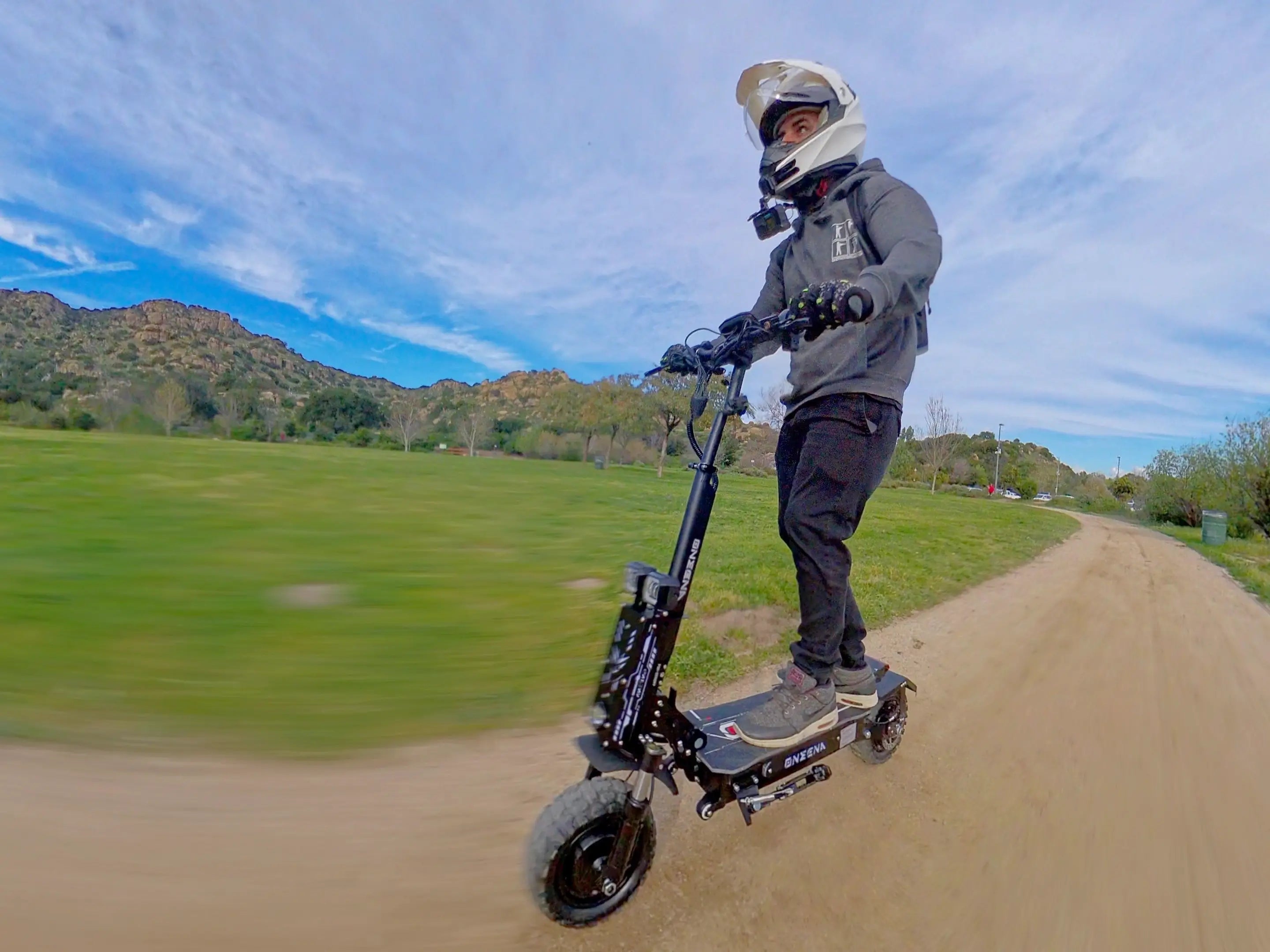
Do You Need a License for an E Scooter? Everything You Need to Know
Do you need a license for an e scooter? In most US states, the answer is no — but the rules vary significantly by state, scooter speed, and where you plan to ride. This guide breaks down exactly what the law says, what counts as a street-legal e scooter, and what you need to know before you ride.

Table of Contents
- What Is an E Scooter — Legally Speaking?
- Do You Need a License for an E Scooter?
- State-by-State Breakdown: License Requirements
- Age Requirements for Riding an E Scooter
- Where Can You Legally Ride an E Scooter?
- Do You Need to Register or Insure Your E Scooter?
- Helmet Laws: What the Rules Say
- What About High-Power or High-Speed E Scooters?
- FAQ
1. What Is an E Scooter — Legally Speaking?
Before answering whether you need a license, it helps to understand how the law actually defines an electric scooter. The legal classification determines everything: where you can ride, whether you need a license, and what safety equipment is required.
In most US states, electric scooters fall into one of two categories:
- Low-speed electric scooter (Class 1–3 equivalent): Motor under 750W, top speed under 20–25 mph. Treated similarly to a bicycle in most jurisdictions. No license required in most states.
- Motor-assisted scooter or moped: Higher power output, capable of speeds above 30 mph. May require a driver’s license, registration, and insurance depending on the state.
The key variables that determine your scooter’s legal class are motor wattage, top speed, and sometimes whether it has a seat. A standing scooter with a 500W motor doing 18 mph is treated very differently from a dual-motor performance scooter capable of 40+ mph.
Always check your specific scooter’s specs against your state’s legal definition — not just the marketing description.
2. Do You Need a License for an E Scooter?
For the majority of riders in the United States riding a standard low-speed electric scooter, no driver’s license is required. This applies in states like California, Texas, Florida, New York, and most others — provided the scooter meets the state’s definition of a low-speed electric device.
However, there are important exceptions:
- Some states require a valid driver’s license (not necessarily a motorcycle license) to operate any motorized vehicle on public roads, including e scooters.
- High-speed or high-power scooters capable of exceeding 30 mph may be classified as mopeds or motorcycles, which do require a license in virtually every state.
- Local ordinances can be stricter than state law. A city may require a license even if the state does not.
The safest approach: look up your state’s specific statute on electric scooters, then check your city or county’s local ordinances. State law sets the floor; local law can raise it.

3. State-by-State Breakdown: License Requirements
Here is a practical overview of how major US states handle e scooter licensing. Note that laws change — always verify with your state’s DMV or transportation authority before riding.
| State | License Required? | Key Conditions |
|---|---|---|
| California | No (for scooters ≤15 mph) | Must be 16+, helmet required under 18 |
| Texas | No | Must be 16+, no sidewalk riding |
| Florida | No (micromobility devices) | Must be 16+, bike lanes preferred |
| New York | No (Class A/B e scooters) | Must be 16+, helmet required under 18 |
| Washington | No | Must be 16+, helmet required |
| Illinois | No | Must be 16+, no highway riding |
| Colorado | No | Must be 16+, treated like bicycle |
| Georgia | No | Must be 15+, bike lane use encouraged |
| North Carolina | Yes (driver’s license) | Treated as moped if motorized |
| Virginia | No | Must be 14+, no highway riding |
Important: This table reflects general state-level rules for standard low-speed e scooters. High-power scooters with top speeds above 30 mph may be classified differently in every state listed above.
4. Age Requirements for Riding an E Scooter
Even when no license is required, most states set a minimum age for operating an electric scooter on public roads or paths. The most common minimum age is 16 years old, though some states allow riders as young as 14 or 15.
Key age-related rules to know:
- Under 16: Most states prohibit riding on public roads entirely. Private property riding may be permitted depending on local rules.
- 16–17: Permitted in most states, often with mandatory helmet requirements regardless of state helmet law for adults.
- 18+: Full riding privileges in virtually all states that permit e scooters, subject to local ordinances.
Parents should note that even in states with no minimum age law for e scooters, local parks, bike paths, and municipalities often have their own age restrictions. Check the specific location rules, not just the state law.

5. Where Can You Legally Ride an E Scooter?
Knowing whether you need a license is only part of the picture. Where you can legally ride matters just as much — and the rules here are often more restrictive than people expect.
Bike Lanes
In most states, e scooters are permitted in designated bike lanes. This is typically the preferred and safest option for urban riding. Some cities require bike lane use when available.
Roads and Streets
Riding on roads is permitted in many states, usually on roads with speed limits of 25–35 mph or lower. Riding on highways, freeways, or roads with speed limits above 35–45 mph is prohibited in virtually every jurisdiction.
Sidewalks
This is where rules get most restrictive. Many cities and states prohibit e scooter riding on sidewalks entirely, or limit it to very low speeds (under 8 mph). Pedestrian safety is the primary concern. Always check local ordinances before riding on a sidewalk.
Parks and Trails
Rules vary widely. Some parks welcome e scooters on paved paths; others ban all motorized vehicles. National parks generally prohibit e scooters on trails. City parks vary by municipality.
Private Property
Riding on private property (with permission) is generally unrestricted by state law, though property owners can set their own rules.

6. Do You Need to Register or Insure Your E Scooter?
Registration
For standard low-speed e scooters (under 20–25 mph), registration is not required in most US states. The scooter is treated similarly to a bicycle from a registration standpoint.
Exceptions exist for higher-speed or higher-power scooters that are classified as mopeds or motor vehicles. In those cases, registration with the state DMV is typically required, along with a license plate.
Insurance
Liability insurance is generally not legally required for low-speed e scooters in most states. However, this does not mean you should skip it. Consider:
- Personal liability: If you injure someone or damage property, you are financially responsible. Homeowner’s or renter’s insurance may cover some e scooter incidents — check your policy.
- Theft and damage: E scooters are a theft target. Dedicated e scooter insurance or a rider on your existing policy can protect your investment.
- Medical costs: Falls and collisions happen. Health insurance covers your injuries, but a dedicated policy may fill gaps.
Several insurers now offer specific micromobility policies. If you ride regularly, it is worth a conversation with your insurance provider.
7. Helmet Laws: What the Rules Say
Helmet requirements for e scooter riders vary significantly by state and age group:
- Mandatory for all ages: A minority of states require helmets for all e scooter riders regardless of age (e.g., Washington state).
- Mandatory under 18: Many states require helmets for riders under 18 but leave it optional for adults (e.g., California, New York, Florida).
- No state mandate: Some states have no helmet law for e scooters at all, though local ordinances may differ.
Regardless of what the law requires, wearing a properly fitted helmet is the single most effective way to reduce head injury risk in a fall or collision. The data on this is unambiguous. A helmet is not optional safety equipment — it is the baseline.
For riders on higher-performance scooters, consider additional protective gear: wrist guards, knee pads, and high-visibility clothing significantly reduce injury severity in accidents.
8. What About High-Power or High-Speed E Scooters?
This is where the licensing question gets more complicated. Performance electric scooters — dual-motor models capable of 40–60+ mph — occupy a legal gray zone in most states.
A scooter capable of 45 mph is not legally the same as a 15 mph commuter scooter, even if they look similar. At those speeds, most states will classify the vehicle as a moped or motorcycle, which triggers:
- A valid driver’s license (motorcycle endorsement may be required)
- Vehicle registration and a license plate
- Liability insurance
- Compliance with motorcycle safety equipment standards
If you own or are considering a high-performance dual-motor scooter, research your state’s specific classification thresholds carefully. The determining factors are usually top speed and motor wattage — not the manufacturer’s marketing category.
For riders who want serious performance but need to stay street-legal, the practical approach is to understand your local rules first, then choose a scooter that fits within them — or be prepared to comply with the additional requirements for higher-class vehicles.

FAQ: Do You Need a License for an E Scooter?
Do you need a driver’s license to ride an electric scooter in the US?
In most US states, no driver’s license is required to ride a standard low-speed electric scooter (under 20–25 mph). However, some states do require a valid driver’s license, and high-speed scooters may be classified as mopeds requiring a license in all states. Always check your specific state’s law.
What is the minimum age to ride an e scooter?
The most common minimum age is 16, though some states allow riders as young as 14. A few states have no minimum age in state law, but local ordinances often fill that gap. Riders under 18 are almost universally required to wear a helmet.
Can I ride an e scooter on the road without a license?
In most states, yes — on roads with lower speed limits (typically 25–35 mph). Riding on highways or high-speed roads is prohibited regardless of license status. Bike lanes are the preferred option where available.
Do I need to register my electric scooter?
For standard low-speed e scooters, registration is not required in most US states. High-power or high-speed scooters classified as mopeds or motor vehicles do require registration. Check your state’s DMV guidelines based on your scooter’s motor wattage and top speed.
Is insurance required for an e scooter?
Liability insurance is not legally required for low-speed e scooters in most states. However, it is strongly recommended. Check whether your homeowner’s or renter’s insurance covers e scooter incidents, and consider a dedicated micromobility policy for regular riders.
Can I ride an e scooter on the sidewalk?
In many cities and states, sidewalk riding is prohibited or restricted to very low speeds. This is one of the most commonly enforced e scooter rules. Always check local ordinances — state law may permit it while your city bans it.
What happens if I ride an e scooter without a required license?
Penalties vary by state but typically include fines ranging from $50 to $500. In states where a license is required, riding without one may also result in the scooter being impounded. Repeated violations can escalate penalties significantly.
Do electric scooters need to follow traffic laws?
Yes. In virtually every US jurisdiction, e scooter riders must follow the same traffic laws as cyclists and motor vehicles: stopping at red lights and stop signs, yielding to pedestrians, using lights at night, and signaling turns. Violations are ticketable offenses.
Are the rules different for shared rental scooters vs. privately owned scooters?
The traffic and safety rules are the same. However, rental scooter programs (Bird, Lime, etc.) operate under city permits that may include additional restrictions on where and how fast you can ride. Private scooter owners are subject to state and local law directly.
Share:
How to Charge an E Scooter: A Complete Guide for Safe and Efficient Charging
Best E Scooter in San Diego: How to Choose the Right Model for Your Ride