




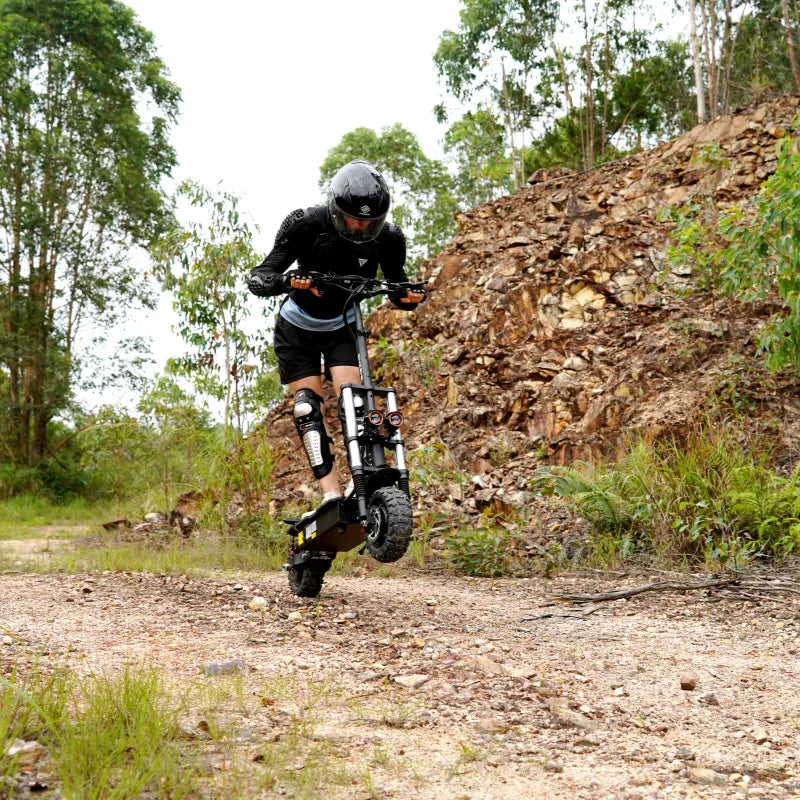
If you're searching for a fast e scooter for adults, you already know the market is flooded with options that all claim to be the fastest, the longest-range, and the best value. The truth? Most of them aren't built for real adults with real commutes, real hills, and real weight. This guide cuts through the noise. Whether you're a daily commuter, a weekend trail rider, or someone who just wants to stop sitting in traffic, we'll help you figure out which high-speed electric scooter actually fits your life — not just your wishlist.

Table of Contents
- What Actually Makes an E Scooter Fast?
- Who Actually Needs a High-Speed Electric Scooter?
- Speed vs. Range: The Trade-Off Nobody Talks About
- 2026 High-Speed E Scooter Comparison Table
- Single Motor vs. Dual Motor: Which Is Right for You?
- Suspension & Tires: Why They Matter More Than Speed
- Use Cases: Matching the Scooter to Your Lifestyle
- Buying Guide: 7 Things to Check Before You Buy
- Pros & Cons Breakdown
- FAQ
1. What Actually Makes an E Scooter Fast?
Speed on an electric scooter isn't just about the number printed on the spec sheet. Three core factors determine how fast a scooter actually feels and performs in the real world:
Motor Wattage (Peak vs. Continuous)
Most brands advertise peak wattage — the maximum output the motor can sustain for a few seconds. Continuous wattage is what the motor delivers over a sustained ride. A scooter rated at 6000W peak might only deliver 2000W continuously. When comparing scooters, always ask: what's the continuous output? That's what determines hill-climbing ability and sustained top speed.
Battery Voltage & Capacity
Higher voltage (60V vs. 48V) means more power delivery to the motor. Larger capacity (measured in Ah) means longer range. A 60V 33Ah battery will outperform a 52V 20Ah battery in both speed and range — but it also adds weight. This is the core trade-off in high-performance scooter design.
Controller Amperage
The controller is the brain between the battery and motor. A 43A controller on a 60V system can push significantly more power than a 30A controller on the same voltage. This is often the hidden differentiator between scooters with identical motor ratings.
Bottom line: A truly fast e scooter for adults needs all three — high-voltage battery, powerful motor, and a capable controller — working together.
2. Who Actually Needs a High-Speed Electric Scooter?
Before you spend $1,000–$2,000+ on a high-speed scooter, it's worth being honest about your actual use case. Here's a breakdown of who benefits most:
- Daily commuters (5–20 miles each way): You need range and reliability more than raw top speed. A scooter that does 35–45 MPH with 50+ miles of range is more practical than one that hits 55 MPH but drains in 25 miles.
- Last-mile riders: If you're connecting to public transit, a lighter, foldable scooter in the 25–35 MPH range is often more practical than a 50+ MPH beast that weighs 100+ lbs.
- Off-road / trail riders: You need torque, suspension, and tire grip more than top speed. A dual-motor scooter with full suspension and 12" tires will outperform a fast-but-rigid scooter on any unpaved surface.
- Enthusiasts and performance riders: You want the fastest, most powerful scooter available and you're willing to manage the weight and charging time that comes with it.
- Heavier riders (200+ lbs): Motor power and load capacity matter significantly. A scooter rated for 265 lbs will underperform for a 220 lb rider on hills. Look for 550 lb load ratings for real-world headroom.
3. Speed vs. Range: The Trade-Off Nobody Talks About
Here's something most buying guides skip: riding at top speed dramatically reduces your range. A scooter rated for 60 miles of range is typically tested at 15–20 MPH on flat ground with a 165 lb rider. If you're riding at 40+ MPH with a 200 lb rider on hilly terrain, expect 40–50% less range.
This matters when comparing scooters. A 70-mile rated range at 55 MPH top speed might deliver 35–40 real-world miles at aggressive riding speeds. Plan accordingly — especially if you're commuting and can't charge mid-route.
Practical rule of thumb: Divide the rated range by 1.5 to get a conservative real-world estimate for mixed-speed riding.
4. 2026 High-Speed E Scooter Comparison Table
Below is a comparison of the most relevant high-speed adult electric scooters in the $1,000–$2,500 range for 2026. We've focused on specs that actually matter for real-world riding.
| Model | Motor | Top Speed | Range | Battery | Tires | Load | Weight | Price |
|---|---|---|---|---|---|---|---|---|
| ONECNA GT8 PRO | 6000W Dual | 50 MPH | 60 mi | 60V 33Ah | 11" Off-Road | 550 lbs | 93.7 lbs | $1,349 |
| ONECNA GT9 | 7000W Dual | 55 MPH | 70 mi | 60V 38Ah | 12" Off-Road | 550 lbs | 111.3 lbs | $1,679 |
| Kaabo Wolf King GT Pro | 5400W Dual | 56 MPH | 93 mi | 72V 35Ah | 11" Pneumatic | 330 lbs | 101 lbs | ~$2,499 |
| Dualtron Thunder 2 | 6640W Dual | 50 MPH | 75 mi | 72V 35Ah | 11" Pneumatic | 265 lbs | 95 lbs | ~$2,999 |
| Segway GT2 | 3000W Dual | 43.5 MPH | 65.2 mi | 60V 23.2Ah | 11" Pneumatic | 265 lbs | 77 lbs | ~$1,999 |
*Competitor specs sourced from manufacturer listings. Real-world performance varies by rider weight, terrain, and speed.
5. Single Motor vs. Dual Motor: Which Is Right for You?

This is one of the most common questions from first-time high-performance scooter buyers. Here's the honest breakdown:
Single Motor (1000W–2000W)
Best for: Flat urban commutes, lighter riders (under 180 lbs), riders who prioritize portability and charging speed.
Pros: Lighter weight, faster charging, lower cost, simpler maintenance.
Cons: Struggles on steep hills (15%+ grade), slower acceleration, lower top speed ceiling.
Dual Motor (4000W–7000W+)
Best for: Hilly terrain, heavier riders, off-road use, riders who want maximum acceleration and top speed.
Pros: Dramatically better hill climbing (40–45° grade), faster 0–30 MPH acceleration, better traction on loose surfaces, higher load capacity.
Cons: Heavier (90–115 lbs), longer charge times (6–8 hours), higher price point.
The verdict: If you're riding on anything other than perfectly flat pavement, or if you weigh over 200 lbs, a dual-motor scooter is worth the premium. The performance difference on hills alone justifies the cost for most riders.
6. Suspension & Tires: Why They Matter More Than Speed

Here's a counterintuitive truth: at 40+ MPH, suspension quality matters more than an extra 5 MPH of top speed. A scooter that hits 55 MPH on a rigid frame with no suspension is genuinely dangerous on anything but perfect pavement. A scooter that tops out at 50 MPH with full front-and-rear suspension is dramatically more rideable, safer, and more comfortable over real-world roads.
Suspension Types
- No suspension: Fine for smooth bike paths under 20 MPH. Avoid for anything faster or rougher.
- Front suspension only: A meaningful improvement, but rear impacts still transfer directly to the rider.
- Full suspension (front + rear): The standard for any scooter intended for 35+ MPH riding. Absorbs road imperfections, reduces rider fatigue, and improves control at speed.
Tire Size & Type
- 8"–10" tires: Common on commuter scooters. Adequate for smooth surfaces.
- 11" tires: Better shock absorption, improved stability at speed, suitable for light off-road use.
- 12" tires: Maximum stability and off-road capability. The larger contact patch improves braking and cornering at high speeds.
Pneumatic (air-filled) tires absorb road vibration far better than solid tires. For any scooter you plan to ride above 30 MPH, pneumatic tires are non-negotiable.
7. Use Cases: Matching the Scooter to Your Lifestyle

🏙️ Urban Commuter (5–15 miles daily)
What you need: 30–45 MPH top speed, 40+ mile range, foldable design, reliable brakes.
What to skip: You don't need 55 MPH or 70-mile range for a 10-mile commute. Save the money or invest it in a better lock and accessories.
Good fit: A 6000W dual-motor scooter like the GT8 PRO gives you more than enough performance for urban use, with the added benefit of handling hills and heavier loads without strain.
🌲 Off-Road / Trail Rider
What you need: Full suspension, 11"+ tires, 40°+ hill climbing, high load capacity, durable frame.
What to skip: Top speed matters less than torque and suspension travel on trails.
Good fit: A 7000W dual-motor scooter with 12" tires and full suspension handles gravel, dirt paths, and moderate trails with confidence.
🚉 Last-Mile Connector
What you need: Lightweight, foldable, 20–35 MPH, 20+ mile range.
What to skip: High-performance dual-motor scooters are often too heavy (90–115 lbs) to carry onto transit.
Good fit: A mid-range single-motor scooter in the 35–55 lb range is more practical here.
⚡ Performance Enthusiast
What you need: Maximum speed, maximum range, premium brakes, full suspension, high load capacity.
What to skip: Nothing — you want it all.
Good fit: The GT9's 7000W dual motor, 55 MPH top speed, 70-mile range, and 45° hill climbing capability puts it at the top of the performance category in this price range.
8. Buying Guide: 7 Things to Check Before You Buy
Before you commit to any fast e scooter for adults, run through this checklist:
- Verify the load capacity against your actual weight. Add 20–30 lbs of buffer. A scooter rated for 265 lbs will underperform for a 240 lb rider, especially on hills.
- Check for UL2272 certification. This is the US safety standard for electric scooters. It covers electrical system safety, fire resistance, and water resistance. Non-certified scooters carry real risk.
- Confirm the brake type. Hydraulic disc brakes are the standard for any scooter above 35 MPH. Mechanical disc brakes are acceptable. Drum brakes are not adequate for high-speed riding.
- Ask about the warranty and parts availability. A 2-year warranty with accessible replacement parts is the minimum for a $1,000+ purchase. Verify that the brand stocks parts domestically.
- Understand your local regulations. Many US cities and states cap e-scooter speeds at 15–25 MPH on public roads. A 50 MPH scooter may be legal to own but not to ride on public streets in your area.
- Factor in charging infrastructure. A 60V 33Ah battery takes 6–8 hours to charge. If you need to charge at work or mid-commute, verify outlet access and charging time against your schedule.
- Test the folding mechanism if portability matters. Some high-performance scooters fold but are too heavy to carry comfortably. If you need to lift it regularly, weigh the scooter against your realistic carrying capacity.
9. Pros & Cons Breakdown
High-Speed E Scooters (45+ MPH) — General
| ✅ Pros | ❌ Cons |
|---|---|
|
|
ONECNA GT8 PRO — Specific
| ✅ Pros | ❌ Cons |
|---|---|
|
|
ONECNA GT9 — Specific
| ✅ Pros | ❌ Cons |
|---|---|
|
|

Who Should Buy Which?
Here's a simple decision framework:
- Buy the GT8 PRO if: You want maximum value, you're primarily riding on roads and light trails, and you want a proven 6000W platform at the lowest entry price in this performance tier.
- Buy the GT9 if: You want the most powerful scooter in this price range, you ride on varied terrain including dirt and gravel, you're a heavier rider who wants maximum headroom, or you simply want the best.
- Buy a competitor if: You need something lighter for transit connections, or you're on a strict budget under $1,000 and a mid-range single-motor scooter fits your actual use case.
FAQ: Fast E Scooters for Adults
What is the fastest e scooter for adults available in 2026?
In the mainstream consumer market (under $3,000), scooters like the ONECNA GT9 (55 MPH) and Kaabo Wolf King GT Pro (56 MPH) represent the top of the speed range. Purpose-built performance scooters can exceed 60–80 MPH, but these are typically not street-legal and require specialized riding experience.
Are fast electric scooters legal to ride on public roads?
It depends on your location. In most US states, electric scooters are limited to 15–25 MPH on public roads and bike lanes. High-speed scooters (45+ MPH) are often legal to own but restricted to private property, closed courses, or specific road types. Always check your local and state regulations before riding at speed on public roads.
How long does a high-performance e scooter battery last?
Most lithium-ion scooter batteries are rated for 500–800 charge cycles before capacity degrades to ~80%. At one charge per day, that's roughly 1.5–2 years of daily use. Proper charging habits (not storing at 0% or 100% for extended periods) can extend battery life significantly.
What's the real-world range of a 60-mile rated scooter?
Expect 35–45 miles of real-world range if you're riding at 30–40 MPH with a 180–220 lb rider on mixed terrain. Range ratings are typically measured at 15–20 MPH on flat ground with a lighter test rider. The faster you ride, the more power you consume.
Do I need a license to ride a fast electric scooter?
In most US states, electric scooters under a certain speed threshold (typically 30 MPH) don't require a motorcycle license. Above that threshold, requirements vary by state. Some states classify high-speed e-scooters as motor vehicles requiring registration and insurance. Check your state's DMV guidelines.
How much does a good fast e scooter for adults cost?
Quality high-speed adult electric scooters (40+ MPH, dual motor, full suspension) typically range from $1,200 to $3,000. Below $1,000, you're generally looking at single-motor scooters with lower top speeds and load capacities. The $1,300–$1,800 range currently offers the best performance-to-value ratio in the market.
What safety gear should I wear on a fast electric scooter?
At 40+ MPH, treat it like a motorcycle: full-face helmet (DOT or ECE certified), gloves, knee and elbow pads, and ideally a riding jacket with CE-rated armor. The stopping distance at 50 MPH is significant — gear that feels excessive at 15 MPH is appropriate at 50 MPH.
Is a dual-motor scooter worth the extra cost?
For most riders who plan to ride on anything other than perfectly flat pavement, yes. The hill-climbing improvement alone (from ~15° on single-motor to 40–45° on dual-motor) makes a meaningful difference in real-world usability. The added traction on wet surfaces is a safety benefit that's hard to quantify but genuinely valuable.
Share:
E Scooter Throttle Repair: How to Fix a Faulty Electric Scooter Throttle in 2026
What Is an E Scooter? A Complete Beginner's Guide to Electric Scooters in 2026