




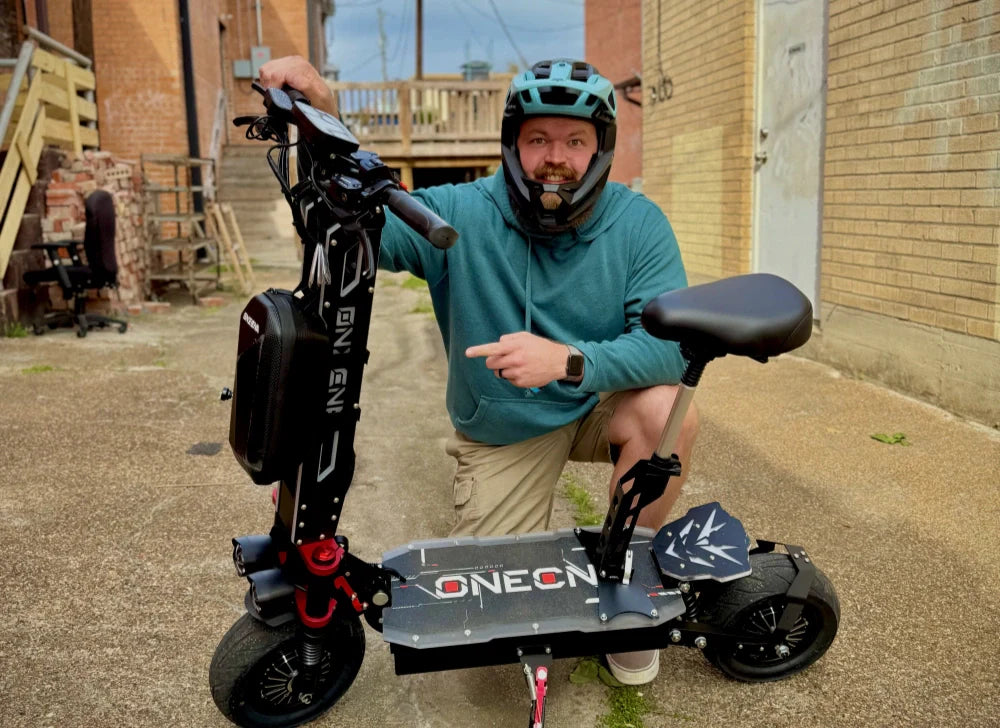
Product Review: The Elite Off-Road Electric Scooter GT9
If you've been searching for a capable off-road electric scooter GT9 review that goes beyond spec sheets, you're in the right place. The GT9 is a dual-motor, 12-inch tire adult scooter built for riders who want more than smooth pavement — and this guide will help you decide whether it actually delivers on that promise, or whether a different machine fits your needs better.

📋 Article Outline at a Glance
- What is the GT9 and who is it designed for?
- Key specs breakdown — what the numbers actually mean
- Real-world performance: terrain, range, and ride quality
- GT9 vs. comparable off-road scooters: honest comparison
- Pros and cons — no sugarcoating
- Buying guide: 5 questions to ask before purchasing any off-road scooter
- Use cases: who should (and shouldn't) buy the GT9
- FAQ
What Is the GT9 — And Why Does It Matter?
The off-road electric scooter category has exploded in the past three years. What started as a niche product for extreme sports enthusiasts has evolved into a legitimate transportation and recreation tool for a much wider audience — trail hikers, suburban commuters on unpaved roads, campus riders, and weekend adventurers alike.
The GT9 sits in the upper-mid tier of this market. It's not the cheapest option, and it's not trying to be. It's engineered around a dual-motor drivetrain, 12-inch pneumatic off-road tires, and a suspension system designed to absorb the kind of punishment that would destroy a standard commuter scooter in a single ride.
The core question this review answers: Is the GT9 the right off-road scooter for your specific situation? That depends on terrain, riding style, budget, and how you weigh performance against portability.
Key Specs — What the Numbers Actually Mean
Spec sheets can be misleading. Here's how to interpret the GT9's core numbers in practical terms:
| Spec | GT9 Value | What It Means in Practice |
|---|---|---|
| Motor Configuration | Dual Motor | Front + rear drive = better traction on loose dirt, gravel, and wet surfaces |
| Tire Size | 12" Pneumatic | Larger air-filled tires absorb bumps and grip uneven terrain far better than solid tires |
| Rider Type | Adult | Built for riders 16+ with higher weight capacity and a more stable platform |
| Variants | With / Without Seat | Seat option adds comfort for longer rides; seatless is lighter and more agile |
| Price Range | $1,649 – $1,749 | Upper-mid tier; competitive for dual-motor off-road class |

The GT9's front and rear suspension system is one of its most distinguishing features — critical for absorbing trail impacts that would otherwise transfer directly to the rider.
Real-World Performance: Terrain, Range, and Ride Quality
🏔️ Terrain Handling
Dual-motor scooters like the GT9 have a meaningful advantage on mixed terrain. Single-motor scooters rely entirely on rear-wheel traction, which can break loose on gravel, wet grass, or loose dirt. With power distributed to both wheels, the GT9 maintains grip in conditions where single-motor alternatives struggle.
That said, it's important to set realistic expectations: the GT9 is an off-road-capable scooter, not a full mountain bike replacement. It handles packed dirt trails, gravel paths, grass, and moderate inclines confidently. Deep mud, rocky technical trails, or steep descents above 20–25% grade are outside its design envelope.
🔋 Range Considerations
Range on any electric scooter is highly variable. Manufacturer-stated ranges are typically measured under ideal conditions: flat terrain, moderate speed, single rider at average weight. In real-world off-road use, expect 20–35% less range than the stated figure due to:
- Increased motor load on inclines and rough terrain
- Dual-motor power draw vs. single-motor
- Rider weight and cargo
- Temperature (cold weather reduces battery efficiency)
Plan your rides conservatively until you've established your personal range baseline on your typical terrain.
🛞 Ride Quality
The 12-inch pneumatic tires make a noticeable difference compared to the 8–10-inch solid tires common on budget scooters. Combined with front and rear suspension, the GT9 delivers a ride that's genuinely comfortable on rough surfaces — not just "tolerable."

GT9 vs. Comparable Off-Road Electric Scooters
No review is complete without honest comparison. Here's how the GT9 stacks up against the general categories of competitors in its price range:
| Factor | GT9 | Budget Off-Road ($800–$1,100) | Premium Off-Road ($2,000+) |
|---|---|---|---|
| Motor Setup | Dual ✅ | Usually single | Dual or triple |
| Tire Size | 12" pneumatic ✅ | 8–10" solid or pneumatic | 11–13" pneumatic |
| Suspension | Front + Rear ✅ | Front only or none | Full suspension |
| Seat Option | Available ✅ | Rarely | Often included |
| Parts Availability | Dedicated parts store ✅ | Variable / limited | Brand-dependent |
| Value for Money | Strong ✅ | Good entry point | Best performance, highest cost |
Key takeaway: The GT9 occupies a sweet spot — it delivers dual-motor performance and full suspension that budget scooters can't match, without the $2,000+ price tag of flagship models. The trade-off is that it won't out-perform purpose-built premium machines on extreme terrain.
Honest Pros and Cons
✅ What the GT9 Does Well
- Dual-motor traction — genuinely better grip on loose or uneven surfaces compared to single-motor alternatives
- 12-inch pneumatic tires — larger contact patch and air cushioning make a real difference in ride comfort
- Front and rear suspension — not just a marketing checkbox; the suspension is tuned for actual off-road use
- Seat variant available — useful for longer rides or riders who prefer a seated position
- Dedicated parts ecosystem — controllers, chargers, tires, brakes, and displays are available separately, which matters for long-term ownership
- Competitive pricing — dual-motor off-road scooters at this spec level typically cost more elsewhere
⚠️ Where to Temper Expectations
- Weight — dual-motor off-road scooters are heavier than commuter models; portability is limited
- Not for extreme technical trails — designed for off-road capable use, not downhill mountain biking-style terrain
- Real-world range varies — off-road riding will reduce range meaningfully vs. flat pavement
- Learning curve — dual-motor power delivery requires some adjustment if you're coming from a single-motor scooter

Buying Guide: 5 Questions to Ask Before Buying Any Off-Road Electric Scooter
Before committing to any off-road scooter — GT9 or otherwise — work through these five questions. They'll clarify what actually matters for your situation.
1. What terrain will you actually ride on?
Be honest. Most riders overestimate how extreme their terrain is. Gravel paths, packed dirt, grass, and moderate hills? A dual-motor scooter with pneumatic tires handles this well. Rocky technical descents or deep mud? You may need a purpose-built off-road vehicle instead.
2. How far do you need to go per charge?
Calculate your typical ride distance, then add 30% buffer for off-road conditions. If your route is 15 miles round-trip on rough terrain, you need a scooter rated for at least 20+ miles under ideal conditions.
3. Do you need to carry the scooter?
Off-road scooters are heavy. If you need to carry it up stairs, load it into a car trunk frequently, or travel with it, weight matters enormously. Check the folded dimensions and weight before purchasing.
4. What's your long-term maintenance plan?
Pneumatic tires get flats. Brakes wear. Controllers fail. Before buying any scooter, verify that replacement parts are available and reasonably priced. This is one area where buying from a brand with a dedicated parts store — rather than a generic import — pays off over time.
5. Seated or standing?
For rides under 20–30 minutes, standing is fine for most riders. For longer adventures, a seat option dramatically improves comfort. Consider how you'll primarily use the scooter before choosing a variant.

Use Cases: Who Should (and Shouldn't) Buy the GT9
👍 The GT9 is a strong fit if you are:
- A suburban or rural commuter dealing with unpaved roads, gravel driveways, or rough bike paths
- A recreational trail rider who wants to explore packed dirt trails, parks, and campgrounds
- A campus or large property rider covering significant distances on mixed surfaces
- Someone who wants dual-motor performance without a $2,000+ price tag
- A rider who values long-term serviceability and wants access to replacement parts
👎 The GT9 may not be the best fit if you are:
- A pure urban commuter on smooth pavement — a lighter, more portable scooter will serve you better
- Looking for an extreme off-road machine for technical mountain trails — consider a purpose-built option
- On a tight budget — there are capable single-motor options at lower price points if your terrain is moderate
- Someone who needs to carry the scooter frequently — the weight of a dual-motor off-road scooter is a real consideration

Final Verdict
The GT9 is a well-engineered off-road electric scooter that delivers genuine dual-motor capability, serious suspension, and long-term serviceability at a price point that undercuts most comparable alternatives. It's not the lightest, not the cheapest, and not designed for extreme technical terrain — but for the rider who wants a capable, durable machine for mixed-surface adventures and rough commutes, it's a compelling option worth serious consideration.
The most important thing isn't whether the GT9 is "the best" scooter — it's whether it's the right scooter for your terrain, your ride distance, and your lifestyle. Use the buying guide questions above to make that call with confidence.
❓ FAQ
Q: Is the GT9 good for beginners?
A: The GT9 is manageable for beginners who are comfortable with the concept of electric scooters, but its dual-motor power delivery is more aggressive than entry-level models. New riders should start in single-motor mode (if available) or at lower speed settings and build up gradually. It's not the ideal first scooter for someone who has never ridden an electric scooter before.
Q: How does dual-motor compare to single-motor for off-road use?
A: Dual-motor scooters distribute power to both wheels, which significantly improves traction on loose, wet, or uneven surfaces. Single-motor scooters rely entirely on rear-wheel drive, which can lose grip in challenging conditions. For genuine off-road use, dual-motor is a meaningful advantage — not just a marketing claim.
Q: Can I use the GT9 for daily commuting on pavement?
A: Yes, but it's over-engineered for that purpose. The GT9 will handle pavement commuting without issue, but you'll be carrying extra weight and spending more than necessary if smooth pavement is your only terrain. If you split time between pavement and off-road, it's a reasonable all-rounder.
Q: What's the difference between the seated and non-seated GT9 variants?
A: The seat-equipped variant ($1,749) adds a saddle for a more comfortable riding position on longer trips. The seatless variant ($1,649) is slightly lighter and more agile. If your rides are typically under 30 minutes, the seatless version is fine. For longer adventures or riders with back concerns, the seat is worth the $100 premium.
Q: How important is parts availability when buying an off-road scooter?
A: Extremely important, and often overlooked. Off-road riding accelerates wear on tires, brakes, and electronics. If replacement parts aren't available — or are prohibitively expensive — a scooter becomes disposable rather than a long-term investment. Always verify parts availability before purchasing any scooter, regardless of brand.
Q: What maintenance does an off-road electric scooter require?
A: Regular maintenance includes checking tire pressure (pneumatic tires lose pressure over time), inspecting brake pads for wear, keeping the battery charged within the recommended range (typically 20–80% for longevity), and periodically checking all bolts and connections — off-road vibration can loosen hardware over time. Most maintenance is straightforward and doesn't require professional service.
Q: How do I know if an off-road scooter is powerful enough for my terrain?
A: The key metrics are motor wattage (higher = more hill-climbing ability), torque (determines acceleration and traction), and tire size (larger tires handle rougher terrain better). For moderate off-road use — gravel, packed dirt, grass, gentle hills — a dual-motor scooter with 12-inch tires is generally sufficient. For steep or technical terrain, look for higher peak wattage and purpose-built suspension.
Share:
Best Electric Scooters for Heavy Riders Up to 550 lbs
Top 5 Electric Scooters for Urban Commuters in 2026