




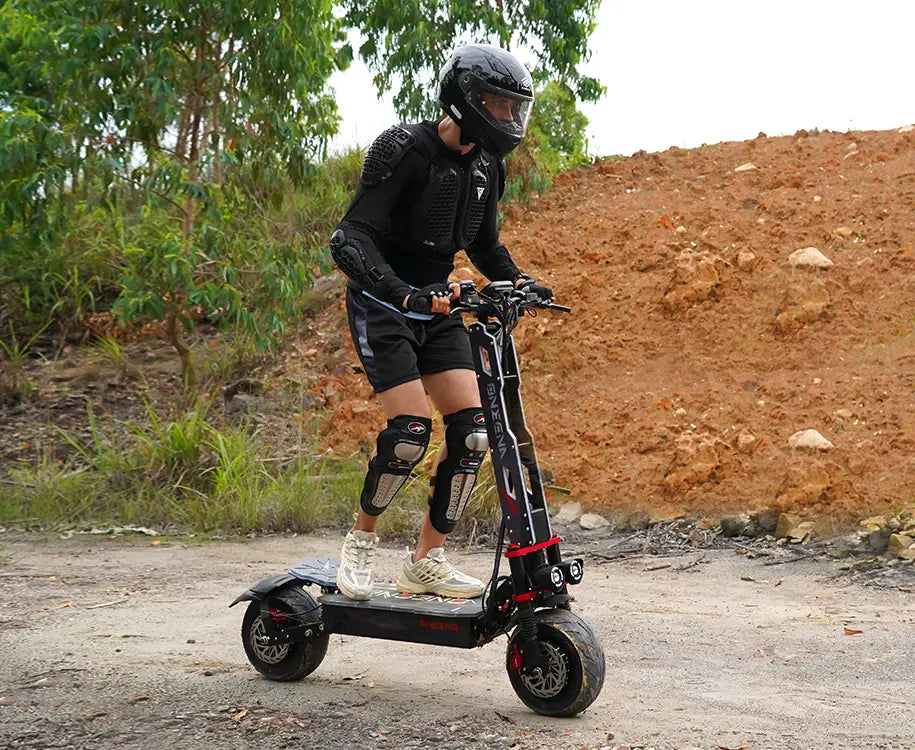
Top 5 Electric Scooters for Urban Commuters in 2026
If you've been searching for the best electric scooters for urban commuters in 2026, you already know the problem: every brand claims to be the fastest, the longest-range, the most portable. The reality is more nuanced — and the "best" scooter depends almost entirely on how, where, and how far you actually ride. This guide cuts through the noise with an honest, side-by-side comparison of five strong options across the metrics that matter most for city commuting.

📋 Article Outline at a Glance
- What makes a scooter genuinely good for urban commuting?
- The 5 metrics that actually matter (and why)
- Top 5 electric scooters for urban commuters in 2026 — compared
- Head-to-head comparison table
- Pros and cons for each category
- Buying guide: how to match a scooter to your commute
- Use cases: which rider profile fits which scooter?
- FAQ
What Makes an Electric Scooter Actually Good for Urban Commuting?
"Urban commuting" covers a wide range of real-world scenarios. A 2-mile flat ride through a dense downtown core has almost nothing in common with a 12-mile mixed-terrain commute that includes hills, bike lanes, and a subway transfer. Before comparing any scooters, it helps to define what urban commuting actually demands:
- Consistent range — not manufacturer-ideal range, but real-world range under load, at speed, on varied terrain
- Portability — can you carry it up stairs, fold it quickly, store it under a desk or in a locker?
- Motor power for hills — flat cities and hilly cities are completely different environments
- Ride comfort on imperfect roads — city streets are rarely smooth; tire size and suspension matter
- Braking reliability — stop-and-go traffic demands consistent, predictable braking
- Long-term serviceability — can you get replacement parts, or is the scooter disposable after 18 months?
With those criteria in mind, here's how to evaluate the five most relevant scooter categories for 2026 urban commuters.
The 5 Metrics That Actually Matter
1. Real-World Range (Not Rated Range)
Manufacturer range figures are measured under ideal conditions: flat terrain, 165 lb rider, moderate speed, room temperature. In real urban use — hills, stop-and-go acceleration, heavier riders, cold mornings — expect 25–40% less. A scooter rated at 28 miles may deliver 17–20 miles in daily commuting conditions. Always calculate your round-trip distance and add a 30% buffer when evaluating range claims.
2. Motor Power and Hill Climbing
For flat cities, 500–750W is sufficient. For cities with meaningful inclines (5–15% grades), you want 1000W or more. Dual-motor configurations add traction and climbing ability but also add weight and reduce range. Match motor power to your actual terrain, not the maximum possible scenario.
3. Folded Weight and Dimensions
A scooter you can't carry isn't truly portable. If your commute involves stairs, transit, or loading into a vehicle, the folded weight and dimensions are as important as any performance spec. Under 30 lbs is manageable for most adults; over 40 lbs becomes a genuine burden for daily carry.
4. Tire Type and Size
Solid tires: zero flats, lower maintenance, harsher ride. Pneumatic (air-filled) tires: better comfort and grip, require pressure checks, can puncture. For urban commuting on mostly paved roads, 10-inch pneumatic tires offer a good balance. Larger tires (12"+) are better for mixed terrain but add weight.
5. Parts Availability and Repairability
This is the most overlooked factor in scooter buying decisions. Brakes wear. Tires puncture. Displays fail. If replacement parts aren't available — or cost nearly as much as a new scooter — you're buying a disposable product. Prioritize brands that sell parts separately and have documented repair resources.

Top 5 Electric Scooter Categories for Urban Commuters in 2026
Rather than ranking by brand alone, this comparison organizes scooters by the commuter profile they serve best — because the "top" scooter is always relative to the rider.
Category 1: The Budget-Friendly Short-Range Commuter
Best for: Riders with commutes under 10 miles on flat terrain who prioritize low cost and light weight.
Entry-level commuter scooters in the $300–$500 range typically offer 500–750W motors, 8–10 inch tires, and 15–20 mile rated range. They're light (22–28 lbs), fold quickly, and are easy to carry. The trade-offs are real: limited hill-climbing ability, shorter real-world range, and often minimal suspension. For a flat 5-mile office commute, they're entirely adequate. For anything more demanding, they'll frustrate you within weeks.
Pros: Affordable, lightweight, easy to store
Cons: Struggles on hills, limited range buffer, fewer parts available
Category 2: The Mid-Range All-Rounder (1000W Class)
Best for: Riders with 10–20 mile commutes on mixed terrain who want a balance of performance and portability.
This is the most competitive segment in 2026. Scooters in the $500–$700 range with 1000W motors, 10-inch pneumatic tires, and 30–40 mile rated range represent the sweet spot for most urban commuters. They handle moderate hills (up to 20–25% grade), deliver real-world range of 20–28 miles, and remain portable enough for transit use. The ONECNA T3, for example, fits this profile: 1000W motor, 48V 16Ah battery, 40-mile rated range, and a full aluminum alloy foldable frame at $549.
Pros: Strong real-world range, handles hills, good value
Cons: Heavier than budget options, higher upfront cost

Category 3: The High-Performance Single-Motor Commuter (1200W Class)
Best for: Riders who prioritize speed and hill-climbing over maximum portability, with commutes up to 25 miles.
Stepping up to 1200W motors delivers noticeably better acceleration and hill-climbing confidence. Top speeds in the 30–32 MPH range make these scooters viable for longer urban routes and mixed road/bike-lane commutes. The trade-off is typically a few extra pounds and a higher price point ($500–$800). For riders who regularly encounter 15–30% grade hills or want a meaningful speed buffer, this class is worth the premium over 1000W options.
Pros: Strong acceleration, confident hill climbing, higher top speed
Cons: Slightly heavier, higher cost, range can drop faster at higher speeds
Category 4: The Dual-Motor Urban-to-Trail Crossover
Best for: Riders whose commute includes unpaved sections, rough bike paths, or significant elevation changes.
Dual-motor scooters distribute power to both wheels, providing traction advantages on loose or uneven surfaces that single-motor scooters can't match. In 2026, this category has become more accessible — you no longer need to spend $2,000+ to get dual-motor capability. The trade-off is weight (typically 45–65 lbs) and reduced portability. These are not "carry up three flights of stairs" scooters; they're "ride to the parking garage and lock it up" scooters.
Pros: Superior traction, handles rough terrain, more versatile
Cons: Heavy, less portable, higher power consumption reduces range
Category 5: The Premium Long-Range Commuter ($800–$1,200)
Best for: Riders with long commutes (20–35 miles), demanding terrain, or who want a scooter that doubles as a weekend recreation vehicle.
Premium commuter scooters in this range typically offer larger battery packs (20Ah+), higher-quality suspension, better displays, and more refined build quality. They're not dramatically faster than mid-range options, but they deliver more consistent performance over time and under varied conditions. If your commute is genuinely long or you want a scooter that will still feel capable in three years, this investment makes sense.
Pros: Best real-world range, premium build quality, long-term durability
Cons: Significant upfront cost, heavier, overkill for short commutes

Head-to-Head Comparison Table
| Category | Motor | Rated Range | Real-World Range | Portability | Price Range | Best For |
|---|---|---|---|---|---|---|
| Budget Short-Range | 500–750W | 15–20 mi | 10–14 mi | ⭐⭐⭐⭐⭐ | $300–$500 | Flat, short commutes |
| Mid-Range All-Rounder | 1000W | 30–40 mi | 20–28 mi | ⭐⭐⭐⭐ | $500–$700 | Mixed terrain, 10–20 mi |
| High-Performance Single | 1200W | 25–35 mi | 18–25 mi | ⭐⭐⭐⭐ | $500–$800 | Hills, speed priority |
| Dual-Motor Crossover | Dual | 30–50 mi | 20–35 mi | ⭐⭐ | $900–$1,800 | Rough terrain, versatility |
| Premium Long-Range | 1000–1500W | 40–60 mi | 28–42 mi | ⭐⭐⭐ | $800–$1,200 | Long commutes, durability |
Pros and Cons for Each Category
Here's a quick-reference summary of the honest trade-offs for each commuter scooter category:
| Category | Key Pros | Key Cons |
|---|---|---|
| Budget Short-Range | Lightest, cheapest, easiest to carry | No hills, short real range, limited parts |
| Mid-Range All-Rounder | Best value, handles most commutes | Heavier than budget, not for extreme terrain |
| High-Performance Single | Speed + hill confidence, still portable | Range drops at high speed, costs more |
| Dual-Motor Crossover | Best traction, handles rough terrain | Heavy, not transit-friendly, expensive |
| Premium Long-Range | Best range, most durable long-term | High cost, overkill for short commutes |
Buying Guide: How to Match a Scooter to Your Commute
Use these four questions to narrow your decision before you look at a single spec sheet.
Step 1 — Map Your Actual Route
Measure your real commute distance (round trip), note the elevation change, and identify the surface types: smooth pavement, rough asphalt, gravel, bike paths. This single exercise eliminates most of the wrong options immediately. A 6-mile flat commute and a 14-mile hilly commute require completely different scooters.
Step 2 — Decide on Your Portability Requirement
Answer honestly: will you carry this scooter? Up stairs? On transit? Into an office? If yes, weight is a hard constraint — stay under 35 lbs. If the scooter lives in a garage or locked outside, weight matters less and you can prioritize performance.
Step 3 — Calculate Your Real Range Need
Take your round-trip distance, multiply by 1.4 (to account for real-world range reduction), and that's your minimum rated range requirement. If your round trip is 16 miles, you need a scooter rated for at least 22–23 miles. Don't cut it close — range anxiety on a commute is genuinely stressful.
Step 4 — Factor in Total Cost of Ownership
A $400 scooter that needs a $120 tire replacement every 6 months and has no available brake pads costs more over two years than a $600 scooter with a robust parts ecosystem. Before buying, search for replacement parts for the specific model. If you can't find them easily, that's a red flag.

Use Cases: Which Rider Profile Fits Which Scooter?
🏙️ The Office Commuter (5–12 miles, flat city)
You ride to work, lock up or bring the scooter inside, and ride home. Your terrain is mostly paved. You may use transit for part of the journey. Best fit: Mid-range 1000W class. Enough range buffer, handles the occasional hill, portable enough for transit. The budget class works if your commute is under 8 miles and truly flat.
🏫 The Campus Rider
You cover a large campus or university area, often on mixed surfaces — paths, grass edges, rough pavement. Distance is moderate (3–8 miles total), but terrain variety matters. Best fit: Mid-range 1000W with pneumatic tires. The tire type matters more than motor power here.
⛰️ The Hilly City Commuter
San Francisco, Seattle, Pittsburgh — cities where hills are unavoidable. A 500W scooter will struggle and overheat on sustained climbs. Best fit: 1200W single-motor or dual-motor crossover. Don't compromise on motor power if your route has consistent elevation gain.
🚇 The Transit Connector
You ride to a subway or bus stop, fold the scooter, carry it on transit, and ride the last mile. Portability is the primary constraint. Best fit: Budget or mid-range class under 30 lbs. Performance is secondary to how easy it is to carry and fold.
🌆 The Long-Distance Urban Commuter (15–30 miles)
Your commute is genuinely long. Range anxiety is real. You need a scooter that delivers consistent performance over time, not just on day one. Best fit: Premium long-range class. The higher upfront cost is justified by the larger battery and more durable components.

What's Changed in 2026 vs. Previous Years
The electric scooter market has matured significantly. Three trends define the 2026 landscape for urban commuters:
1. Better value at the mid-range. What cost $800 in 2023 now costs $500–$600. The 1000W class has become the new baseline for serious commuters, displacing the 500W class that dominated entry-level buying decisions two years ago.
2. Parts ecosystems are becoming a differentiator. As more riders have experienced the frustration of owning an "orphaned" scooter with no available parts, brands that sell controllers, tires, brakes, and displays separately are gaining a meaningful advantage in buyer trust.
3. Dual-motor has become more accessible. The price gap between single and dual-motor scooters has narrowed. Riders who previously couldn't justify the premium are now reconsidering, especially for mixed-terrain commutes.
Final Thoughts
The best electric scooter for urban commuting in 2026 isn't a single model — it's the one that matches your specific route, portability needs, and budget. The mid-range 1000W class offers the strongest value for most commuters: enough range, enough power, and enough portability to handle the majority of real-world urban scenarios. Step up to 1200W if hills are a consistent factor; step up to dual-motor if your commute crosses into mixed terrain. Stay in the budget class only if your commute is genuinely short and flat.
Whatever you choose, prioritize parts availability and build quality over headline specs. A scooter that's still running reliably in two years is worth more than one with impressive numbers that's collecting dust after 14 months.
❓ FAQ
Q: How do I calculate the real-world range of an electric scooter?
A: Take the manufacturer's rated range and multiply by 0.65–0.75 for a realistic estimate under normal urban conditions (mixed speed, moderate hills, average rider weight). For hilly terrain or heavier riders, use 0.60. Always plan your commute with a 20–30% range buffer to avoid running out of charge.
Q: Is a 1000W motor enough for city commuting?
A: For most urban commuters, yes. A 1000W motor handles flat terrain easily and manages moderate hills (up to 20–25% grade) without significant strain. If your city has consistent steep hills above 25% grade, consider stepping up to 1200W or a dual-motor configuration.
Q: What's the difference between pneumatic and solid tires for commuting?
A: Pneumatic (air-filled) tires absorb road vibration better, provide more grip, and deliver a more comfortable ride — but they can puncture and require periodic pressure checks. Solid tires are maintenance-free and puncture-proof but transmit more road vibration to the rider. For urban commuting on mostly paved roads, pneumatic tires are generally the better choice for comfort.
Q: How important is IP rating (water resistance) for a commuter scooter?
A: More important than most buyers realize. If you commute year-round, you will ride in rain. Look for at least IP54 rating (splash-resistant from all directions). IP65 or higher is better for wet climates. Avoid scooters with no stated IP rating if you plan to ride in anything other than dry conditions.
Q: Should I buy a scooter with a seat for commuting?
A: It depends on your ride duration. For commutes under 20–25 minutes, standing is comfortable for most riders. For longer rides — or if you have back or knee concerns — a seat option significantly improves comfort. Some scooters offer optional seats as add-ons, which gives you flexibility without committing to the seated configuration from day one.
Q: How long do electric scooter batteries last?
A: Most lithium-ion scooter batteries are rated for 500–800 charge cycles before capacity degrades to around 80%. For a daily commuter charging once per day, that's roughly 1.5–2 years before you notice meaningful range reduction. Battery longevity improves significantly if you avoid charging to 100% or depleting to 0% regularly — keeping the battery between 20–80% extends its lifespan.
Q: What's the most overlooked factor when buying a commuter scooter?
A: Parts availability. Most buyers focus on speed, range, and price — and completely ignore whether replacement tires, brake pads, controllers, and displays are available for the specific model they're buying. A scooter with no available parts becomes disposable the moment something breaks. Before purchasing, search for the model name + "replacement parts" and verify that components are actually in stock and reasonably priced.
Q: Are electric scooters legal for commuting in cities?
A: Regulations vary significantly by city and country. In the US, most cities allow electric scooters on bike lanes and roads with speed limits under 25–35 MPH, but rules on maximum speed, helmet requirements, and where you can ride differ by jurisdiction. Always check your local regulations before commuting — and note that regulations have been evolving rapidly as scooter adoption increases.
Share:
Product Review: The Elite Off-Road Electric Scooter GT9
How to Maximize Your Electric Scooter's Performance and Safety