




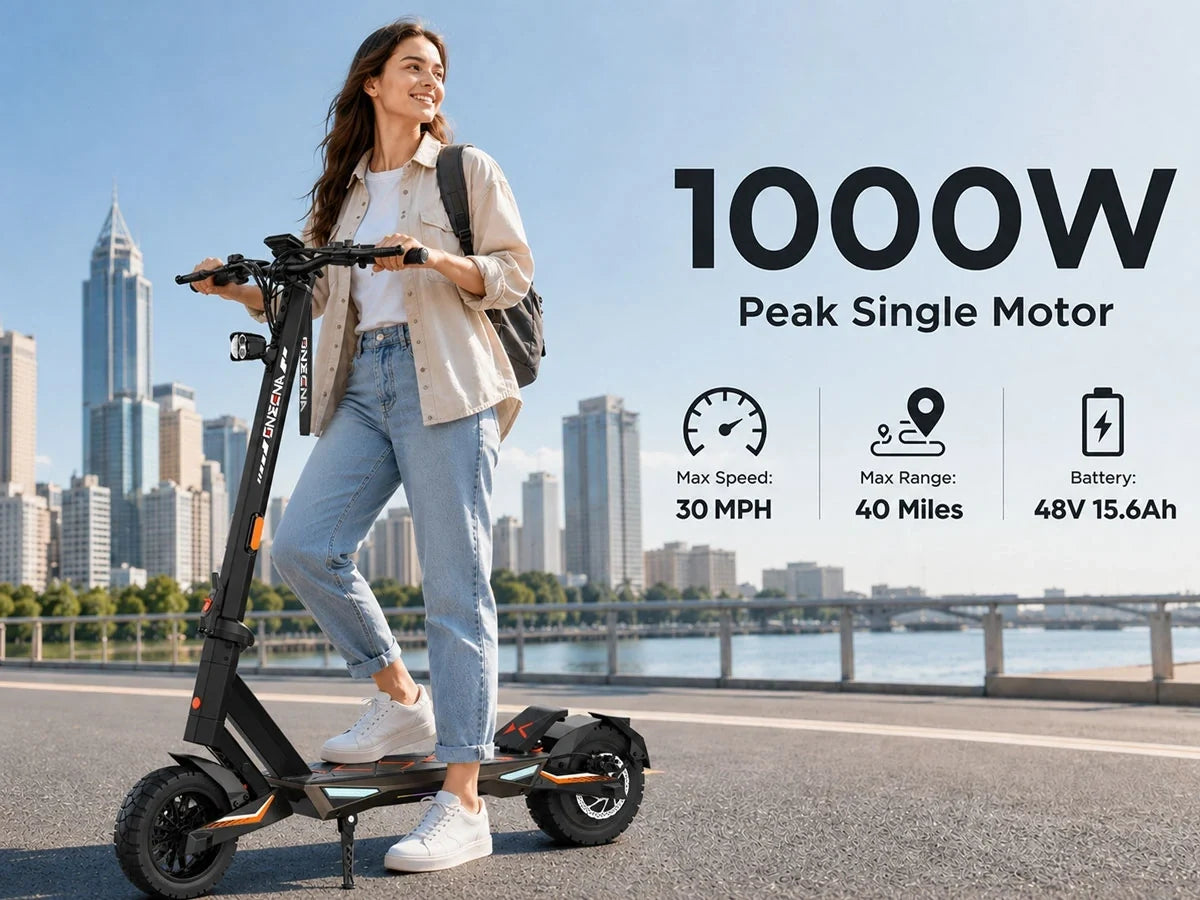
Knowing how to lock an e scooter correctly is the difference between a scooter that's still there when you return and one that isn't. Electric scooter theft is rising in every major U.S. city — and most riders are making the same preventable mistakes. This guide covers how to lock an e scooter using the right hardware, the right technique, and the right mindset, so your ride stays yours no matter where you park it.

Table of Contents
- Why E Scooter Theft Is More Common Than You Think
- The 5 Best Lock Types for Electric Scooters
- How to Lock an E Scooter: Step-by-Step
- Where to Lock Your Scooter (and Where Not To)
- Layered Security: Going Beyond the Lock
- 7 Locking Mistakes That Get Scooters Stolen
- Built-In Anti-Theft Features to Look For
- What to Do If Your E Scooter Is Stolen
- FAQ
Why E Scooter Theft Is More Common Than You Think
Electric scooters are attractive targets for thieves for a straightforward reason: they're valuable, portable, and — when improperly secured — easy to grab and go. A mid-range scooter retails for $400–$1,500. A high-performance dual-motor model can run $2,000 or more. That's a significant payday for someone with bolt cutters and 30 seconds.
According to data from cities with active scooter-share programs, theft and vandalism account for a meaningful percentage of fleet losses annually. Personal scooters face similar risks, especially in dense urban areas where foot traffic provides cover for opportunistic theft.
The good news: most scooter theft is opportunistic, not targeted. Thieves look for the easiest grab. A properly locked scooter — even with a mid-tier lock — is usually enough to make them move on to an easier target.
The core principle: your goal isn't to make your scooter impossible to steal (nothing is). Your goal is to make it harder to steal than the next scooter over.
The 5 Best Lock Types for Electric Scooters
Not all locks are created equal. Here's a breakdown of the main options, their strengths, and where they fit in a security strategy.
1. U-Lock (D-Lock)
The gold standard for urban security. A quality U-lock made from hardened steel resists bolt cutters, angle grinders (to a degree), and leverage attacks. The rigid shape also limits the working space a thief has to apply force.
- Best for: Primary lock in high-theft areas
- Weakness: Limited reach — you need to be near a fixed anchor point
- Recommended brands: Kryptonite, Abus, OnGuard
- Security rating to look for: Sold Secure Gold or equivalent
2. Chain Lock
A heavy-duty chain with a quality padlock offers flexibility that a U-lock can't match. You can loop it through the frame, wheel, and a fixed object in one pass. The tradeoff is weight — a serious chain lock can weigh 3–5 lbs.
- Best for: Overnight parking or situations where anchor points are far from the scooter
- Weakness: Heavy; lower-grade chains can be cut quickly
- Look for: 10mm+ hardened steel links, shrouded padlock
3. Cable Lock
Lightweight and flexible, cable locks are easy to carry but offer minimal real security. A standard cable can be cut in seconds with basic tools. Use them only as a secondary deterrent, never as your primary lock.
- Best for: Low-risk environments, secondary lock only
- Weakness: Easily defeated with wire cutters
4. Folding Lock
A newer category that bridges the gap between U-locks and chains. Folding locks use hardened steel plates linked together, offering more reach than a U-lock with better security than a cable. They fold compactly for transport.
- Best for: Commuters who need portability without sacrificing too much security
- Recommended: Abus Bordo series
5. Disc Brake Lock
A small lock that clamps onto the brake disc, preventing the wheel from rotating. Extremely portable — fits in a pocket. Not a standalone solution (a thief can simply carry the scooter), but excellent as a secondary deterrent and a reminder alarm.
- Best for: Quick stops, secondary layer, alarm function
- Weakness: Doesn't secure the scooter to a fixed object
How to Lock an E Scooter: Step-by-Step
The technique matters as much as the hardware. Here's the correct process:
Step 1: Find a Solid Anchor Point
Your lock is only as strong as what it's attached to. Look for:
- Dedicated bike racks (Sheffield stands, ring-and-post racks)
- Thick metal poles bolted into concrete
- Structural elements of buildings (with permission)
Avoid: thin signposts that can be lifted over, wooden posts, chain-link fencing, or anything that can be cut faster than your lock.
Step 2: Lock Through the Frame, Not Just the Wheel
This is the most common mistake. Locking only through a wheel means a thief can remove the wheel and walk away with the rest of the scooter. Always pass your lock through the main frame — ideally the stem or the deck frame near the rear wheel.
Step 3: Minimize Slack in the Lock
The more space inside your lock, the more leverage a thief can apply. Fill the lock as tightly as possible around the frame and anchor point. A U-lock should have minimal empty space inside the shackle.
Step 4: Position the Lock Keyhole Downward
Pointing the keyhole toward the ground makes it harder to pick and protects the lock mechanism from rain and debris.
Step 5: Add a Secondary Lock
Use a second lock — a cable through the front wheel, a disc brake lock, or a folding lock through the rear wheel — to create a two-lock system. Defeating two different lock types requires two different tools, which dramatically increases the time and effort required.
Step 6: Engage Any Built-In Security Features
Many modern scooters include a built-in lock mode or alarm. Always activate these before walking away, even if you've already applied a physical lock.

Where to Lock Your Scooter (and Where Not To)
Best Places to Lock
- Designated bike parking areas — High visibility, purpose-built anchors, often near security cameras
- Inside your destination — If a café, office, or gym allows it, bringing your scooter inside is the most secure option. Most folding scooters are compact enough to fit under a desk or in a corner.
- Well-lit, high-traffic areas — Thieves prefer cover. A busy sidewalk in front of a store is safer than a quiet alley.
- Near security cameras — Not a guarantee, but a meaningful deterrent and useful for recovery if theft does occur.
Places to Avoid
- Isolated or poorly lit areas — Gives thieves time and cover to work
- Thin or removable anchor points — Signposts, temporary fencing, or anything that can be lifted over
- The same spot every day — Predictable parking patterns let thieves plan ahead
- Overnight on the street — If you must, use your heaviest lock and consider a GPS tracker
Layered Security: Going Beyond the Lock
A physical lock is your first line of defense, not your only one. A layered approach combines multiple deterrents to make theft progressively harder at each stage.
GPS Tracker
A hidden GPS tracker doesn't prevent theft, but it dramatically improves recovery odds. Small trackers (Apple AirTag, Tile, or dedicated GPS units) can be concealed in the stem, under the deck, or inside the handlebar. If your scooter is stolen, you have a real-time location to share with police.
Alarm System
Aftermarket scooter alarms trigger on vibration or movement. Even a basic alarm adds a psychological deterrent — most thieves don't want the attention. Some disc brake locks include a built-in alarm (100dB+) that activates when the wheel is moved.
Scooter Cover
A cover serves two purposes: it protects from weather and it obscures the brand and model from casual observation. A thief who can't quickly assess the value of what they're looking at is more likely to move on.
Insurance
Renters and homeowners insurance policies sometimes cover personal property theft, including scooters. Dedicated micromobility insurance is also available. Check your existing policy and consider a rider if your scooter represents a significant investment.
Registration and Documentation
Photograph your scooter from multiple angles, record the serial number, and keep purchase documentation. This information is essential for police reports and insurance claims, and it helps establish ownership if your scooter is recovered.
7 Locking Mistakes That Get Scooters Stolen
- Using only a cable lock — Cable locks can be cut in under 10 seconds. They're a secondary tool, not a primary one.
- Locking only the wheel — Wheels can be removed. Always lock through the frame.
- Locking to something removable — A lock through a thin signpost is useless if the thief can lift the scooter over the top.
- Leaving too much slack — Extra space inside the lock gives thieves room to work. Fill the lock as tightly as possible.
- Parking in the same spot every day — Routine makes you predictable. Vary your parking location when possible.
- Relying on built-in lock mode alone — Software locks can be bypassed. Always use a physical lock in addition to any built-in security features.
- Skipping the lock for "just a minute" — Most opportunistic theft takes less than 60 seconds. If you're leaving the scooter unattended, lock it. Every time.

Built-In Anti-Theft Features to Look For
When choosing a scooter, built-in security features can meaningfully supplement your physical lock strategy. Here's what to look for:
- Electronic lock mode — Disables the motor so the scooter can't be ridden away. Activated via the display or a companion app. Note: this doesn't prevent the scooter from being carried.
- Alarm system — Triggers on vibration or unauthorized movement. Look for 100dB+ output.
- App connectivity — Bluetooth or cellular-connected scooters can send theft alerts and, in some cases, provide location data.
- Unique serial number — Record it. It's your primary identifier for police reports and recovery.
For example, the ONECNA GT7 and GT8 PRO include an electronic lock mode accessible via the display panel — a useful first layer that works alongside a physical lock, not instead of one.
What to Do If Your E Scooter Is Stolen
Acting quickly improves your chances of recovery. Here's the sequence:
- Check the GPS tracker first — If you have one, pull up the location immediately. Share it with police, not vigilantes.
- File a police report — Do this within 24 hours. You'll need the serial number, purchase receipt, and photos. A police report is required for insurance claims.
- Contact your insurance provider — If you have coverage, initiate the claim process. The police report number will be required.
- Post on local community platforms — Nextdoor, local Facebook groups, and Reddit city subreddits have helped recover stolen scooters. Include photos and the serial number.
- Check local resale platforms — Thieves often list stolen items on Facebook Marketplace, Craigslist, or OfferUp within days. Search by model name and alert local police if you find a match.
- Notify the manufacturer — Some manufacturers can flag a serial number as stolen, which can complicate resale or service for the thief.
Frequently Asked Questions
What is the best lock for an electric scooter?
A high-quality U-lock (Sold Secure Gold rated) is the best primary lock for most situations. Pair it with a secondary cable or folding lock through the front wheel for a two-lock system. For overnight parking or high-theft areas, a heavy chain lock offers more flexibility and comparable security.
Can you lock an electric scooter to a bike rack?
Yes — dedicated bike racks are one of the best anchor points available. Sheffield stands and ring-and-post racks are ideal. Make sure to lock through the scooter's frame (not just a wheel) and to the structural part of the rack, not a loose or removable section.
Do electric scooters have built-in locks?
Many modern scooters include an electronic lock mode that disables the motor. This is a useful deterrent against riding theft, but it doesn't prevent a scooter from being carried away. Always use a physical lock in addition to any built-in electronic security.
How do I lock an electric scooter without a rack?
Look for thick metal poles (lamp posts, parking meter posts, structural columns) that are firmly anchored in concrete and tall enough that the scooter can't be lifted over the top. Avoid thin signposts, wooden posts, or anything that can be cut or removed faster than your lock.
Is a cable lock enough for an electric scooter?
No. A standard cable lock can be cut in under 10 seconds with basic tools. Cable locks are useful as a secondary deterrent — for example, looping through a wheel in addition to a primary U-lock — but should never be your only lock.
Should I lock my electric scooter by the wheel or the frame?
Always lock through the frame. Locking only through a wheel means a thief can remove the wheel and take the rest of the scooter. The ideal locking point is the main frame — the stem or the deck frame near the rear wheel — passed through a fixed anchor point.
How do I prevent my electric scooter from being stolen overnight?
For overnight parking, use your heaviest lock (a quality chain or U-lock), add a secondary lock, activate any built-in alarm or lock mode, and consider a GPS tracker. If possible, bring the scooter inside. Overnight street parking carries significantly higher theft risk than daytime parking in busy areas.
Does a GPS tracker help recover a stolen scooter?
Yes — significantly. A hidden GPS tracker gives you real-time location data to share with police, which dramatically improves recovery odds compared to having no location information. Conceal the tracker in the stem, under the deck, or inside the handlebar so it's not visible to a thief doing a quick inspection.
What should I do immediately after my scooter is stolen?
Check any GPS tracker for location, file a police report within 24 hours (you'll need the serial number and purchase receipt), contact your insurance provider, and post on local community platforms with photos and the serial number. Check local resale sites like Facebook Marketplace and Craigslist — stolen scooters often appear within days.
How much should I spend on a scooter lock?
A general rule of thumb: spend 10–15% of your scooter's value on security. For a $1,000 scooter, that's $100–$150 — enough to get a quality U-lock plus a secondary cable or disc brake lock. Skimping on security to save $30 rarely makes financial sense when the alternative is replacing a $1,000+ scooter.
Share:
E Scooter High Speed: How to Choose the Right Fast Electric Scooter
E Scooter Laws by State: Speed Limits, License Requirements and More