




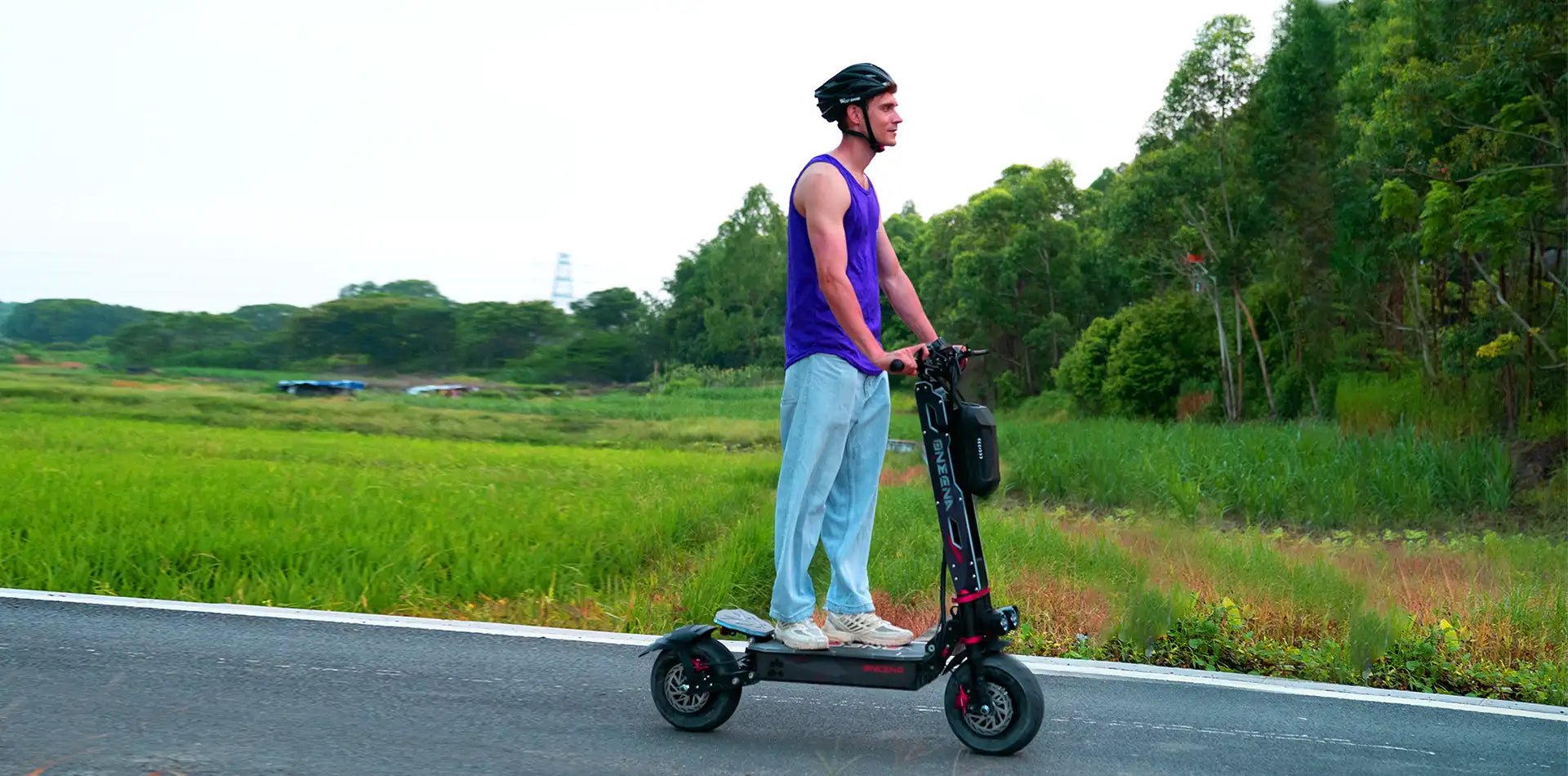
Why Performance and Safety Are the Same Problem
Knowing how to maximize your electric scooter’s performance and safety starts with understanding that these two goals are not separate — they’re the same goal approached from different angles. A scooter that’s well-maintained performs better: it accelerates more smoothly, brakes more reliably, handles more predictably, and delivers closer to its rated range. That same well-maintained scooter is also safer, because the systems you depend on in an emergency — brakes, tires, lights — are functioning as designed rather than degraded by neglect.
Most electric scooter problems — reduced range, sluggish acceleration, brake fade, tire blowouts — don’t happen suddenly. They develop gradually through small, preventable failures: a tire slowly losing pressure, brake pads wearing thin, a battery repeatedly discharged to zero. The riders who get the most out of their scooters are not the ones with the most expensive machines — they’re the ones who understand what their scooter needs and act on it consistently.
Battery Management: The Foundation of Performance
Why the Battery Is the Most Critical Component
The battery is the single most expensive component on your electric scooter and the one most directly affected by how you use and store the scooter. Battery degradation is permanent — once capacity is lost, it cannot be recovered. The good news is that most battery degradation is preventable with straightforward habits.
The Optimal Charge Range
Lithium-ion batteries degrade faster at the extremes of their charge range. Repeatedly charging to 100% and discharging to 0% accelerates capacity loss significantly. For most riders, this means:
- Charge to 80–85% for daily commuting; reserve full charges for long rides
- Never let the battery sit at 0% — deep discharge causes irreversible cell damage
- If storing for more than two weeks, charge to 50–60% before storage
- Avoid charging immediately after a hard ride — let the battery cool 20–30 minutes first
Charging Habits That Extend Battery Life
Use the charger that came with your scooter or a manufacturer-approved replacement. Third-party chargers with incorrect voltage or amperage ratings can damage battery cells. Charge at room temperature when possible — charging below 40°F / 5°C stresses lithium cells and reduces efficiency. Don’t leave the scooter plugged in indefinitely after it reaches full charge.
Reading Battery Performance Signals
Warning signs of battery degradation include: range dropping noticeably below what you used to get on the same route, the battery indicator dropping rapidly under acceleration, or the scooter cutting power unexpectedly at what appears to be a partial charge. These symptoms warrant a battery health check.
Tire Pressure and Condition: The Most Overlooked Safety Factor
Why Tire Pressure Matters More Than Most Riders Realize
Tire pressure affects four things simultaneously: ride comfort, handling precision, range efficiency, and blowout risk. Under-inflated tires increase rolling resistance, make the scooter feel sluggish in corners, and dramatically increase the risk of pinch flats. Over-inflated tires reduce the contact patch with the road, decreasing grip on rough surfaces.
How to Check and Set Tire Pressure
Check tire pressure at least once a week for daily riders, and before any long ride. Use a quality pressure gauge — the built-in gauges on many pumps are inaccurate. The correct pressure is printed on the tire sidewall. Most electric scooter pneumatic tires run between 40–65 PSI depending on tire size and rider weight. Check pressure when the tires are cold (before riding).
Inspecting Tires for Wear and Damage
Before each ride, take 10 seconds to visually inspect both tires. Look for: cuts or embedded objects in the tread, sidewall bulges or cracks, uneven wear patterns, and tread depth. Most electric scooter tires should be replaced when the tread depth reaches 1–2mm.
Brake Maintenance: When to Inspect, Adjust, and Replace

Understanding Your Brake System
Most quality electric scooters use disc brakes — either mechanical (cable-actuated) or hydraulic (fluid-actuated). Hydraulic disc brakes provide more consistent stopping power and require less hand force, but need periodic fluid checks. Mechanical disc brakes are simpler but require cable tension adjustments as the cable stretches over time.
How to Test Your Brakes
At the start of each ride, perform a quick brake test at low speed: squeeze each brake lever independently and feel for firm, progressive resistance. A spongy feel on hydraulic brakes indicates air in the brake line. On mechanical brakes, excessive lever travel before braking begins means the cable needs tightening.
Brake Pad Inspection and Replacement
Brake pads should be inspected every 300–500 miles or every 3 months, whichever comes first. Most disc brake pads have a wear indicator groove — when the groove disappears, the pad must be replaced. Riding on worn pads damages the brake rotor and dramatically increases stopping distance.
Riding Habits That Protect Both You and the Scooter
Smooth Inputs, Not Aggressive Ones
The single most effective habit for both performance and longevity is smooth throttle and brake application. Aggressive full-throttle acceleration from a stop puts maximum stress on the motor, battery, and drivetrain simultaneously. Smooth, progressive acceleration is easier on every component and often gets you to your destination just as quickly in urban traffic.
Riding Posture and Weight Distribution
Stand with feet shoulder-width apart on the deck, knees slightly bent to absorb impacts, weight centered over the deck. On descents, shift weight slightly back to keep the front wheel from washing out. On climbs, shift slightly forward to maintain front wheel contact. Keep a relaxed grip on the handlebars.
Speed Management in Different Conditions
Wet pavement increases stopping distance by 30–50% compared to dry conditions — reduce speed accordingly. Loose gravel or sand reduces traction unpredictably — slow down before entering these surfaces, not while on them. At night, ride at a speed where your headlight illuminates the road far enough ahead to stop safely.
Protective Gear: What Actually Matters and Why
The Helmet: Non-Negotiable
Head injuries are the leading cause of serious injury and death in electric scooter accidents. A helmet is the single most effective piece of protective equipment available. For electric scooters capable of 20+ mph, a full-face helmet provides significantly better protection than an open-face or cycling helmet. Look for helmets certified to CPSC, DOT, or ECE 22.06 standards.
Wrist Guards and Gloves
In a fall, the instinctive reaction is to extend your hands to catch yourself. Wrist fractures are among the most common electric scooter injuries for exactly this reason. Wrist guards with rigid splints prevent the hyperextension that causes fractures. Gloves with palm padding provide a secondary layer of protection and improve grip in wet conditions.
Knee and Elbow Pads
For riders who regularly ride at higher speeds, on off-road terrain, or in traffic, knee and elbow pads provide meaningful protection against road rash and impact injuries. For off-road riding specifically, knee pads with hard-shell caps are strongly recommended.
Visibility and Lighting: Being Seen Is Not Optional

Front and Rear Lighting
Before riding at night or in low-light conditions, verify that both lights are functioning and that the front light is bright enough to illuminate the road ahead at your intended speed. A rear light visible from 200+ feet is the minimum standard for night riding.
Reflective Gear and Signaling
Reflective gear makes you visible from any angle when illuminated by another vehicle’s headlights. A reflective vest or jacket dramatically increases your visibility to drivers approaching from the side or rear. Use hand signals to communicate your intentions — signal turns at least 50 feet before the turn and make eye contact with drivers at intersections before proceeding.
Storage and Weather: Protecting Your Scooter Long-Term
Indoor Storage Is Always Better
UV exposure degrades rubber components and fades paint. Rain and humidity accelerate corrosion on metal components and degrade electrical connections. If indoor storage isn’t possible, a quality waterproof cover provides meaningful protection.
Cold Weather and Cleaning
Cold temperatures reduce lithium battery capacity temporarily. Charging a cold battery (below 40°F / 5°C) causes permanent capacity loss — bring the scooter indoors to warm up before charging. Use a damp cloth rather than a pressure washer for cleaning — high-pressure water forces moisture into bearings and motor windings regardless of IP rating.
A Simple Maintenance Schedule
| Frequency | Task | Why It Matters |
|---|---|---|
| Before every ride | Check tire pressure visually; test brakes at low speed; verify lights work | Catches the most common safety issues before they become emergencies |
| Weekly | Check tire pressure with gauge; inspect tires for cuts; wipe down deck and stem | Prevents slow leaks from becoming blowouts |
| Monthly | Inspect brake pads; check all bolts for tightness; lubricate folding mechanism | Prevents gradual loosening and wear that causes sudden failures |
| Every 3 months | Full brake inspection; bearing check; inspect wiring; clean electrical connectors | Catches wear before it reaches the failure point |
| Annually | Replace worn brake pads and tires; battery health check; inspect frame welds | Resets wear items before they affect safety or performance |
| Before storage | Charge to 50–60%; clean thoroughly; apply corrosion protection; store indoors | Prevents battery degradation and corrosion during storage |
FAQ — Maximizing Electric Scooter Performance and Safety
How often should I charge my electric scooter battery?
Charge based on usage, not a fixed schedule. The key habit is avoiding full discharge — don’t let the battery drop below 15–20% before charging. For battery longevity, charge to 80–85% for daily use rather than 100%.
What tire pressure should I use?
The correct pressure is printed on the tire sidewall. Most electric scooter pneumatic tires run between 40–65 PSI. Heavier riders should use the higher end of the recommended range. Check pressure when tires are cold for an accurate reading.
How do I know when my brake pads need replacing?
Most disc brake pads have a wear indicator groove. When this groove is no longer visible, the pad must be replaced. Other signs: increased stopping distance, grinding or squealing noise when braking, or the brake lever traveling further than usual before braking begins.
Is it safe to ride an electric scooter in the rain?
Most electric scooters with IP54 or higher rating can handle light rain, but riding in heavy rain or through standing water is not recommended. Wet pavement increases stopping distance by 30–50%. Reduce speed significantly, increase following distance, and avoid puddles.
How can I extend the range of my electric scooter?
Maintain correct tire pressure, use smooth throttle inputs, use regenerative braking where available, ride at moderate speeds, and avoid carrying unnecessary weight. On cold days, allow the battery to warm up slightly before demanding full performance.
How do I store my electric scooter for winter?
Charge the battery to 50–60%, clean thoroughly and apply corrosion protection, store indoors at room temperature, and check the battery charge every 4–6 weeks, topping up if it drops below 30%.
Why does my electric scooter lose range over time?
Lithium batteries lose capacity gradually with charge cycles, typically 2–3% per year under normal use. Accelerated range loss is caused by repeatedly discharging to 0%, charging in very cold temperatures, leaving the battery at 100% for extended periods, and using non-approved chargers.
Share:
Top 5 Electric Scooters for Urban Commuters in 2026
The Benefits of UL-Certified Electric Scooters