




Winter riding brings a unique mix of beauty and challenge. Snow-covered streets, soft slush, and icy corners can make everyday commuting quite different from regular seasons. If you're planning to ride an electric scooter during colder months, choosing the right features becomes essential. This guide explores the key things to look for when selecting an electric scooter in snow, and explains why certain models handle winter conditions better than others.
1. The Importance of Power and Torque
Snow creates additional resistance under your tires, meaning scooters with lower torque tend to slip or struggle when accelerating. That’s why dual-motor scooters excel in winter. Their balanced power distribution gives riders stronger traction and better control when climbing snowy slopes or navigating slippery urban paths.
ONECNA's dual-motor scooters are especially suited for this. Their powerful drive systems allow riders to maintain smooth and predictable movement even in low-friction environments. Whether you're riding through morning frost or light snowfall, strong torque ensures your scooter doesn't bog down or lose momentum.
2. Traction and Tire Design: The Foundation of Winter Stability
One of the biggest factors in winter riding safety is tire design. Wider tires naturally increase the amount of rubber contacting the ground, improving stability and control. Deep tread patterns channel snow and slush away from the wheel surface, helping maintain grip on uneven or partially icy surfaces.
The GT9 offers off-road tires engineered for rugged terrain, making them perfect for winter commuters who may encounter compact snow or wet patches. The GT8 Pro's reinforced tread design also performs well in cold-weather environments, improving rider confidence when dealing with unpredictable winter surfaces.
3. Battery Efficiency During Winter
Cold temperatures can temporarily reduce battery efficiency, impacting range and overall power output. While this is normal for lithium batteries, choosing a scooter with a higher-capacity battery helps compensate for winter energy loss. ONECNA equips its scooters with high-performance battery cells optimized to deliver stable output even in colder conditions.
To maintain battery health during winter, store your scooter indoors whenever possible, charge the battery at room temperature, and allow the scooter to warm up slightly before you begin the ride. These small habits help preserve long-term battery performance.
4. Braking Performance on Snowy Roads
Stopping distances increase significantly on snowy or icy surfaces. Reliable braking systems are not optional—they're essential. Scooters fitted with mechanical or hydraulic disc brakes offer better stability, allowing riders to adjust speed gradually, which helps prevent slipping or sudden loss of control.
Both the GT9 and GT8 Pro come with advanced braking systems designed to help riders maintain predictable stopping power even in low-traction environments. Dual braking setups further improve safety by distributing braking force across both wheels.
5. Water Resistance and Build Quality
Snow is simply frozen water, and when it melts, moisture can quickly reach your scooter's internal components. For winter use, scooters should have solid water-resistance protection and durable construction that withstands wet road conditions and light splashes.
ONECNA scooters are built with sealed electrical components and reinforced frames that help protect against winter moisture. This makes them suitable for practical cold-weather commuting as long as riders avoid deep water or riding directly through thick slush.
6. Visibility and Safety During Winter Rides
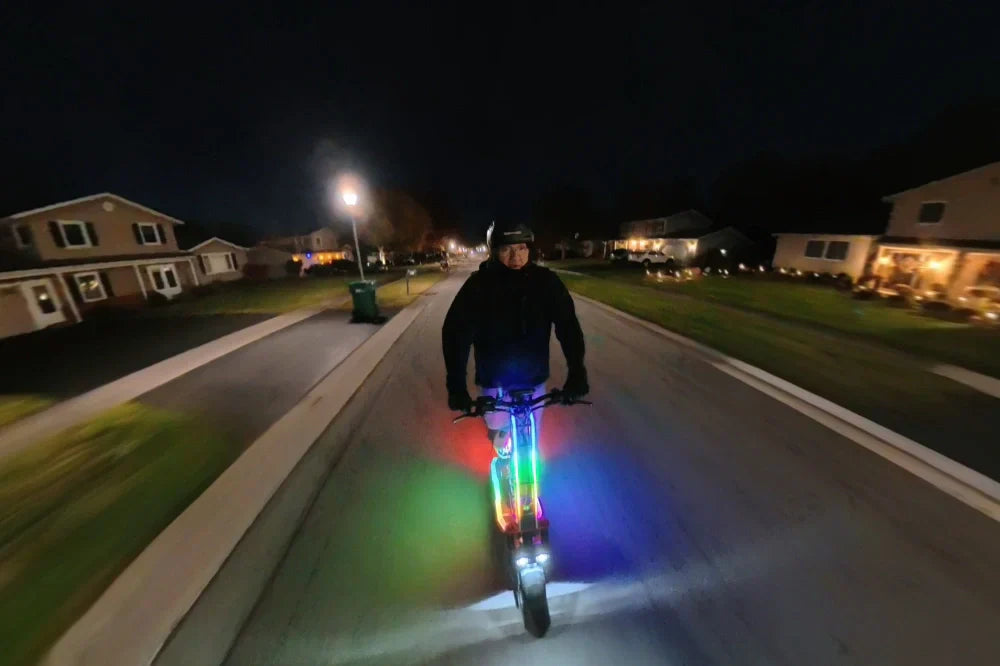
Winter doesn’t just bring cold temperatures—it also means shorter daylight hours. Bright headlights, rear lights, and side reflectors are especially important. The GT9 and GT8 Pro feature powerful illumination systems that improve visibility for both the rider and surrounding traffic.
Riders should consider wearing reflective jackets or accessories as well. Being visible is essential, especially when snow reduces roadside visibility or when riding near vehicles during evening hours.
7. Practical Tips for Riding an Electric Scooter Safely in Snow
- Ride slower than usual and increase your stopping distance
- Avoid sudden acceleration and hard braking
- Wear insulated gloves and waterproof winter clothing
- Store and charge your scooter indoors to protect battery health
- Wipe moisture off your scooter after your ride to prevent corrosion
- Use both brakes gently to avoid wheel lock-up
- Stay on cleared or partially cleared routes whenever possible
8. Best ONECNA Scooters for Winter Riding
For riders searching for a reliable electric scooter in snow, these two models provide exceptional winter adaptability:
ONECNA GT9
The GT9's combination of dual 1200W motors, wide off-road tires, and a sturdy build makes it an excellent winter companion. Its enhanced traction helps riders stay stable on snowy suburban roads, while its power output ensures a smooth, consistent ride even when weather conditions fluctuate.
ONECNA GT8 Pro
The GT8 Pro is ideal for daily commuters who want a responsive, lightweight, and durable winter-ready scooter. With strong acceleration, reliable braking, and balanced power distribution, it provides dependable performance in cold or lightly snowy environments. Its frame is engineered for stability, giving riders extra confidence on slippery surfaces.
Final Thoughts
Winter riding doesn't need to be intimidating. With the right scooter and proper preparation, you can enjoy safe, efficient, and comfortable rides even when the weather turns icy ⛄. Whether you're heading to work or exploring your city in a fresh layer of snow, the ONECNA GT9 and GT8 Pro offer the performance and durability needed to handle winter conditions with confidence.
Share:
How to Keep Your Electric Scooter from Being Stolen — Practical Security Tips for ONECNA Riders
The Truth About Really Fast Scooters: How Fast Can They Go?