




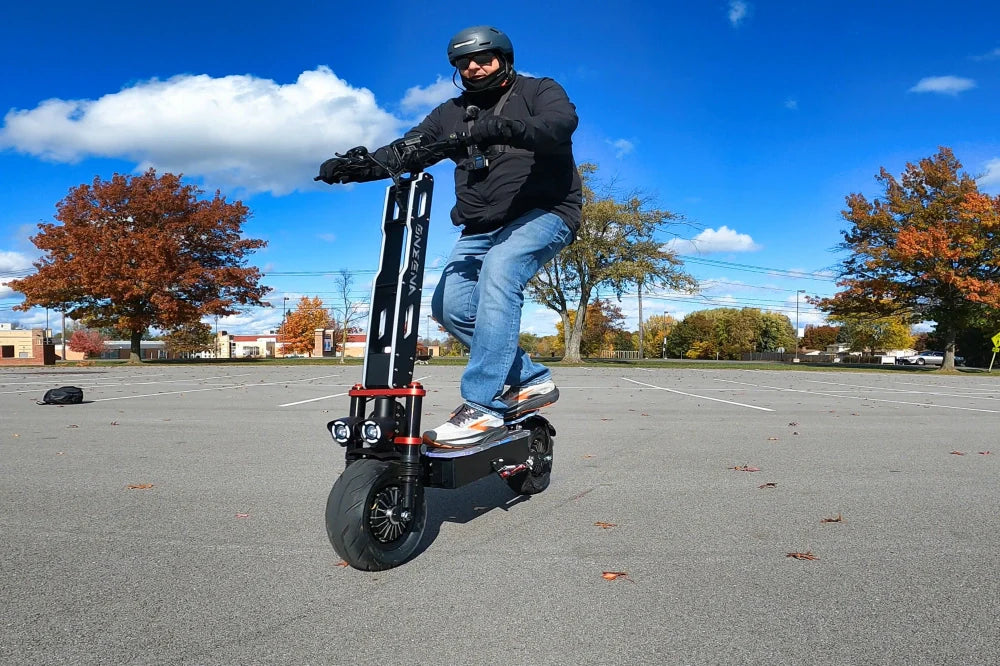
When people search for an off road escooter, they are rarely looking for novelty. Most are searching because standard electric scooters have failed them—on broken pavement, gravel paths, dirt trails, steep inclines, or simply under real-world riding conditions.
This article is written for adult riders who want clarity, not hype. Instead of listing generic benefits, we will break down what actually separates a true off-road electric scooter from an urban commuter model, how different riders should evaluate performance, and why certain design choices matter far more than marketing specifications.
By the end, you should be able to tell whether an off road escooter is right for your riding style—and how to choose one that delivers real control, not just raw power.
What “Off Road” Really Means
True off-road capability is defined by how well a scooter maintains stability, traction, and control when terrain becomes unpredictable. Loose gravel, uneven surfaces, steep inclines, and repeated high-impact vibrations all challenge a scooter’s design.
Power Alone Does Not Make an Off Road eScooter
Motor wattage is necessary but meaningless without control. Dual-motor configurations are common because they improve traction, but excessive power without proper suspension and frame rigidity often results in wheel spin, instability, and rider fatigue. Usable power matters more than peak output.
Suspension: The Foundation of Off-Road Control
Suspension is the most important system on an off road escooter. Without it, every bump transfers force directly into the rider’s joints and steering, reducing grip, increasing braking distance, and compromising safety.
Front Suspension
Controls steering stability and absorbs initial impact. Poor front suspension leads to twitchy handling.
Rear Suspension
Manages large impacts and weight transfer. Weak rear suspension causes instability under acceleration and braking.
Hydraulic suspension systems are preferred for off-road use because they control rebound speed and prevent bouncing. High-performance models like the ONECNA GT9 use aggressive dual hydraulic suspension tuned for loose terrain and higher speeds.
Tires: Where Power Meets the Ground
Tires determine how effectively a scooter interacts with terrain. True off road scooters typically use wider profiles, deeper tread patterns, and reinforced sidewalls for traction, comfort, and confidence.
Frame Geometry and Structural Integrity
Off-road riding stresses the frame. Reinforced decks, rigid steering columns, and balanced weight distribution are essential for stability and durability.
Braking Systems for Off-Road Conditions
High speeds and reduced traction require hydraulic disc brakes for superior modulation and stopping power—essential for adult off-road riders.
Who Actually Needs an Off Road eScooter?
- Mixed-surface commuters: pavement and trails
- Recreational off-road riders: forest paths, gravel, open land
- Heavier or taller riders: require stronger frames and suspension
Real-World Use: Where Design Choices Matter
Suspension tuning, throttle response, deck width, and handlebar stability all affect rider confidence. The GT8 Pro balances off-road capability with urban usability, while the GT7 provides higher power and performance for riders upgrading from entry-level scooters.
You can explore ONECNA’s full lineup at onecnascooter.com.
Maintenance Considerations for Off Road eScooters
- Check suspension bolts and pivots regularly
- Monitor tire wear more frequently
- Keep braking systems properly adjusted
Is an Off Road eScooter Worth It? 🛴
For riders facing rough terrain, yes—but only if the scooter is designed for it. True off-road scooters provide confidence, reduced fatigue, and consistent performance.
Final Thoughts
Choosing an off road escooter is not about appearance or peak specs—it’s about how power, suspension, tires, and structure work together to maintain control. When engineered properly, off-road riding becomes safe, controlled, and enjoyable.
Share:
Suspension Scooter: What Really Matters for Off-Road Riders
How Fast Do Scooters Go? Understanding Speed, Safety, and Real-World Performance