




What's an Electric Scooter? A Complete Guide for New Riders

What's an electric scooter? If you've recently searched what's an electric scooter, you're not alone. More people than ever are discovering electric scooters as a practical, fun, and affordable way to travel. Whether you're looking for an easier commute, a recreational riding experience, or an alternative to driving, understanding what's an electric scooter is the first step toward choosing the right model.
Electric scooters have rapidly evolved from simple personal mobility devices into powerful transportation solutions capable of traveling long distances, climbing steep hills, and reaching impressive speeds. Today's market offers everything from beginner-friendly commuter scooters to high-performance machines designed for experienced riders.
In this guide, we'll explain what an electric scooter is, how it works, its advantages, important buying considerations, and compare several popular ONECNA models to help you make an informed decision.
Table of Contents
- What Is an Electric Scooter?
- How Does an Electric Scooter Work?
- Benefits of Electric Scooters
- Common Uses for Electric Scooters
- Important Features to Consider
- ONECNA Electric Scooter Comparison
- Which ONECNA Model Is Right for You?
- How Long Do Electric Scooters Last?
- FAQ
What Is an Electric Scooter?
An electric scooter is a battery-powered personal transportation device that uses an electric motor to propel the rider forward. Unlike traditional kick scooters, electric scooters require minimal physical effort because the motor provides the driving force.
Most electric scooters include:
- A rechargeable battery
- An electric motor
- A throttle for acceleration
- A braking system
- A folding frame design
- Tires and wheels
- A display showing speed and battery information
Electric scooters are available in a wide variety of sizes and performance levels, making them suitable for commuters, students, recreational riders, and performance enthusiasts.
How Does an Electric Scooter Work?
Electric scooters operate through a relatively simple system. Energy stored inside the battery is delivered to the motor through a controller. When the rider presses the throttle, the controller regulates power output and sends electricity to the motor, causing the scooter to accelerate.
Key components include:
Battery
The battery stores electrical energy and largely determines riding range.
Motor
The motor converts electrical energy into movement. More powerful motors generally provide better acceleration and climbing ability.
Controller
The controller acts as the scooter's brain, managing power delivery and safety functions.
Braking System
Modern scooters typically use electronic, mechanical, or hydraulic braking systems.
Benefits of Electric Scooters
The popularity of electric scooters continues to grow because they offer several advantages over traditional transportation options.
Cost Savings
Electric scooters typically cost far less to operate than cars, motorcycles, or rideshare services.
Convenience
Most models can be folded and transported easily.
Environmental Benefits
Electric scooters produce zero direct emissions during operation.
Reduced Traffic Stress
Many riders use scooters to avoid congestion during daily commuting.
Fun Riding Experience
Electric scooters combine practical transportation with recreational enjoyment.
Common Uses for Electric Scooters
Electric scooters serve many different purposes:
- Daily commuting
- College campus transportation
- Last-mile travel
- Recreational riding
- Urban exploration
- Off-road adventures
The best scooter depends largely on how and where you plan to ride.
Important Features to Consider
Top Speed
Different riders have different speed requirements. Commuters often prioritize efficiency while enthusiasts may seek maximum performance.
Range
Range determines how far the scooter can travel on a single charge.
Load Capacity
Heavier riders should select scooters with sufficient weight capacity.
Tire Size
Larger tires improve ride comfort and stability.
Shock Absorption System
A quality shock absorption system enhances comfort and control over uneven terrain.
ONECNA Electric Scooter Comparison
| Model | Price | Top Speed | Range | Load Capacity | Tire Size |
|---|---|---|---|---|---|
| T3 | $569 | 30 MPH | 40 Miles | 265 LBS | 10" |
| A2 | $649 | 35 MPH | 45 Miles | 265 LBS | 10" |
| GT7 | $899 | 45 MPH | 55 Miles | 550 LBS | 11" |
| GT8 PRO | $1299 | 50 MPH | 60 Miles | 550 LBS | 11" |
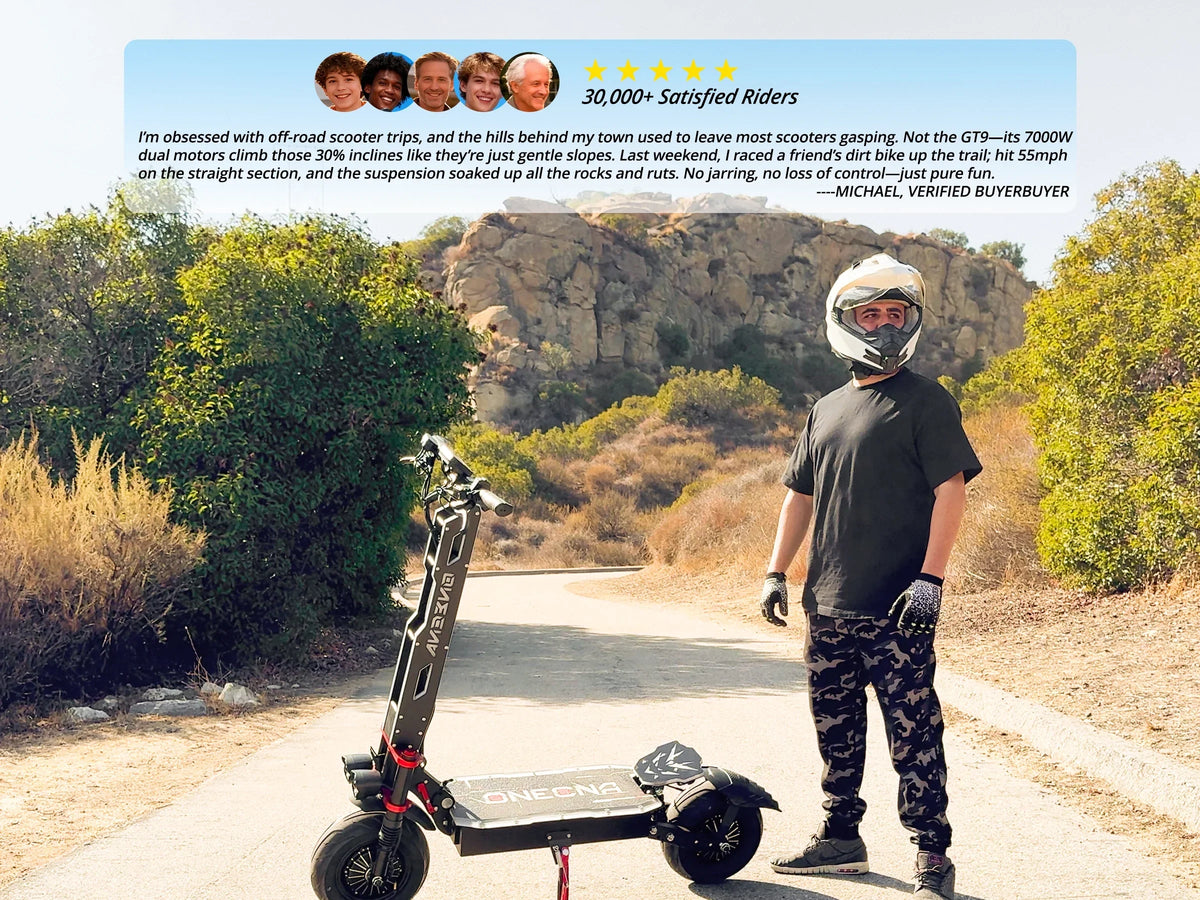
| GT9 | $1599 | 55 MPH | 70 Miles | 550 LBS | 12" |
Which ONECNA Model Is Right for You?
If you're completely new to electric scooters, the T3 offers an affordable introduction to personal electric transportation. Riders seeking higher speeds and longer range may prefer the A2.
For riders who want serious performance, the GT series offers substantial upgrades in speed, power, range, and load capacity.
- T3: Budget-friendly commuter
- A2: Affordable performance commuter
- GT7: Value-focused off-road performer
- GT8 PRO: Balanced flagship model
- GT9: Ultimate performance flagship
How Long Do Electric Scooters Last?
One of the most common questions after learning what's an electric scooter is understanding its lifespan.
With proper maintenance, quality electric scooters can provide years of reliable service. Key factors affecting longevity include:
- Battery care
- Tire maintenance
- Brake inspections
- Proper charging habits
- Storage conditions
- Riding style
Regular maintenance helps maximize both performance and lifespan.
Frequently Asked Questions
What's an electric scooter used for?
Electric scooters are commonly used for commuting, recreation, campus transportation, and short-distance travel.
Are electric scooters difficult to ride?
Most beginners can learn basic riding skills quickly with proper safety precautions.
How fast do electric scooters go?
Speed varies by model. ONECNA scooters range from 30 MPH to 55 MPH.
How far can an electric scooter travel?
Range depends on battery size, rider weight, terrain, and riding conditions. ONECNA models offer up to 70 miles of range.
Which ONECNA scooter is the fastest?
The GT9 is currently the fastest scooter in the ONECNA lineup, reaching speeds of up to 55 MPH.
Share:
Best Electric Scooters for Adults Around 200 lbs: Complete Buying Guide for 2026
Best Commute Electric Scooter with Front Bluetooth Music Speaker