




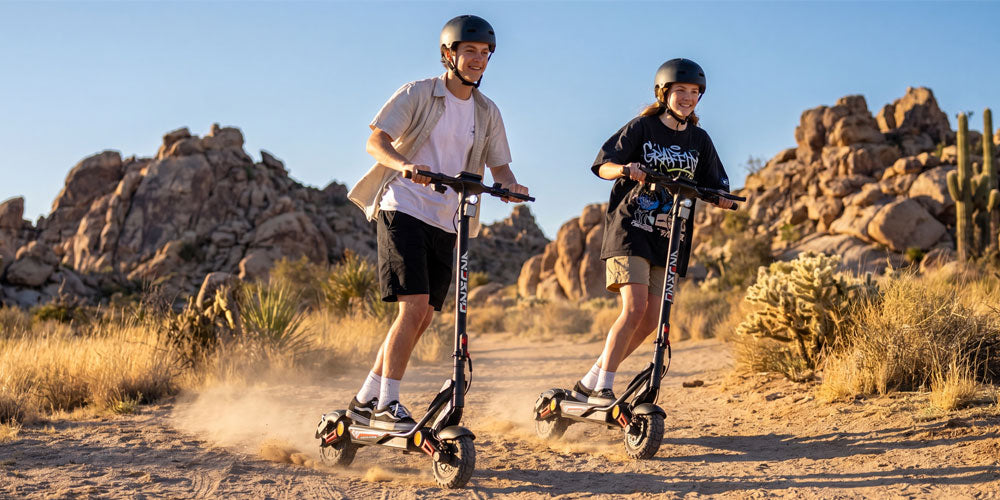
E-scooter regulations by state vary more than most riders expect — and in Texas, New York, Washington, and Illinois, the differences are significant. Before you ride, understanding the exact rules for your state on speed limits, helmet laws, age requirements, and where electric scooters are legally permitted could be the difference between a smooth commute and a costly citation.

Why E-Scooter Laws Differ So Much by State
Unlike cars or motorcycles, electric scooters don't have a single federal regulatory framework. Each state — and often each city within that state — writes its own rules. This patchwork of legislation means a scooter that's perfectly legal in Austin could get you ticketed in Chicago, or vice versa.
The core reason for this variation is classification. States define e-scooters differently: some treat them like bicycles, others like mopeds, and a few have created entirely new categories. That classification determines everything downstream — where you can ride, how fast, and what safety gear is required.
Understanding these distinctions isn't just about avoiding fines. It's about riding safely and responsibly in your community.
How to Read This Guide
For each state, we cover six key dimensions:
- Maximum speed limit — the legal top speed for e-scooters on public roads or paths
- Minimum riding age — who is legally allowed to operate an e-scooter
- Helmet requirements — mandatory vs. recommended, and for which age groups
- Where you can ride — sidewalks, bike lanes, roads, or a combination
- Registration and license plate — whether your scooter needs to be registered with the state
- Insurance requirements — whether liability coverage is legally required
Laws change. Always verify current rules with your state DMV or local municipality before riding, especially in cities that have enacted their own ordinances on top of state law.
Texas E-Scooter Regulations

Texas passed House Bill 1886 in 2019, which created a statewide framework for electric scooters and micro-mobility devices. The law provides a solid baseline, though cities like Austin and Houston have added their own layers.
Maximum Speed Limit
Texas law caps e-scooters at 35 mph on public roads — one of the more permissive limits in the country. However, most cities impose lower operational limits. In Austin, for example, shared scooter operators are required to geofence speeds to 15 mph in certain zones. If you're riding a personal scooter, the state limit applies, but always check local ordinances.
Minimum Riding Age
Riders must be at least 16 years old to operate an e-scooter on public roads in Texas. Riders under 18 are required to wear a helmet. There is no minimum age for riding on private property, but public road access is restricted to those 16 and older.
Helmet Requirements
Texas requires helmet use for riders under 18 years old. Adult riders (18+) are not legally required to wear a helmet, though it is strongly recommended — especially at higher speeds. If you're riding a high-performance scooter capable of 30+ mph, a full-face helmet is a practical necessity regardless of what the law says.
Where You Can Ride
Under Texas law, e-scooters may be operated on:
- Roads with a speed limit of 35 mph or less
- Bike lanes where available
- Paths and trails designated for bicycle use
Sidewalk riding is generally prohibited in Texas unless a local ordinance specifically permits it. In practice, many Texas cities have mixed rules — Austin prohibits sidewalk riding downtown but allows it in some residential areas. Always check the specific city rules.
Registration and License Plate
Personal e-scooters in Texas do not require registration or a license plate as long as they meet the state's definition of a "micro-mobility device" (motor under 750W, max speed under 35 mph). Scooters that exceed these thresholds may be classified as mopeds and require registration.
Insurance Requirements
Texas does not require liability insurance for e-scooters that qualify as micro-mobility devices. That said, if you cause an accident, you are personally liable for damages. Checking whether your homeowner's or renter's insurance covers e-scooter incidents is a smart move.
New York E-Scooter Regulations
New York legalized e-scooters statewide in 2020 through the New York State Budget Act, but New York City has its own additional rules that are worth understanding separately. The state framework applies to all areas outside NYC; within the five boroughs, city rules take precedence in several areas.
Maximum Speed Limit
New York State sets the maximum speed for e-scooters at 20 mph. Within New York City, the operational speed limit is also 20 mph, though the city has the authority to lower this in specific zones. This is notably lower than Texas, reflecting New York's denser urban environment.
Minimum Riding Age
Riders must be at least 16 years old to operate an e-scooter in New York State. In New York City, the minimum age is also 16. Riders under 18 must wear a helmet.
Helmet Requirements
New York requires helmets for riders under 18 years old. Adult riders are not legally required to wear one, but given New York City's traffic density, most experienced riders choose to wear a helmet regardless. For high-speed riding outside the city, a helmet is strongly advisable.
Where You Can Ride
In New York State (outside NYC), e-scooters may be ridden in:
- Bike lanes
- Roads with a speed limit of 30 mph or less
- Paths designated for bicycle use
In New York City specifically, e-scooters are permitted in bike lanes and on roads, but not on sidewalks. The city has been expanding its protected bike lane network, which has made e-scooter commuting increasingly practical in many neighborhoods.
Registration and License Plate
New York State does not require registration for e-scooters that meet the state's definition (motor under 750W, max speed under 20 mph). Scooters exceeding these specs may be classified differently and subject to motor vehicle registration requirements.
Insurance Requirements
No insurance is legally required for e-scooters in New York State. However, New York City has discussed requiring insurance for commercial shared scooter operators. For personal riders, insurance is optional but worth considering given the city's litigation environment.
Washington State E-Scooter Regulations

Washington State updated its e-scooter laws in 2019 under RCW 46.61.710, creating a clear framework for "motorized foot scooters." Seattle has additional city-level rules, particularly around shared scooter programs, but the state law provides the baseline for personal scooter riders across the state.
Maximum Speed Limit
Washington State caps e-scooters at 20 mph on public roads. This applies to both personal and shared scooters. Seattle's shared scooter program enforces lower speeds in certain areas through geofencing, but the state maximum remains 20 mph for personal riders.
Minimum Riding Age
Washington requires riders to be at least 16 years old. Riders under 18 must wear a helmet. There is no provision for younger riders on public roads, regardless of supervision.
Helmet Requirements
Washington is one of the stricter states on helmets: riders under 18 are required by law to wear a helmet. Adult riders are not legally required to wear one under state law, but King County (which includes Seattle) has historically had broader helmet requirements for cyclists that may apply to scooter riders as well. Check local rules if you're riding in the Seattle metro area.
Where You Can Ride
Washington State allows e-scooters on:
- Roads with a speed limit of 25 mph or less (unless a local authority permits higher)
- Bike lanes
- Shared-use paths where bicycles are permitted
Sidewalk riding is generally prohibited in Washington, though local jurisdictions can make exceptions. In Seattle, sidewalk riding is not permitted in the downtown core.
Registration and License Plate
Washington State does not require registration for e-scooters that qualify as motorized foot scooters under RCW 46.61.710 (motor under 1,000W, max speed under 20 mph). Scooters with more powerful motors may be classified as mopeds and require registration and a driver's license to operate.
Insurance Requirements
No insurance is required for e-scooters in Washington State. As with other states, personal liability exposure remains, so checking your existing insurance policies for coverage gaps is advisable.
Illinois E-Scooter Regulations
Illinois passed the Electric Scooter Act in 2019, legalizing e-scooters statewide. Chicago has its own additional regulations and a well-established shared scooter program, but the state law governs personal scooter riders throughout Illinois.
Maximum Speed Limit
Illinois sets the maximum speed for e-scooters at 20 mph. Chicago's shared scooter program enforces lower speeds in certain areas, but the state cap of 20 mph applies to personal riders on public roads.
Minimum Riding Age
Illinois requires riders to be at least 16 years old. Riders under 18 must wear a helmet. The law does not permit younger riders on public roads, even with adult supervision.
Helmet Requirements
Illinois mandates helmets for riders under 18 years old. Adult riders are not legally required to wear a helmet under state law. Chicago's shared scooter operators are required to provide helmet information to users, but enforcement for personal riders is limited.
Where You Can Ride
Under the Illinois Electric Scooter Act, e-scooters may be ridden on:
- Roads with a speed limit of 30 mph or less
- Bike lanes
- Paths designated for bicycle use
Sidewalk riding is prohibited under state law. Chicago enforces this actively in the downtown area. Outside Chicago, enforcement varies by municipality, but the prohibition is statewide.
Registration and License Plate
Illinois does not require registration for e-scooters that meet the state's definition (motor under 750W, max speed under 20 mph). Higher-powered scooters may be classified as motor-driven cycles and require registration, a valid driver's license, and insurance.
Insurance Requirements
No insurance is required for standard e-scooters in Illinois. However, scooters classified as motor-driven cycles (typically those exceeding 750W or 20 mph) do require liability insurance. If your scooter falls into a gray area, checking with the Illinois Secretary of State's office is the safest approach.
State-by-State Comparison: Quick Reference Table

| Rule | Texas | New York | Washington | Illinois |
|---|---|---|---|---|
| Max Speed | 35 mph | 20 mph | 20 mph | 20 mph |
| Min Age | 16 | 16 | 16 | 16 |
| Helmet (mandatory) | Under 18 | Under 18 | Under 18 | Under 18 |
| Sidewalk Riding | ❌ Prohibited | ❌ Prohibited | ❌ Prohibited | ❌ Prohibited |
| Bike Lane Allowed | ✅ Yes | ✅ Yes | ✅ Yes | ✅ Yes |
| Registration Required | ❌ No | ❌ No | ❌ No | ❌ No |
| Insurance Required | ❌ No | ❌ No | ❌ No | ❌ No |
When Do These Rules Apply? Key Scenarios Explained
Commuting to Work
If you're using an e-scooter for your daily commute, the most important rules are where you can ride and at what speed. In all four states, bike lanes are your primary legal route. On roads, stay within the posted speed limit and the state e-scooter cap — whichever is lower. Avoid sidewalks in all four states; it's prohibited and creates conflict with pedestrians.
Riding at Night
All four states require e-scooters to have front and rear lights when operated at night. This is a safety requirement, not just a legal one. A scooter without lights at night is genuinely dangerous, regardless of what the law says. Many modern scooters — including performance models like the ONECNA GT9 — come with integrated front headlights and rear brake lights as standard equipment, which satisfies this requirement out of the box.
Riding in a City vs. Rural Area
City rules often add restrictions on top of state law. If you're riding in Austin, Chicago, Seattle, or New York City, always check the city's specific ordinances. Rural areas typically default to state law, which is generally more permissive. The key variable is road speed limits — most states restrict e-scooters to roads with speed limits of 25–35 mph, which excludes most highways and arterials.
Crossing State Lines
If you're riding near a state border, be aware that the rules change the moment you cross. Texas's 35 mph limit doesn't apply once you enter New Mexico or Oklahoma. Always know which state's rules govern your current location.
What Happens If You Break the Rules?
Penalties vary by state and city, but common consequences include:
- Fines: Typically $50–$500 depending on the violation and jurisdiction
- Scooter impoundment: Some cities can impound your scooter for serious violations
- Points on your driver's license: In some states, e-scooter violations can affect your driving record
- Civil liability: If you cause an accident while violating traffic law, your legal exposure increases significantly
The practical takeaway: the fines themselves are manageable, but the civil liability exposure from an at-fault accident is the real risk. Riding legally isn't just about avoiding tickets — it's about protecting yourself financially.
Practical Safety Tips That Apply in All Four States
Regardless of which state you're in, these practices reduce your risk:
- Wear a helmet every time — even if the law doesn't require it for adults. Head injuries don't care about legal thresholds.
- Use lights at night — front white light and rear red light are required in all four states after dark.
- Signal your turns — hand signals are legally required in most states and practically important for safety.
- Ride predictably — sudden lane changes and erratic speed changes are the leading cause of scooter-vehicle conflicts.
- Know your scooter's actual top speed — some high-performance scooters can exceed legal limits. Riding within legal speed ranges isn't just about compliance; it's about having adequate stopping distance.
How Scooter Specs Interact with State Law
One thing many riders overlook: the specifications of your scooter determine which legal category it falls into. A scooter with a 500W motor and a 15 mph top speed is clearly an e-scooter in all four states. A scooter with a 3,000W dual-motor setup capable of 45 mph is a different story — it may be classified as a moped or motor-driven cycle, triggering registration, licensing, and insurance requirements.
If you're riding a high-performance scooter, check your state's motor wattage and speed thresholds carefully. In Washington, the threshold is 1,000W; in Texas, New York, and Illinois, it's typically 750W. Exceeding these thresholds changes your legal obligations significantly.
Frequently Asked Questions (FAQ)
Do I need a driver's license to ride an e-scooter in Texas, New York, Washington, or Illinois?
No. In all four states, a driver's license is not required to operate a standard e-scooter (one that meets the state's definition of a micro-mobility device or motorized foot scooter). However, if your scooter exceeds the motor wattage or speed thresholds that define an e-scooter under state law, it may be reclassified as a moped or motor-driven cycle, which does require a license.
Can I ride my e-scooter on the sidewalk in any of these states?
No. Sidewalk riding is prohibited under state law in Texas, New York, Washington, and Illinois. Some cities have local exceptions in residential areas, but as a general rule, sidewalks are off-limits. Bike lanes and roads with appropriate speed limits are your legal options.
Is a helmet required for adults in these states?
Not legally, for adults 18 and older. All four states require helmets for riders under 18, but adult riders are not legally mandated to wear one. That said, wearing a helmet is strongly recommended regardless of age, particularly at speeds above 15 mph.
Do I need to register my e-scooter with the state?
No, as long as your scooter meets the state's definition of an e-scooter (generally under 750W–1,000W motor and under 20–35 mph top speed). Scooters that exceed these thresholds may require registration as a moped or motor vehicle.
Is e-scooter insurance required in these states?
No, for standard e-scooters. None of the four states require liability insurance for e-scooters that fall within the legal definition. However, if your scooter is classified as a moped or motor-driven cycle, insurance may be required. And regardless of legal requirements, reviewing your existing insurance policies for coverage gaps is a smart precaution.
What's the minimum age to ride an e-scooter in these states?
16 years old in all four states — Texas, New York, Washington, and Illinois all share this minimum age requirement for operating an e-scooter on public roads.
Can I ride an e-scooter on the highway or freeway?
No. E-scooters are restricted to roads with speed limits of 25–35 mph depending on the state. Highways and freeways far exceed these limits and are off-limits for e-scooter operation in all four states.
What happens if my city has different rules than the state?
City rules take precedence within city limits. State law sets the floor — cities can add restrictions but generally cannot be more permissive than state law. Always check both state and local rules for wherever you plan to ride.
Do these laws apply to shared scooters (like Bird or Lime) and personal scooters equally?
The same state laws apply to both. However, shared scooter operators are also subject to additional city permits and operational requirements (like geofencing speed limits) that don't apply to personal scooter owners. As a personal scooter rider, you're governed by state and local law, not the shared operator's additional restrictions.
Where can I find the most current e-scooter laws for my city?
Start with your state's DMV or Department of Transportation website, then check your city's municipal code or transportation department. Laws in this space are evolving quickly — what was true in 2022 may have changed by 2025. When in doubt, call your local police non-emergency line; they can tell you exactly what's enforced in your area.
Share:
Is Your Electric Scooter Street Legal? A State-by-State Guide (TX/NY/WA/IL)
E Scooter Instruction Manual: Complete User Guide for Setup, Riding and Maintenance