




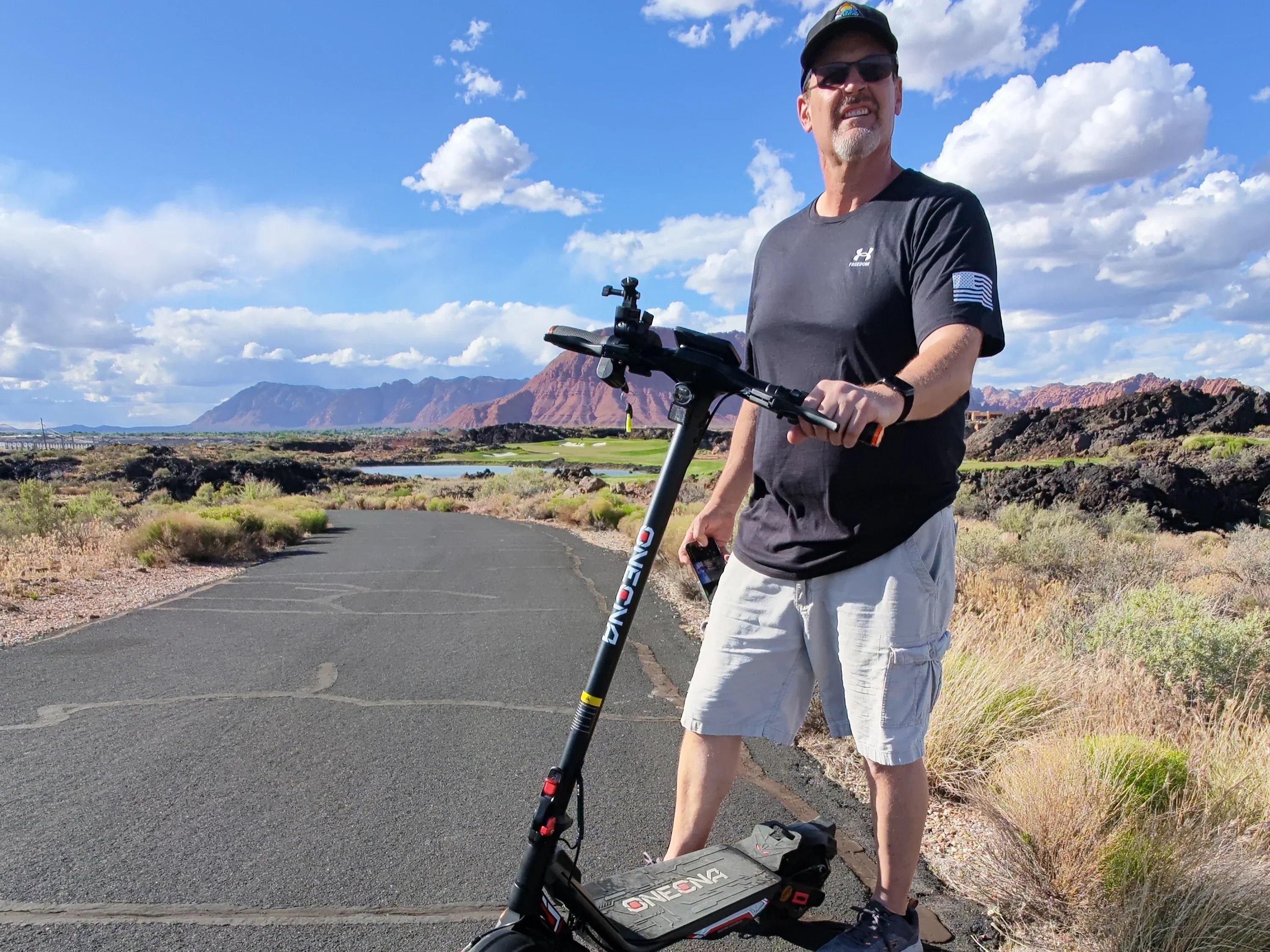
How to Choose the Perfect Electric Scooter for Your Needs: A 2026 Expert Guide
In the rapidly evolving landscape of urban mobility, learning how to choose the perfect electric scooter for your needs has become a vital skill for modern commuters and outdoor enthusiasts alike. Whether you are navigating the dense streets of New York, the cycle-friendly paths of Berlin, or the rugged trails of the Pacific Northwest, the hardware under your feet determines your safety, efficiency, and overall enjoyment. This guide provides a deep dive into technical specifications, legal frameworks across the US, EU, and Canada, and a comparative analysis of industry-leading models like the OneCna GT9 to ensure your next investment is perfectly aligned with your lifestyle.
- Definition: Understanding Modern Micromobility
- Key Facts and Industry Statistics 2026
- Identifying Riding Intent: What is Your "Why"?
- Technical Deep Dive: Motors, Batteries, and Brakes
- Legal Compliance: USA, Europe, and Canada
- Comparison: Performance vs. Commuter Models
- Expert Tips for Safety and Longevity
- Step-by-Step Guide to Purchasing
- Frequently Asked Questions
Definition: Understanding Modern Micromobility
An electric scooter is defined as a motorized stand-up vehicle utilizing a rechargeable Lithium-ion battery and a brushless DC (BLDC) motor. Unlike its kick-powered ancestors, a modern e-scooter integrates sophisticated Electronic Control Units (ECUs) and regenerative braking systems. Understanding how to choose the perfect electric scooter for your needs involves more than just speed; it encompasses the synergy between torque, frame geometry, and battery chemistry.
In 2026, these vehicles are categorized primarily by their motor configuration (Single vs. Dual) and intended environment (Urban vs. All-Terrain). For instance, a "Commuter Scooter" emphasizes folding mechanisms and weight, whereas a "Performance Scooter" like the OneCna GT8 PRO focuses on suspension travel and peak wattage.
Key Facts and Industry Statistics 2026
To make an evidence-based decision, consider these current industry benchmarks:
- Efficiency: E-scooters consume approximately 1.1 kWh of electricity to travel 100 miles, making them nearly 20 times more efficient than gasoline-powered cars.
- Urban Growth: Data from the NACTO indicates that e-scooter trips in North America have surpassed 136 million annually, reducing urban CO2 emissions significantly.
- Battery Safety: The shift toward UL 2272 certification has reduced battery-related incidents by 85% in major metropolitan areas like New York and London.
- Average Lifespan: High-quality frames, such as those found in the OneCna T3, are now designed for over 5,000 miles of operation with regular maintenance.

Identifying Riding Intent: What is Your "Why"?
Before looking at prices, you must categorize your primary usage. Identifying how to choose the perfect electric scooter for your needs starts with your daily routine.
The Last-Mile Commuter
If your goal is to bridge the gap between the subway and your office, portability is king. You need a scooter that weighs under 40 lbs and folds in under 3 seconds. The OneCna A2 is specifically engineered for this, offering dual-motor stability in a surprisingly compact frame.
The Long-Range Explorer
For those replacing their car entirely for a 15-mile round trip, battery capacity (Watt-hours) is the priority. You should seek a minimum of 48V 15Ah. Models like the OneCna T3 offer the stamina required for consistent daily use without "range anxiety."
The Off-Road Adventurer
Weekend trail riding requires high ground clearance and knobby tires. The OneCna GT9, with its robust dual-drive system, is built to handle dirt paths and gravel that would destroy a standard city scooter.
Technical Deep Dive: Motors, Batteries, and Brakes
Motor Power (Wattage)
Motor power dictates your ability to maintain speed on inclines.
- 250W - 350W: Suitable for flat terrain and riders under 170 lbs.
- 500W - 1000W: Ideal for moderate hills and urban acceleration.
- 2000W - 5600W+: Found in extreme models like the OneCna GT7, providing the torque necessary for steep 30-degree inclines.
Braking Systems
When traveling at 25+ mph, stopping power is non-negotiable.
- Electronic/Regenerative: Good for slowing down and recovering energy but insufficient for emergencies.
- Mechanical Disc Brakes: Reliable and easy to maintain; standard on the OneCna GT8 PRO.
- Hydraulic Brakes: The gold standard for performance, offering the most modulation and least physical effort.
Legal Compliance: USA, Europe, and Canada
Safety and legality are central to how to choose the perfect electric scooter for your needs. Regulations vary wildly by geography:
| Region | Max Speed Limit | Helmet Laws | Road Access |
|---|---|---|---|
| USA (General) | 20 mph (32 km/h) | Varies by State | Bike lanes & Roads (<35mph) |
| European Union | 25 km/h (15.5 mph) | Mandatory in many areas | Cycle paths; Sidewalks banned |
| Canada | 24-32 km/h | Mandatory | Provincial pilot programs |
Comparison: Performance vs. Commuter Models
To help you decide how to choose the perfect electric scooter for your needs, we have compared the flagship OneCna lineup based on real-world application.
| Model | Primary Feature | Ideal Rider Weight | Best For |
|---|---|---|---|
| OneCna T2 | Ultra-Lightweight | Up to 265 lbs | Student Commutes |
| OneCna A2 | Dual-Motor Compact | Up to 265 lbs | City Professionals |
| OneCna GT9 | Rugged Durability | Up to 550 lbs | Off-Road / Trails |
| OneCna GT7 | Peak Power (5600W) | Up to 550 lbs | Speed Enthusiasts |
Expert Tips for Safety and Longevity
- Battery "Sweet Spot": To prolong Lithium-ion health, try to keep your battery between 20% and 80% charge.
- Tire Pressure Calibration: Check your PSI once a week. Low pressure is the leading cause of "pinch flats".
- The "Drop Test": Once a month, lift your scooter 2 inches and drop it. Listen for rattles to identify loose bolts.
- IP Rating Awareness: While models like the OneCna GT8 PRO are water-resistant, they are not waterproof.

Step-by-Step Guide to Purchasing
Step 1: Define Your Topography
Do you live in a hilly city? If yes, skip single-motor scooters. You need a dual-motor setup like the OneCna A2.
Step 2: Calculate Your Real-World Range
Subtract 30% from the advertised range to get a realistic distance for your daily use.
Step 3: Test the Portability
Check the folded dimensions. For frequent stair users, the OneCna T2 is the gold standard.
Frequently Asked Questions
Q: Is a dual-motor scooter necessary for city riding?
A: It depends on the incline. For flat cities, a single motor is fine. For hilly areas, a dual-motor scooter like the OneCna A2 is highly recommended.
Q: How often should I charge my electric scooter?
A: It is best to charge it after every ride if the battery is below 80% to preserve the life of the cells.
Q: What is the average lifespan of a OneCna scooter?
A: With proper maintenance, a high-quality model like the OneCna GT7 can last 3-5 years.
Share:
How Fast Can Electric Scooters Go? Top Speeds Explained
70 MPH Electric Scooter for Sale: Fast Alternatives for Adult Riders