




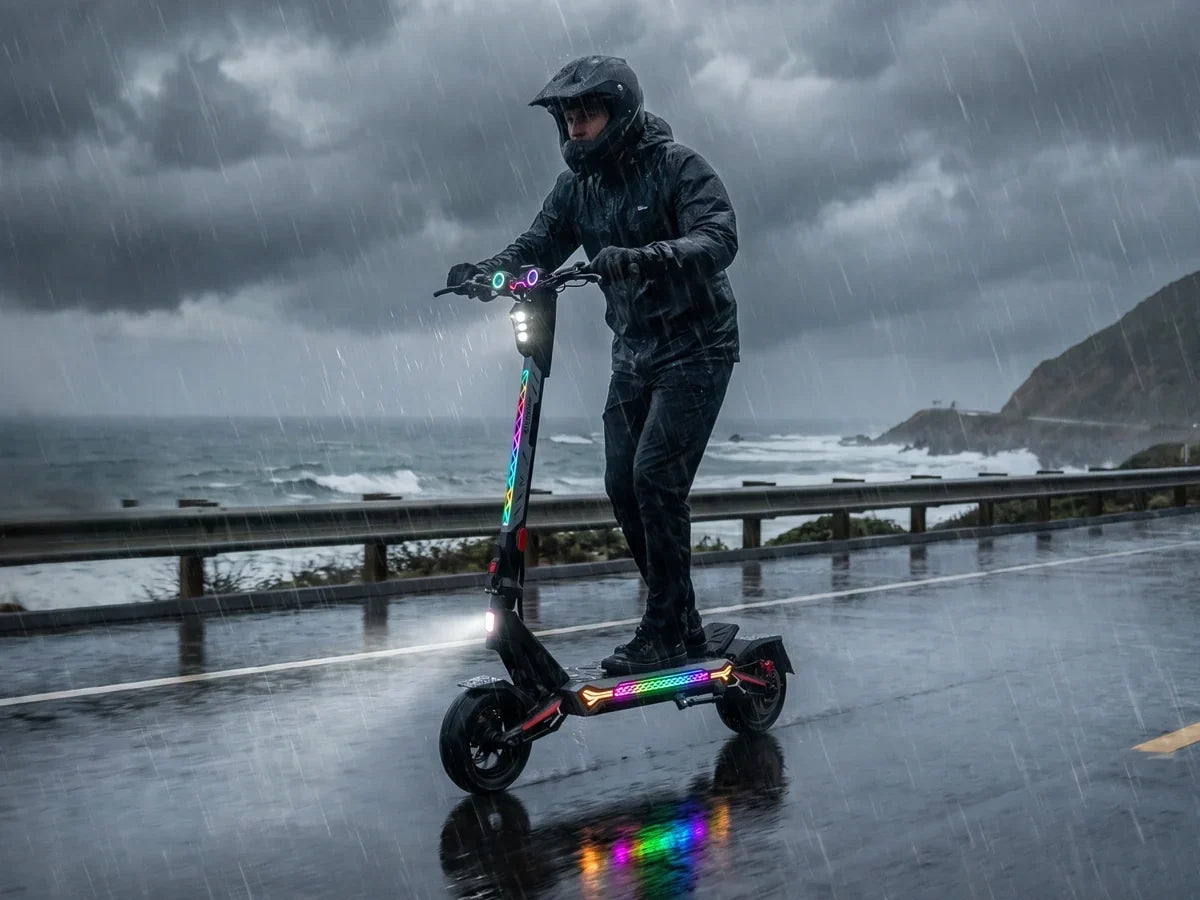
What Is an E Scooter? Everything You Need to Know
An e scooter — short for electric scooter — is a two-wheeled, battery-powered personal vehicle that lets you travel short to medium distances without pedaling, burning gas, or sitting in traffic. If you've ever wondered what is an e scooter, how it works, whether it's legal where you live, or if it's actually worth buying, this guide answers every question — plainly and honestly.
Table of Contents
- What Is an E Scooter? (Definition & Core Concept)
- How Does an Electric Scooter Work?
- Types of E Scooters
- Key Specs You Actually Need to Understand
- Why People Ride E Scooters
- E Scooter Safety: What You Must Know
- E Scooter Laws in the US (State-by-State Overview)
- When Is the Right Time to Buy an E Scooter?
- Basic Maintenance Every Rider Should Know
- FAQ
1. What Is an E Scooter? (Definition & Core Concept)
At its most basic, an e scooter is a motorized scooter powered by a rechargeable lithium-ion battery and driven by one or two electric motors mounted in the wheel hubs. You stand on a flat deck, steer with handlebars, and control speed with a thumb throttle. Braking is handled by a combination of electronic regenerative braking and mechanical disc or drum brakes.
Unlike mopeds or motorcycles, most e scooters are foldable, lightweight enough to carry onto public transit, and require no license in many US states. Unlike bicycles, they require zero physical effort — you just ride.
The term "e scooter" covers a wide spectrum: from lightweight 15 mph commuter models to high-performance machines capable of 60+ mph with dual motors and off-road tires. Understanding where on that spectrum your needs fall is the first step to making a smart decision.
Quick definition: An e scooter is a battery-powered, two-wheeled personal mobility device designed for short-to-medium distance travel, typically foldable, and ridden standing up.
2. How Does an Electric Scooter Work?
An electric scooter's drivetrain is elegantly simple compared to a combustion engine. Here's what happens from the moment you press the throttle:
The Power Chain
- Battery pack — Stores energy in lithium-ion cells (measured in volts × amp-hours = watt-hours of capacity). A 60V 38Ah pack, for example, holds 2,280Wh — enough for 50–65 miles of real-world range.
- Controller (ESC) — The brain of the scooter. It reads your throttle input and sends the precise amount of current to the motor(s).
- Hub motor(s) — Brushless DC motors built directly into the wheel hub(s). Single-motor scooters are efficient and quiet; dual-motor scooters deliver dramatically more torque for hills and off-road terrain.
- Throttle — Usually a thumb-press lever on the right handlebar. Some models use a twist grip.
- Regenerative braking — When you brake, the motor reverses its role and acts as a generator, converting kinetic energy back into electricity and extending range by 5–15%.
Charging
Most e scooters charge via a standard wall outlet using a proprietary charger. Charge times range from 4 hours (small commuter packs) to 10–12 hours (large high-performance packs). Some models support fast charging with higher-amperage chargers.
Suspension
Entry-level scooters often have no suspension or only front spring forks. Mid-range and performance models add dual suspension — front hydraulic forks and rear spring or hydraulic shocks — which dramatically improves comfort on uneven pavement and off-road surfaces.
3. Types of E Scooters
Not all e scooters are built for the same rider or the same road. Here's a practical breakdown:
Commuter / Lightweight (Under 30 lbs, 15–25 mph)
Designed for last-mile urban commuting. Easy to fold and carry on the subway or into the office. Limited range (10–20 miles) and modest power. Best for flat city streets and riders who prioritize portability over performance.
Mid-Range / All-Rounder (30–50 lbs, 25–40 mph)
The sweet spot for most adult riders. Enough power for moderate hills, 25–40 mile range, and better suspension than entry-level models. These handle mixed terrain — bike lanes, light gravel paths, and suburban roads.
High-Performance / Dual-Motor (50–100 lbs, 40–70+ mph)
Built for riders who want serious speed, long range, and the ability to handle off-road terrain. Dual hub motors, large battery packs, hydraulic suspension, and hydraulic disc brakes are standard. These are not toys — they require the same respect as a motorcycle.
Off-Road E Scooters
Characterized by wide pneumatic tires (10–12 inches), aggressive tread, and reinforced frames. Designed for trails, gravel, grass, and uneven terrain. Often overlap with the high-performance category.
Seated E Scooters
Some models include a removable seat, making them more comfortable for longer rides. Popular with older riders or those with mobility considerations.
4. Key Specs You Actually Need to Understand
Spec sheets can be overwhelming. Here are the numbers that actually matter and what they mean in plain English:
| Spec | What It Means | What to Look For |
|---|---|---|
| Motor Wattage | Power output (peak vs. continuous) | 500W+ for hills; 2,000W+ for off-road |
| Battery (Wh) | Total energy storage = range potential | 500Wh = ~20 mi; 2,000Wh+ = 50+ mi |
| Top Speed | Maximum speed (often limited by law) | Match to your local legal limit |
| Weight Capacity | Max rider + cargo weight | Most adult scooters: 220–330 lbs |
| IP Rating | Water and dust resistance | IP54 minimum for wet-weather riding |
| Tire Size | Larger = more stability and comfort | 10–12" pneumatic for off-road/comfort |
A note on range claims: Manufacturers test range under ideal conditions — flat road, light rider, low speed, perfect temperature. Real-world range is typically 60–75% of the advertised figure. Always factor this in when comparing models.
5. Why People Ride E Scooters
The reasons people choose an e scooter over a car, bike, or public transit are practical, financial, and environmental — often all three at once.
Cost Savings
The average American spends over $10,000 per year on car ownership (insurance, gas, maintenance, depreciation). An e scooter costs $0.01–0.03 per mile in electricity. For commutes under 10 miles each way, the math is hard to argue with.
Time Efficiency
In dense urban areas, an e scooter often beats a car door-to-door. No parking fees, no circling the block, no waiting for the bus. You park at your destination.
Environmental Impact
Even accounting for battery production, e scooters produce dramatically fewer lifecycle emissions than gasoline vehicles. For short trips that would otherwise be driven solo, the carbon reduction is significant.
Fun
This one gets underrated in practical guides. Riding an e scooter — especially a well-built one with good suspension and responsive brakes — is genuinely enjoyable. It changes how you experience your city or neighborhood.
Health & Accessibility
For riders with physical limitations that make cycling difficult, e scooters provide independent mobility without the exertion of pedaling. They're also a practical option for older adults who want to stay active and mobile.
6. E Scooter Safety: What You Must Know
E scooter injuries are real and preventable. The majority of serious accidents involve one or more of these factors: no helmet, excessive speed for conditions, unfamiliar terrain, or mechanical failure from poor maintenance. Here's what responsible riders do:
Gear Up — Every Single Ride
- Helmet: Non-negotiable. A full-face helmet is recommended for speeds above 25 mph.
- Wrist guards: The instinct when falling is to catch yourself with your hands. Wrist fractures are the most common e scooter injury.
- Knee and elbow pads: Especially important for new riders and off-road use.
- Bright/reflective clothing: Visibility is your best defense against vehicle collisions.
Know Your Brakes
Before every ride, test your brakes at low speed. Disc brakes require periodic pad inspection and rotor truing. Hydraulic disc brakes (found on performance models) offer the most consistent stopping power but need occasional fluid checks. A scooter with a dual braking system — electronic regenerative + mechanical disc — gives you redundancy if one system fails.
Ride Predictably
Signal turns with hand gestures. Make eye contact with drivers before crossing intersections. Avoid weaving between lanes. Ride in bike lanes where available. The more predictable your behavior, the safer you are.
Inspect Before You Ride
A 60-second pre-ride check: tire pressure, brake lever feel, throttle response, headlight and taillight function, and folding mechanism lock (if applicable). Most mechanical failures that cause accidents are detectable before they happen.
7. E Scooter Laws in the US (State-by-State Overview)
E scooter regulations in the United States vary significantly by state and even by city. Here's a general framework — always verify with your local DMV or city transportation authority before riding.
Common Regulatory Categories
- Speed limits: Most states cap street-legal e scooters at 15–25 mph. Higher-powered scooters may be classified as mopeds or motorcycles.
- Age requirements: Typically 16–18 years minimum. Some states require a driver's license.
- Helmet laws: Mandatory for minors in most states; mandatory for all riders in some (California, for example, requires helmets for all e scooter riders).
- Where you can ride: Bike lanes, roads, sidewalks — rules differ by jurisdiction. Many cities prohibit sidewalk riding entirely.
- Registration: Most states do not require registration for e scooters under a certain wattage/speed threshold. Above that threshold, moped or motorcycle registration may apply.
Key States at a Glance
| State | Max Speed (Street Legal) | Helmet Required? | License Required? |
|---|---|---|---|
| California | 15 mph | Yes (all riders) | No (16+ with valid ID) |
| Texas | 20 mph | No (recommended) | No |
| Florida | 20 mph | Under 16 only | No |
| New York | 20 mph | Under 18 only | No |
| Washington | 20 mph | Under 16 only | No |
Note: Laws change frequently. Always check your state's current DMV guidelines and your city's municipal code before riding.
8. When Is the Right Time to Buy an E Scooter?
The honest answer: when you have a clear use case and a realistic budget. Here's a framework to help you decide.
Buy an E Scooter If:
- Your commute is 2–15 miles each way and involves predictable terrain
- You have secure storage at home and at your destination
- You're willing to invest 30 minutes per month in basic maintenance
- You live in a city or suburb with bike lanes or low-traffic roads
- You want to reduce car trips for errands, not eliminate your car entirely
Wait (or Reconsider) If:
- Your commute involves highways or roads with no bike infrastructure
- You have no safe, dry storage space
- Your local laws are unclear or restrictive for your intended use
- You're looking for a primary vehicle replacement for long distances
Best Times of Year to Buy
Late fall and winter (October–February) typically offer the best prices as demand drops. Spring launches often bring new model releases, which can push prior-year models to discount pricing. Black Friday and end-of-quarter sales are reliable discount windows.
9. Basic Maintenance Every Rider Should Know
An e scooter is a mechanical and electrical system. Neglect it and it will fail — often at the worst possible moment. The good news: basic maintenance is simple and takes very little time.
Weekly (5 minutes)
- Check tire pressure (under-inflated tires dramatically reduce range and increase puncture risk)
- Inspect brake pads for wear
- Wipe down the deck and folding mechanism
Monthly (15–20 minutes)
- Tighten all bolts (vibration loosens fasteners over time)
- Inspect brake cables or hydraulic lines for wear or leaks
- Check wheel bearings for play or grinding
- Clean and lubricate the folding hinge
Every 6 Months / 500 Miles
- Replace brake pads if worn below 2mm
- Inspect tire tread depth — replace if worn smooth
- Check battery health via the app or display (if supported)
- Inspect motor cables and connectors for corrosion
Battery Care Tips
- Don't store at 0% or 100% charge for extended periods — 40–80% is the ideal storage range
- Avoid charging in temperatures below 32°F (0°C)
- Use only the manufacturer-supplied charger or a verified compatible unit
FAQ — What Is an E Scooter?
Q: What is an e scooter, exactly?
An e scooter (electric scooter) is a battery-powered, two-wheeled personal vehicle you ride standing up. It uses one or two electric hub motors, a rechargeable lithium-ion battery, and a thumb throttle for speed control. Most models are foldable and designed for short-to-medium distance travel.
Q: How fast do e scooters go?
Speed varies widely by model. Entry-level commuter scooters typically top out at 15–20 mph. Mid-range models reach 25–35 mph. High-performance dual-motor scooters can exceed 50–60 mph. In most US states, street-legal e scooters are limited to 15–25 mph by law.
Q: How far can an e scooter go on one charge?
Range depends on battery capacity, rider weight, terrain, and speed. Budget models offer 10–20 miles. Mid-range scooters deliver 25–40 miles. High-capacity performance models can achieve 50–70+ miles per charge under real-world conditions.
Q: Do I need a license to ride an e scooter in the US?
In most US states, no license is required for e scooters under a certain speed/wattage threshold. However, requirements vary by state and city. Always check your local DMV and municipal regulations before riding.
Q: Are e scooters safe?
E scooters are safe when ridden responsibly with proper protective gear, at appropriate speeds, and on suitable terrain. The majority of serious injuries involve riders without helmets or riding in conditions beyond their skill level. Mechanical safety depends on regular maintenance and buying from reputable manufacturers.
Q: Can I ride an e scooter in the rain?
It depends on the scooter's IP (Ingress Protection) rating. A scooter rated IP54 or higher can handle light rain and splashing. Riding in heavy rain or through deep puddles is not recommended for any e scooter, as water can damage electrical components over time.
Q: How long does an e scooter battery last?
Most lithium-ion e scooter batteries are rated for 500–1,000 full charge cycles before capacity degrades noticeably. With proper care (avoiding full discharge, not storing at extreme temperatures), a quality battery pack can last 3–5 years of regular use.
Q: What's the difference between a single-motor and dual-motor e scooter?
A single-motor scooter is lighter, more energy-efficient, and better for flat urban commuting. A dual-motor scooter delivers significantly more torque and acceleration, handles hills and off-road terrain far better, and typically has a higher top speed — but weighs more and uses battery power faster.
Q: How much does a good e scooter cost?
Entry-level commuter scooters start around $300–$600. Mid-range all-rounders run $600–$1,500. High-performance dual-motor models typically cost $1,500–$4,000+. As with most things, you get what you pay for — particularly in terms of battery quality, motor reliability, and build durability.
Q: What should I look for when buying my first e scooter?
Start with your use case: commute distance, terrain type, and storage situation. Then prioritize: range that covers your route with 20% buffer, a weight you can comfortably carry if needed, pneumatic (air-filled) tires for comfort, and a reputable brand with accessible customer support and spare parts.
Share:
Accessories for E Scooter: Must-Have Upgrades for Every Rider in 2026
Electric Scooter Laws in Texas, New York, Washington & Illinois: What You Need to Know