




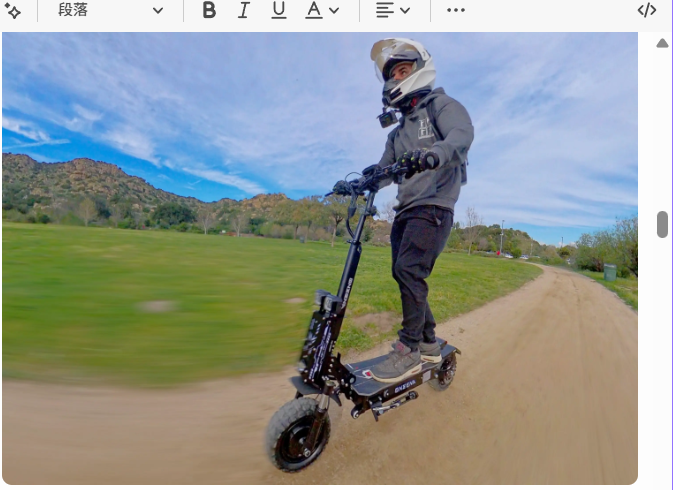
Foldable E Scooter for Adults: Best Portable Electric Scooters in 2026
If you're searching for the best foldable e scooter for adults in 2026, you're not alone — and you're asking the right question. The market has exploded with options, but most buyers end up confused by specs that sound impressive on paper yet disappoint in real life. This guide cuts through the noise. Whether you're commuting across a city, riding trails on weekends, or just want something you can fold and carry onto a train, we'll help you figure out exactly which portable electric scooter fits your life — not just your wishlist.

Table of Contents
- What Is a Foldable E Scooter — and What Makes It "Portable"?
- Why Portability Matters More Than Ever in 2026
- Key Specs to Compare Before You Buy
- Top Foldable E Scooters for Adults: Side-by-Side Comparison
- Pros & Cons by Rider Profile
- Buying Guide: How to Choose the Right One
- Use Cases: Which Scooter Fits Your Life?
- When Is the Best Time to Buy?
- FAQ
1. What Is a Foldable E Scooter — and What Makes It "Portable"?
A foldable e scooter is an electric scooter designed with a hinged stem that collapses the handlebar column down toward the deck, reducing the overall footprint for storage or transport. But "foldable" and "portable" are not the same thing.
Here's the distinction that most buyers miss:
- Foldable = the scooter physically folds. Almost every adult e-scooter on the market today folds.
- Portable = you can actually carry it. This depends on weight (ideally under 55 lbs / 25 kg for most adults), folded dimensions, and whether it has a carry handle.
A 77 lb (35 kg) dual-motor scooter technically folds — but you're not carrying it up three flights of stairs. A 26 lb (12 kg) single-motor commuter folds and you can sling it over your shoulder. That difference defines your real-world experience.
What to look for in a truly portable foldable e scooter:
- Folded weight under 55 lbs for solo carry; under 35 lbs for daily carry
- Folded length under 47 inches (120 cm)
- One-step or tool-free fold mechanism
- Integrated carry hook or handle
- Compact enough to fit under a desk or in a car trunk

2. Why Portability Matters More Than Ever in 2026
Urban mobility has shifted. In 2026, more cities have implemented micro-mobility lanes, e-scooter parking zones, and public transit integration policies. The practical result: adults who commute by train, bus, or rideshare increasingly need a scooter that travels with them — not one that stays locked outside.
Four reasons portability is now a primary buying criterion:
- Last-mile commuting — Fold it on the subway, unfold at the station exit. No parking fees, no theft risk.
- Apartment living — No garage? No problem. A truly portable scooter fits in a hallway closet or under a bed.
- Multi-modal travel — Fly with it, check it as luggage, or fit it in a rideshare trunk.
- Theft prevention — The safest anti-theft measure is taking your scooter inside with you.
Beyond convenience, portability also signals build quality. Scooters engineered for real portability tend to have tighter tolerances, better hinge locks, and more thoughtful weight distribution — all of which translate to a more reliable ride.
3. Key Specs to Compare Before You Buy
Before jumping into model comparisons, understand what each spec actually means for your daily use. Here's a plain-English breakdown:
Motor Power (Watts)
Motor wattage determines hill-climbing ability and top speed. For flat urban commuting, 500W–1000W is sufficient. For hills or mixed terrain, 1500W+ per motor is more appropriate. Dual-motor setups (e.g., 2×1500W) offer redundancy and torque but add weight.
Battery Range (Miles/km)
Manufacturer range figures are almost always measured at low speed on flat ground with a 165 lb (75 kg) rider. Real-world range is typically 60–75% of the stated figure. A scooter claiming 50 miles will likely deliver 30–38 miles under normal adult riding conditions.
Weight & Payload Capacity
Scooter weight affects portability; payload capacity affects safety. Always check that the max load rating exceeds your body weight by at least 20–30 lbs to ensure structural longevity.
Tire Type
- Pneumatic (air-filled) — Better ride comfort, absorbs bumps, but can puncture. Best for mixed surfaces.
- Solid/Honeycomb — Puncture-proof, zero maintenance, but harsher ride on rough pavement.
- Tubeless pneumatic — Best of both: air cushioning with reduced puncture risk.
Braking System
Disc brakes offer the shortest stopping distances and are preferred for higher-speed scooters. Electronic regenerative brakes are common as a secondary system. Drum brakes are low-maintenance but less powerful. For adults riding at 20+ mph, dual disc brakes are strongly recommended.
IP Rating (Water Resistance)
IP54 = splash-resistant (light rain OK). IP65 = jet-spray resistant (heavier rain OK). No IP rating = avoid riding in any wet conditions. For year-round commuters, IP54 minimum is a practical requirement.

4. Top Foldable E Scooters for Adults: Side-by-Side Comparison (2026)
Below is a comparison across four common adult rider categories. We've included a range of market options alongside the ONECNA GT series to give you a realistic picture of what's available at different price and performance tiers.
Category A: Lightweight Commuter (Under 35 lbs)
| Feature | Budget Commuter (~$400–600) | Mid-Range Commuter (~$700–1,000) |
|---|---|---|
| Weight | 26–30 lbs | 28–34 lbs |
| Motor | 350–500W single | 500–800W single |
| Real-World Range | 12–18 miles | 20–28 miles |
| Top Speed | 15–18 mph | 18–22 mph |
| Tires | Solid or 8" pneumatic | 10" pneumatic |
| Best For | Short flat commutes, occasional use | Daily commutes up to 5 miles each way |
| Weakness | Poor hill performance, limited range | Not suitable for hills >10% grade |
Category B: Performance Dual-Motor (35–65 lbs)
| Feature | ONECNA GT7 (5,600W Dual) | ONECNA GT8 PRO (6,000W Dual) | Typical Competitor (~$1,800–2,500) |
|---|---|---|---|
| Motor | 2×2,800W | 2×3,000W | 2×1,500–2,000W |
| Real-World Range | 35–50 miles | 40–55 miles | 25–40 miles |
| Top Speed | Up to 50 mph | Up to 55 mph | 35–45 mph |
| Tire Size | 11" pneumatic | 11" pneumatic | 10–11" pneumatic |
| Suspension | Front + rear dual | Front + rear dual | Front only (common) |
| Payload | 330 lbs (150 kg) | 330 lbs (150 kg) | 220–265 lbs |
| Folds? | ✅ Yes | ✅ Yes | ✅ Yes |
| Carry-on Portable? | ❌ Car trunk / storage | ❌ Car trunk / storage | ❌ Car trunk / storage |
| Best For | Hills, mixed terrain, heavier riders | Performance + off-road capability | General performance riding |
Note: High-performance dual-motor scooters fold for storage but are not designed for daily carry. If your priority is subway-compatible portability, see Category A. If your priority is power, range, and terrain versatility, Category B is your zone.

5. Pros & Cons by Rider Profile
🏙️ The Urban Commuter
Needs: Lightweight, folds quickly, fits on transit, range of 15–25 miles/day, IP54+
- ✅ Pros of lightweight commuter scooters: Easy to carry, low theft risk, transit-friendly, lower cost
- ❌ Cons: Limited range, struggles on hills, less comfortable on rough pavement
Best fit: Single-motor 500–800W scooter with 10" pneumatic tires and a folded weight under 33 lbs.
🏔️ The Weekend Trail Rider
Needs: Dual suspension, fat tires, high torque, 40+ mile range, durable build
- ✅ Pros of performance scooters: Handles gravel, grass, and inclines; longer range; more stable at speed
- ❌ Cons: Heavy (50–80 lbs), not transit-portable, higher price, longer charge time
Best fit: Dual-motor 5,000W+ scooter with 11" pneumatic tires and front/rear suspension. The ONECNA GT7 or GT8 PRO fits this profile well — both handle mixed terrain with a 330 lb payload capacity and full suspension systems.
🔄 The Dual-Use Adult (Commute + Weekend)
Needs: Balance of portability and performance, 25–40 mile range, moderate hill capability
- ✅ Pros: One scooter for multiple use cases, mid-weight (35–50 lbs), versatile
- ❌ Cons: Compromises on both ends — not as light as a commuter, not as powerful as a trail scooter
Best fit: 1,500–2,500W single or dual motor with 10–11" tires, dual suspension, and a folded weight under 55 lbs.
👤 The Heavier Rider (220+ lbs)
Needs: High payload rating (300+ lbs), strong motor to maintain speed under load, robust frame
- ✅ Pros of high-payload scooters: Safer, more stable, better range retention under load
- ❌ Cons: Heavier scooters, higher price, fewer lightweight options
Best fit: Dual-motor scooter with 330 lb+ payload rating. Most budget scooters cap at 220–265 lbs, which is insufficient for heavier adults at sustained speeds.

6. Buying Guide: What to Prioritize in 2026
The e-scooter market in 2026 is more mature than it was three years ago — which means more options, but also more marketing noise. Here's a practical decision framework:
Step 1: Define Your Primary Use Case
Write down your single most common riding scenario. Is it a 3-mile flat commute? A 15-mile weekend trail ride? A mix? Your primary use case should drive 80% of your buying decision. Don't optimize for the edge case.
Step 2: Set a Realistic Weight Budget
If you'll carry the scooter up stairs or onto transit more than twice a week, your weight limit is 35 lbs. If it lives in a car trunk or garage, you can go up to 65+ lbs without issue.
Step 3: Calculate Your Real Range Need
Take your daily round-trip distance and multiply by 1.4 (to account for real-world range loss). That's your minimum battery requirement. Add 20% buffer if you ride hills or at higher speeds.
Step 4: Check the Braking System
For any scooter with a top speed above 20 mph, dual disc brakes are non-negotiable for adult safety. Verify this before purchasing — it's often buried in spec sheets.
Step 5: Verify After-Sales Support
Parts availability, warranty terms, and customer service responsiveness matter more than most buyers realize — especially for higher-performance scooters where components like controllers, batteries, and motors may need replacement after 1–2 years of heavy use.
Step 6: Don't Over-Buy on Speed
In most US cities, e-scooters are legally limited to 15–20 mph on public roads. A scooter capable of 55 mph is impressive — but if you're commuting in a city, you'll spend 95% of your time at 15 mph anyway. Prioritize range, comfort, and build quality over top speed unless you have a specific off-road or private-property use case.

7. Use Cases: Which Scooter Fits Your Life?
Scenario A: Office Commuter, 4 Miles Each Way, Flat City
What you need: 15–20 mile real range, under 33 lbs, IP54, folds in under 5 seconds, fits under a desk.
What to avoid: Dual-motor scooters (overkill weight and cost), solid tires on rough pavement.
Verdict: A quality mid-range single-motor scooter in the $700–1,000 range covers this perfectly.
Scenario B: Suburban Rider, 10 Miles Each Way, Moderate Hills
What you need: 25–35 mile real range, 800W+ motor, front suspension, disc brakes.
What to avoid: Budget scooters with 350W motors — they'll struggle on 8%+ grades and degrade faster under load.
Verdict: Step up to a 1,500W+ single or entry-level dual-motor in the $1,000–1,500 range.
Scenario C: Weekend Trail + Occasional City Commute
What you need: Dual suspension, 11" pneumatic tires, 40+ mile range, 330 lb payload, dual disc brakes.
What to avoid: Scooters with front-only suspension — rear hits on trails are jarring and fatiguing.
Verdict: A full-suspension dual-motor scooter like the ONECNA GT7 handles both scenarios without compromise. It folds for car transport and delivers trail-capable performance without sacrificing city usability.
Scenario D: Heavier Adult (240+ lbs), Mixed Use
What you need: 330 lb+ payload, dual motor for sustained torque under load, robust frame construction.
What to avoid: Any scooter with a 220 lb payload limit — riding at or near the limit accelerates wear on motors, batteries, and frames.
Verdict: The ONECNA GT8 PRO's 330 lb payload and 6,000W dual-motor system is purpose-built for this profile.

8. When Is the Best Time to Buy a Foldable E Scooter?
Timing your purchase can save you $100–$400 on a quality adult scooter. Here's what the 2026 market looks like:
- Spring (March–May): Demand spikes as riding season begins. Prices are typically at or near MSRP. New model releases often happen in Q1–Q2.
- Summer (June–August): Peak season. Fewer discounts, but best availability of current-year models.
- Fall (September–October): Best window for deals on current-year models as retailers clear inventory before new releases. Often 10–20% off.
- Winter (November–January): Black Friday and holiday sales offer the deepest discounts, but stock of popular models can sell out. Good time to buy if you're willing to wait for spring to ride.
Pro tip: If you're buying a performance scooter ($1,500+), don't wait for a sale if the model you want is in stock. Supply chain constraints mean popular high-performance models can go out of stock for months. A 10% discount isn't worth a 3-month wait.
FAQ: Foldable E Scooters for Adults
Q: Are foldable electric scooters safe for adults?
Yes — when matched to the rider's weight, terrain, and speed needs. The key safety factors are: choosing a scooter with an appropriate payload rating, wearing a helmet, using disc brakes at speeds above 20 mph, and not exceeding the scooter's rated speed on public roads. Cheap scooters with undersized motors and poor braking systems are the primary source of adult e-scooter accidents.
Q: How long does a foldable e scooter battery last?
Most quality lithium-ion e-scooter batteries are rated for 500–800 charge cycles before capacity drops to ~80%. At one charge per day, that's roughly 1.5–2 years of daily use. Partial charging (keeping the battery between 20–80%) extends battery life significantly. Avoid storing a fully depleted battery for extended periods.
Q: Can I take a foldable e scooter on a plane?
Generally no — most airline regulations prohibit lithium-ion batteries above 100Wh in checked or carry-on luggage. Most adult e-scooters have batteries in the 250Wh–1,000Wh+ range, which exceeds airline limits. Check with your specific airline before traveling. Some smaller commuter scooters with sub-100Wh batteries may qualify, but these are rare in the adult performance category.
Q: What is the weight limit for most adult e-scooters?
Budget and mid-range scooters typically support 220–265 lbs (100–120 kg). Performance and off-road scooters often support 265–330 lbs (120–150 kg). Always verify the manufacturer's stated payload capacity and choose a scooter rated at least 20–30 lbs above your body weight for safety and longevity.
Q: Are foldable e scooters street legal in the US?
Laws vary by state and city. Most US states classify e-scooters as "low-speed electric vehicles" or "motorized scooters" with speed limits of 15–20 mph on public roads. Some states require registration, insurance, or a driver's license. High-performance scooters capable of 40+ mph are typically restricted to private property. Always check your local regulations before riding on public roads.
Q: How long does it take to charge a foldable e scooter?
Charge time depends on battery capacity and charger output. A standard 2A charger on a 48V/20Ah battery takes approximately 10 hours. Fast chargers (5A–10A) can reduce this to 3–5 hours. Some performance scooters support dual-charger setups that halve charge time. For daily commuters, overnight charging on a standard charger is the most battery-friendly approach.
Q: What's the difference between a foldable e scooter and a kick scooter?
A kick scooter is human-powered — you propel it by pushing off the ground. A foldable e scooter has an electric motor and battery, providing powered propulsion. Both fold for storage, but e-scooters are heavier, faster, and require charging. For adults covering distances over 1 mile, an e-scooter is significantly more practical.
Q: How do I maintain a foldable electric scooter?
Key maintenance tasks: check tire pressure weekly (for pneumatic tires), inspect brake pads monthly, tighten stem and handlebar bolts every 2–3 months, keep the battery between 20–80% charge when storing, and clean the deck and folding mechanism after wet rides. For performance scooters with dual motors, check motor bearing condition annually.
Last updated: July 2026. Specifications and pricing are subject to change. Always verify current specs directly with the manufacturer before purchasing.
Share:
Choosing Between High-Performance and Commuter E-Scooters
E Scooter Throttle Repair: How to Fix a Faulty Electric Scooter Throttle in 2026