




California E Scooter Laws 2026: Rules, Speed Limits and Safety Requirements
California e scooter laws 2026 set a 15 mph speed limit on bike paths, require helmets for riders under 18, and restrict riding to roads posted at 25 mph or less. Whether you're a daily commuter, a weekend rider, or shopping for your first electric scooter, understanding these rules isn't optional — it's how you avoid fines, stay safe, and ride with confidence. This guide covers every current rule, what changed in 2026, and practical answers to the questions California riders ask most.
What Are California E Scooter Laws?
California regulates electric scooters primarily under Vehicle Code Section 21235, which was first enacted in 2019 and has been updated several times since. Under California law, an electric scooter (also called a motorized scooter) is defined as a device with handlebars, a floorboard, and an electric motor — capable of no more than 15 mph on a paved level surface.
This definition matters because it determines which rules apply. Scooters that exceed 15 mph by design may be classified differently and subject to additional requirements, including registration and insurance.
The core rules under California law as of 2026:
- Maximum speed: 15 mph on bike paths and shared-use paths
- Minimum age: 16 years old
- Helmet: Required for riders under 18; strongly recommended for all
- License: A valid driver's license or learner's permit is required
- Registration: Not required for scooters meeting the legal definition
- Riding on sidewalks: Prohibited
- Riding on roads: Permitted on roads with posted speed limits of 25 mph or less

Speed Limits: How Fast Can You Legally Ride?
The 15 mph speed limit applies specifically to bike lanes, bike paths, and shared-use paths. On a road with a posted speed limit of 25 mph or less, you may ride in the traffic lane — but you're still expected to keep up with the flow of traffic safely.
Here's where it gets nuanced:
- Bike lane on a 35 mph road: You can ride in the bike lane at up to 15 mph
- Road with 25 mph limit, no bike lane: You may ride in the traffic lane
- Road with 30+ mph limit, no bike lane: You cannot legally ride your scooter there
- Sidewalk: Prohibited statewide (local ordinances may vary)
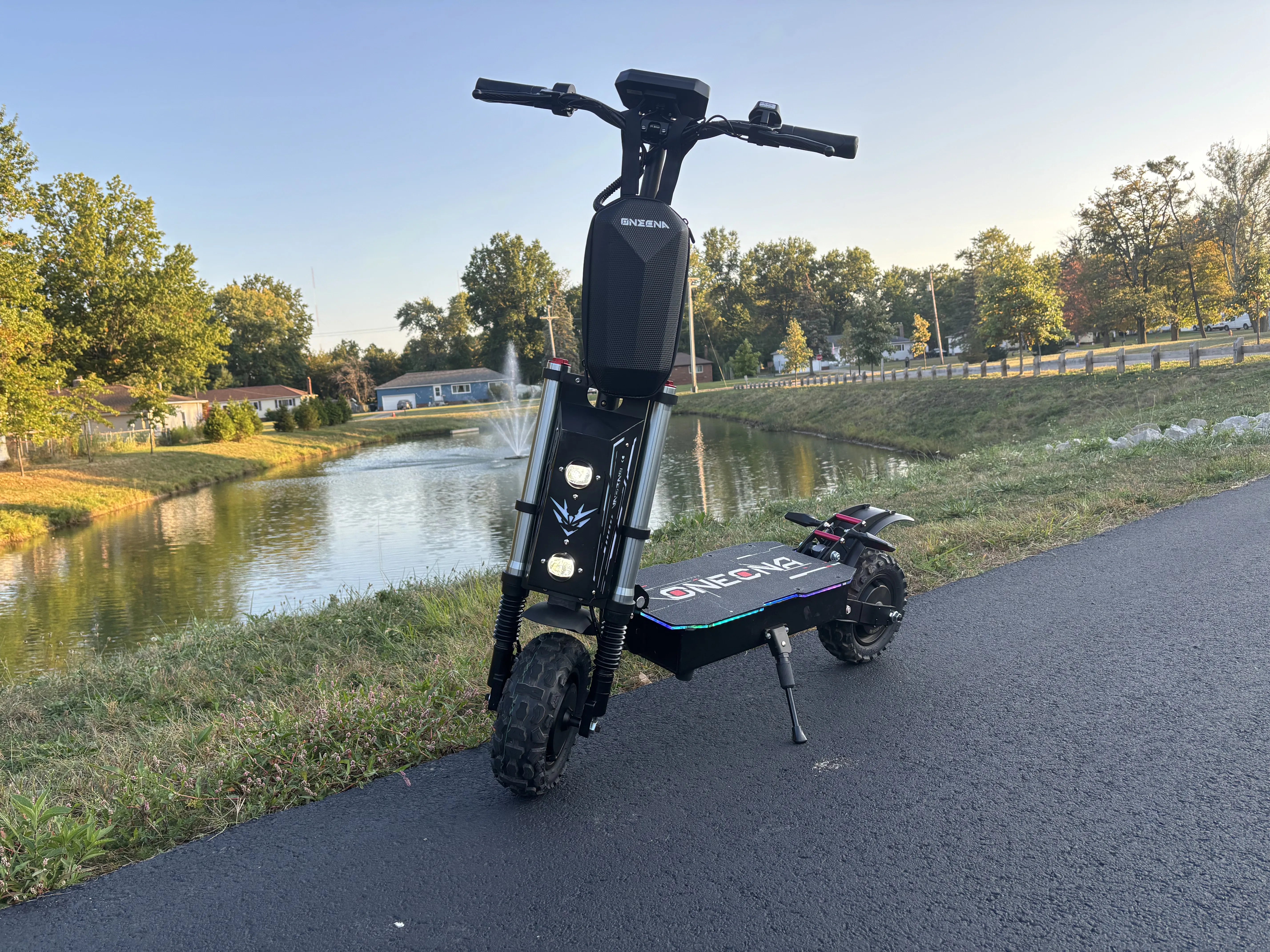
This is why scooter capability and legal speed are two different conversations. A high-performance scooter like the ONECNA GT8 PRO is capable of much higher speeds — but in California, riders are expected to use speed-limiting modes or ride responsibly within the 15 mph legal cap on public paths. Many performance scooters include adjustable speed modes precisely for this reason.
💡 Practical tip: If your scooter has a speed limiter or Eco mode, set it to 15 mph when riding on California bike paths. You'll stay legal and extend your battery range at the same time.
Where Can You Ride an E Scooter in California?
One of the most common sources of confusion for California riders is where they're actually allowed to ride. Here's a clear breakdown:
✅ Where You CAN Ride
- Bike lanes — the most common and preferred option
- Shared-use paths (multi-use trails) — at 15 mph or less
- Roads with posted speed limits of 25 mph or less — in the traffic lane if no bike lane exists
- Class IV separated bike lanes — where available
❌ Where You CANNOT Ride
- Sidewalks — prohibited statewide
- Roads with speed limits above 25 mph — unless a bike lane is present
- Freeways and highways — strictly prohibited
- Private property — without permission of the property owner
Local cities can add restrictions on top of state law. San Francisco, for example, has designated scooter parking zones and bans riding in certain pedestrian-heavy areas. Always check your city's municipal code in addition to state law.
Helmet Rules and Age Requirements
Helmet Requirements
As of 2026, California law requires a helmet for all riders under 18 years old. Adult riders (18+) are not legally required to wear a helmet under state law — but this does not mean it's safe to ride without one.
The helmet must meet one of the following safety standards:
- CPSC (Consumer Product Safety Commission)
- ASTM International
- Snell Memorial Foundation
- ANSI Z90.4
A bicycle helmet meets these standards. A skateboard helmet typically does as well. A fashion or novelty helmet does not.
Age Requirements
You must be at least 16 years old to operate an electric scooter on public roads in California. Riders under 18 must also wear a helmet, as noted above. There is no upper age limit.
⚠️ Note: Even though adult helmets aren't legally mandated, California Highway Patrol data consistently shows that head injuries are the leading cause of scooter fatalities. At 15 mph, a fall onto pavement is serious. Wear a helmet regardless of the law.

Do You Need a License or Registration?
Driver's License
Yes — California requires a valid driver's license or learner's permit to operate an electric scooter on public roads. This applies to all riders, regardless of age (above the minimum 16).
This is one of the rules that surprises many new riders. Unlike some states where no license is required for low-speed scooters, California explicitly requires one.
Vehicle Registration
Electric scooters that meet the legal definition (max 15 mph by design, under 100 lbs) do not require vehicle registration or license plates in California. This is a significant advantage over mopeds and motorcycles.
Insurance
California does not currently require liability insurance for electric scooters. However, if you're involved in an accident that causes property damage or injury, you may be personally liable. Renters or homeowners insurance sometimes covers personal liability for scooter incidents — worth checking your policy.
What Changed in 2026?
California's 2026 updates to e scooter regulations focused on three areas:
1. Expanded Enforcement in High-Density Areas
Several California cities — including Los Angeles and San Jose — increased enforcement of sidewalk riding and speed violations in 2026, following a rise in pedestrian incidents involving shared e-scooters. Fines for sidewalk riding increased in some jurisdictions.
2. Shared Scooter Operator Requirements
Companies operating shared scooter fleets (Bird, Lime, etc.) now face stricter geofencing requirements, mandatory speed reduction in school zones and parks, and enhanced data-sharing obligations with city transportation departments.
3. Clarification on High-Speed Scooters
The California DMV issued updated guidance clarifying that scooters capable of exceeding 15 mph — even if ridden below that speed — may be subject to moped or motorcycle classification depending on their design specifications. Riders of high-performance scooters should verify their vehicle's classification before riding on public roads.
If you own a performance scooter and plan to ride in California, check whether your model's top speed places it outside the standard e-scooter definition. When in doubt, contact the California DMV directly.
City-Specific Rules: LA, San Francisco, San Diego
State law sets the floor — cities can add restrictions on top of it. Here's what riders in California's three largest cities need to know:
Los Angeles
- Sidewalk riding: Prohibited (enforced more strictly since 2025)
- Shared scooter parking: Must use designated corrals; blocking pedestrian paths results in fines
- Speed in parks: 10 mph in city parks and recreation areas
- DUI laws apply: Riding under the influence of alcohol or drugs is illegal
San Francisco
- Permit system: Shared scooter operators must hold a city permit
- Riding on The Embarcadero and Market Street: Restricted during peak hours
- Helmet: Recommended for all ages (city campaigns actively promote this)
- Scooter parking: Designated zones only; improperly parked scooters are removed
San Diego
- Boardwalk riding: Prohibited on the Mission Beach and Pacific Beach boardwalks
- Speed in Mission Bay Park: 8 mph in pedestrian-heavy zones
- Parking: Must be upright and not blocking access ramps or driveways

Fines and Penalties for Violations
California e scooter violations are treated as infractions in most cases — not criminal offenses — but the fines add up quickly:
| Violation | Base Fine (approx.) |
|---|---|
| Riding on sidewalk | $197 |
| No helmet (under 18) | $25 (first offense, often waived with proof of purchase) |
| No driver's license | $250+ |
| Riding under the influence | $250+ and possible misdemeanor |
| Riding on freeway/highway | $197+ |
| Carrying a passenger | $197 |
Note: Base fines are multiplied by court fees and assessments in California, meaning a $197 base fine often results in a total payment of $500 or more. These are not trivial amounts.
Safety Requirements Beyond the Law
Legal compliance is the minimum. Here's what experienced California riders actually do to stay safe:
Lighting
California law requires a white front light visible from 300 feet and a red rear reflector when riding at night. Many riders add a rear blinking light as well — it's not required but significantly improves visibility in urban traffic.
Brakes
Your scooter must have a brake that allows the front wheel to skid on dry, level pavement. Most modern scooters meet this standard, but it's worth verifying if you're buying used or importing a model not sold in the US market.
Riding Two-Up
Carrying a passenger on an electric scooter is illegal in California. Scooters are designed for one rider. Even on private property, carrying a passenger on a scooter not designed for it creates serious stability and braking risks.
Distracted Riding
Using a handheld phone while riding is illegal under the same laws that apply to drivers. Earbuds in both ears are also prohibited — you must be able to hear traffic around you.
Gear Recommendations
- Helmet — CPSC-certified, properly fitted
- Wrist guards — the most common injury in scooter falls is a broken wrist from instinctive bracing
- Knee pads — especially for new riders
- Bright or reflective clothing — particularly at dawn, dusk, and night

FAQ: California E Scooter Laws 2026
Do I need a license to ride an electric scooter in California?
Yes. California requires a valid driver's license or learner's permit to operate an electric scooter on public roads. This applies to all riders 16 and older.
Is it legal to ride an e scooter on the sidewalk in California?
No. Riding an electric scooter on the sidewalk is prohibited statewide under California Vehicle Code Section 21235. You must use bike lanes, shared paths, or roads with speed limits of 25 mph or less.
What is the speed limit for e scooters in California?
15 mph on bike paths and shared-use paths. On roads with a 25 mph speed limit, you may ride in the traffic lane but should match the flow of traffic safely.
Do adults need to wear a helmet on an e scooter in California?
State law only requires helmets for riders under 18. However, helmets are strongly recommended for all riders regardless of age. Many cities and safety organizations actively encourage adult helmet use.
Do I need to register my electric scooter in California?
No, if your scooter meets the legal definition of a motorized scooter (max 15 mph by design, under 100 lbs). Scooters that exceed these specs may require registration as a moped or motorcycle.
Can I ride my e scooter on the road in California?
Yes, on roads with posted speed limits of 25 mph or less. On roads with higher speed limits, you may only ride in a designated bike lane — not in the traffic lane.
What happens if I get caught riding on the sidewalk?
The base fine is approximately $197, but with California court fees and assessments, the total can exceed $500. Repeat violations may result in higher penalties.
Are e scooter DUI laws the same as for cars in California?
Yes. Riding an electric scooter under the influence of alcohol or drugs is illegal in California and can result in a fine of $250 or more, plus a possible misdemeanor charge — the same as for motor vehicles.
Can I ride a high-speed scooter (40+ mph) in California?
Not on public roads under the standard e-scooter classification. Scooters capable of exceeding 15 mph may be classified as mopeds or motorcycles, requiring registration, insurance, and a motorcycle endorsement. Always verify your scooter's legal classification with the California DMV before riding on public roads.
What are the rules for e scooters in Los Angeles specifically?
LA follows state law plus additional local rules: no sidewalk riding (strictly enforced), 10 mph in city parks, designated parking corrals for shared scooters, and DUI laws apply. Check the LA Department of Transportation website for the most current local ordinances.
Share:
How Fast Can an E Scooter Go? Everything You Need to Know Before Buying
E Scooter vs E Bike: Complete Comparison of Speed, Range, Cost and Features