




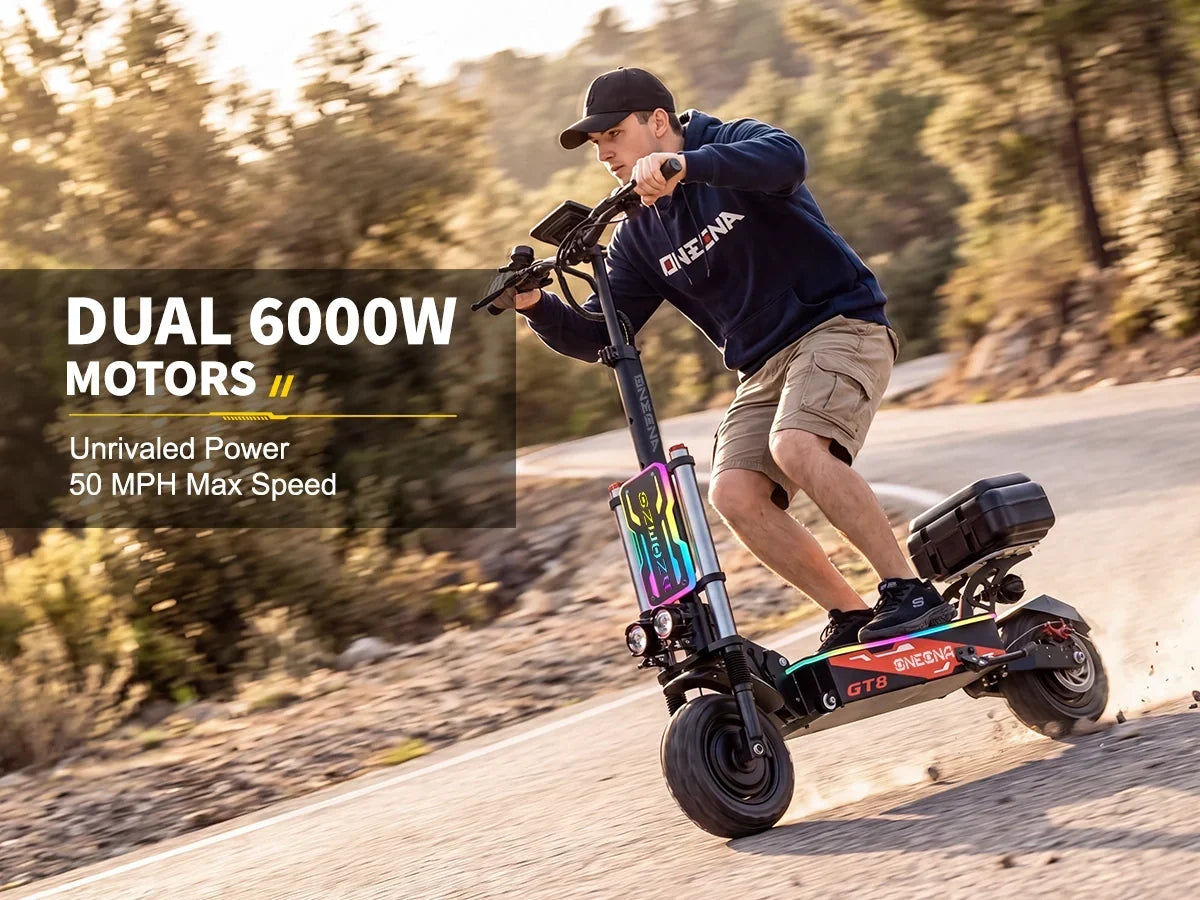
E scooter laws by state are more fragmented than most riders realize. Whether you're commuting through downtown Los Angeles, cutting across a college campus in Texas, or exploring bike paths in Florida, the rules governing your ride can change the moment you cross a state line. This guide covers e scooter laws by state — including speed limits, license requirements, helmet mandates, age restrictions, and where electric scooters are legally permitted — so you can ride with confidence, not guesswork.

Table of Contents
- Why E Scooter Laws Vary by State
- The 5 Key Legal Categories You Need to Know
- E Scooter Laws by State: A Detailed Breakdown
- Speed Limits: What's the Legal Maximum?
- Helmet Laws: Who Has to Wear One?
- License Requirements by State
- Where Can You Legally Ride an E Scooter?
- Age Requirements Across States
- Practical Tips for Staying Legal
- FAQ
Why E Scooter Laws Vary by State
Electric scooters occupy an unusual legal gray zone. They're faster than bicycles but slower than motorcycles, and most state legislatures have had to write new laws from scratch — often borrowing language from existing bike or moped statutes. The result is a patchwork of regulations that can feel arbitrary but usually reflect local priorities: traffic density, infrastructure, public safety data, and lobbying from both scooter-share companies and traditional transit advocates.
A few key factors drive the variation:
- Urban vs. rural infrastructure — Dense cities like NYC or Chicago have different safety concerns than suburban or rural areas.
- Scooter-share program influence — States where Lime, Bird, or Spin operate heavily tend to have more developed regulatory frameworks.
- Legislative pace — Some states updated laws in 2019–2020; others haven't revisited the issue since.
- Local ordinance layering — Even within a state, cities and counties can impose stricter rules than state law.
Bottom line: always check both state law and your local municipality before riding.
The 5 Key Legal Categories You Need to Know
Before diving into the state-by-state breakdown, it helps to understand the five dimensions that most e scooter laws address:
- Speed limit — The maximum legal speed for the scooter's motor output or actual riding speed.
- Helmet requirement — Whether helmets are mandatory, and for which age groups.
- License or registration — Whether you need a driver's license, learner's permit, or vehicle registration.
- Minimum age — The youngest age at which someone can legally operate an e scooter.
- Where you can ride — Bike lanes, sidewalks, roads, or a combination.
E Scooter Laws by State: A Detailed Breakdown
The following covers the most populated and most-searched states. Laws are current as of 2024 but can change — always verify with your state's DMV or DOT website.
California
- Speed limit: 15 mph on roads; lower in bike lanes where posted
- Helmet: Required for riders under 18; strongly recommended for adults
- License: Valid driver's license or learner's permit required
- Minimum age: 16
- Where to ride: Bike lanes preferred; roads with speed limit ≤25 mph permitted; sidewalks generally prohibited
- Notes: California AB-2989 (2018) established the statewide framework. Local cities like San Francisco and LA have added their own restrictions.
Texas
- Speed limit: 35 mph (motor output cap); local jurisdictions may set lower limits
- Helmet: No statewide mandate for adults; recommended for minors
- License: Not required
- Minimum age: 10 (with adult supervision under 16)
- Where to ride: Roads, bike lanes, and paths; sidewalks allowed unless prohibited by local ordinance
- Notes: Texas HB 1543 (2019) is relatively permissive. Austin and Houston have additional local rules.
Florida
- Speed limit: 20 mph
- Helmet: Required for riders under 16
- License: Not required
- Minimum age: 16 (or younger with parental consent in some jurisdictions)
- Where to ride: Bike lanes and paths; roads with speed limit ≤35 mph; sidewalks prohibited in most cities
- Notes: Florida SB 542 (2019) legalized e scooters statewide. Miami Beach and Orlando have specific local rules.
New York
- Speed limit: 20 mph (15 mph in NYC)
- Helmet: Required for riders under 18 statewide; NYC requires helmets for all riders on shared scooters
- License: Not required
- Minimum age: 16
- Where to ride: Bike lanes and protected paths; roads with speed limit ≤30 mph; sidewalks prohibited
- Notes: New York legalized personal e scooters in 2020. NYC has some of the strictest local enforcement.
Washington
- Speed limit: 20 mph
- Helmet: Required for all riders (one of the strictest statewide mandates)
- License: Not required
- Minimum age: 16
- Where to ride: Bike lanes and paths; roads where no bike lane exists; sidewalks prohibited
Colorado
- Speed limit: 20 mph
- Helmet: Required under 18; adults encouraged
- License: Not required
- Minimum age: 16
- Where to ride: Bike lanes and paths; roads ≤30 mph; sidewalks at local discretion
- Notes: Denver has a robust scooter-share program and well-defined local rules.
Illinois
- Speed limit: 20 mph
- Helmet: Required under 18
- License: Not required
- Minimum age: 16
- Where to ride: Bike lanes; roads where no bike lane exists; sidewalks prohibited in Chicago
Georgia
- Speed limit: 20 mph
- Helmet: Required under 16
- License: Not required
- Minimum age: 15
- Where to ride: Bike lanes and paths; roads ≤35 mph; sidewalks at local discretion
Arizona
- Speed limit: 20 mph
- Helmet: No statewide mandate
- License: Not required
- Minimum age: No statewide minimum (local rules apply)
- Where to ride: Bike lanes, paths, and roads; sidewalks at local discretion
- Notes: Arizona is one of the more permissive states. Scottsdale and Tempe have active scooter programs.
Oregon
- Speed limit: 20 mph
- Helmet: Required for all riders (statewide)
- License: Not required
- Minimum age: 16
- Where to ride: Bike lanes and paths; roads ≤25 mph; sidewalks prohibited
Nevada
- Speed limit: 20 mph
- Helmet: Required under 18
- License: Not required
- Minimum age: 16
- Where to ride: Bike lanes and paths; roads ≤35 mph; sidewalks prohibited in Las Vegas
North Carolina
- Speed limit: 20 mph
- Helmet: Required under 16
- License: Not required
- Minimum age: 16
- Where to ride: Bike lanes and paths; roads ≤25 mph; sidewalks at local discretion
Michigan
- Speed limit: 25 mph
- Helmet: Required under 19
- License: Not required
- Minimum age: 16
- Where to ride: Bike lanes and paths; roads ≤25 mph; sidewalks prohibited
Virginia
- Speed limit: 20 mph
- Helmet: Required under 14
- License: Not required
- Minimum age: 14
- Where to ride: Bike lanes and paths; roads ≤25 mph; sidewalks at local discretion

Speed Limits: What's the Legal Maximum?
The most common legal speed cap across U.S. states is 20 mph. This applies to the scooter's motor-assisted speed, not necessarily the top speed the hardware is capable of. A few important nuances:
- Motor output vs. riding speed: Some states regulate the motor's rated wattage or speed capability; others regulate actual riding speed. In practice, most enforcement focuses on riding speed.
- Context-dependent limits: Even in states with a 20 mph cap, you may be required to slow to 10–15 mph in school zones, pedestrian areas, or shared paths.
- High-performance scooters: Scooters capable of exceeding 20 mph (like many dual-motor models) are legal to own in most states — but you're legally required to ride within the posted limit. Think of it like owning a car that can do 120 mph: the capability doesn't change the speed limit.
Texas stands out with a 35 mph cap, making it one of the most permissive states for higher-speed riding on appropriate roads.
Helmet Laws: Who Has to Wear One?
Helmet requirements fall into three broad categories across states:
- All riders required — Washington and Oregon mandate helmets for everyone, regardless of age.
- Minors only — The majority of states (California, Florida, New York, Colorado, Illinois, etc.) require helmets for riders under 16 or 18.
- No statewide mandate — Texas, Arizona, and a handful of others leave helmet use to individual discretion for adults.
Regardless of legal requirements, wearing a helmet is one of the most effective ways to reduce head injury risk. Studies from the CDC and NHTSA consistently show that helmet use reduces the risk of serious head injury by 50–70% in micromobility accidents.
License Requirements by State
This is where many riders are pleasantly surprised: the majority of U.S. states do not require a driver's license to operate a personal electric scooter. The main exception is California, which requires a valid driver's license or learner's permit.
However, "no license required" doesn't mean "no rules apply." You're still subject to traffic laws, speed limits, and right-of-way rules in virtually every state. Riding under the influence of alcohol or drugs on an e scooter can result in a DUI charge in many jurisdictions — the same as operating a motor vehicle.
A few states classify higher-powered scooters (typically those exceeding 750W or 30 mph) as mopeds or low-speed vehicles, which do require registration and sometimes a license. Always check the wattage classification thresholds in your state.
Where Can You Legally Ride an E Scooter?
This is arguably the most practically important question — and the one with the most local variation. Here's the general framework:
Bike Lanes
Permitted in virtually every state that has legalized e scooters. If a bike lane is available, you're typically expected to use it rather than the main road.
Roads
Permitted in most states, usually restricted to roads with speed limits of 25–35 mph. Riding on highways or interstates is universally prohibited.
Sidewalks
This is where the most variation exists. Most major cities prohibit sidewalk riding due to pedestrian safety concerns. Some states leave it to local ordinance. A few rural areas permit it. When in doubt, assume sidewalks are off-limits in urban areas.
Shared Paths and Greenways
Generally permitted, but often with a lower speed limit (10–15 mph) and a requirement to yield to pedestrians.
Private Property
State laws don't apply on private property — but property owners can set their own rules, and trespassing laws still apply.

Age Requirements Across States
Most states set the minimum riding age at 16, though there's meaningful variation:
- 14+: Virginia
- 15+: Georgia
- 16+: California, Florida, New York, Washington, Colorado, Illinois, Oregon, Nevada, North Carolina, Michigan
- No statewide minimum: Arizona (local rules apply), Texas (10+ with adult supervision)
For riders under the minimum age, some states allow riding on private property or with direct adult supervision. Parents should check both state law and local ordinances before allowing younger riders on public roads or paths.
Practical Tips for Staying Legal
Understanding the law is step one. Here's how to stay compliant in practice:
- Check your state's DMV or DOT website — This is the authoritative source. Laws change, and blog posts (including this one) can lag behind updates.
- Look up your city's municipal code — State law sets the floor; cities can go stricter. Search "[your city] electric scooter ordinance" to find local rules.
- Know your scooter's specs — Motor wattage and top speed determine how your scooter is classified. Keep documentation handy.
- Wear a helmet regardless of the law — It's the single highest-impact safety decision you can make.
- Use lights at night — Most states require front and rear lights for nighttime riding. Many quality scooters include integrated lighting; verify yours does before riding after dark.
- Don't ride under the influence — DUI laws apply to e scooters in most states.
- Yield to pedestrians — Even where sidewalk riding is permitted, pedestrians have the right of way.
Frequently Asked Questions
Do I need a license to ride an electric scooter in the US?
In most states, no. California is the primary exception, requiring a valid driver's license or learner's permit. However, some states classify high-powered scooters as mopeds, which do require a license. Always check your specific state's classification rules based on your scooter's wattage and top speed.
What is the legal speed limit for electric scooters?
The most common limit is 20 mph, which applies in the majority of U.S. states. Texas allows up to 35 mph. Some states set limits as low as 15 mph in certain zones. Local speed limits in school zones, parks, and shared paths are often lower than the statewide cap.
Are electric scooters legal on sidewalks?
Generally no, especially in urban areas. Most major cities prohibit sidewalk riding to protect pedestrians. Some states leave this to local ordinance, so the answer varies by city. When in doubt, use the bike lane or road.
Do I need to register my electric scooter?
For most personal e scooters (under 750W or 20 mph), registration is not required. Higher-powered models may be classified as mopeds or low-speed vehicles in some states, which do require registration. Check your state's DMV for the wattage and speed thresholds that trigger registration requirements.
What age do you have to be to ride an electric scooter?
The most common minimum age is 16. Virginia allows riders as young as 14; Georgia allows 15. Texas permits riders as young as 10 with adult supervision. Arizona has no statewide minimum but defers to local ordinances. Always check both state and local rules.
Can I ride an electric scooter on the road?
Yes, in most states — but typically only on roads with speed limits of 25–35 mph or lower. Highways and interstates are universally off-limits. If a bike lane is available, you're usually required to use it instead of the main road.
Do electric scooter laws apply to private property?
State traffic laws generally do not apply on private property. However, property owners can set their own rules, and trespassing laws still apply. DUI laws may still apply on private property in some jurisdictions.
Are helmets required for electric scooter riders?
It depends on the state and your age. Washington and Oregon require helmets for all riders. Most other states require helmets only for minors (under 16 or 18). Texas and Arizona have no statewide helmet mandate for adults. Regardless of the law, wearing a helmet is strongly recommended.
What happens if I ride an electric scooter illegally?
Penalties vary by state and violation type. Common consequences include fines (typically $25–$250), scooter impoundment, and in serious cases (DUI, reckless riding), criminal charges. Repeat violations can result in higher fines or loss of riding privileges.
How do I find the e scooter laws for my specific city?
Start with your state's DMV or Department of Transportation website for the statewide framework. Then search your city's official website or municipal code for local ordinances. Searching "[city name] electric scooter laws" or "[city name] micromobility ordinance" usually surfaces the relevant documents quickly.
Share:
How to Lock an E Scooter: The Complete Anti-Theft Guide for 2026
How to Make an E Scooter Go Faster: Tips to Boost Speed Safely