




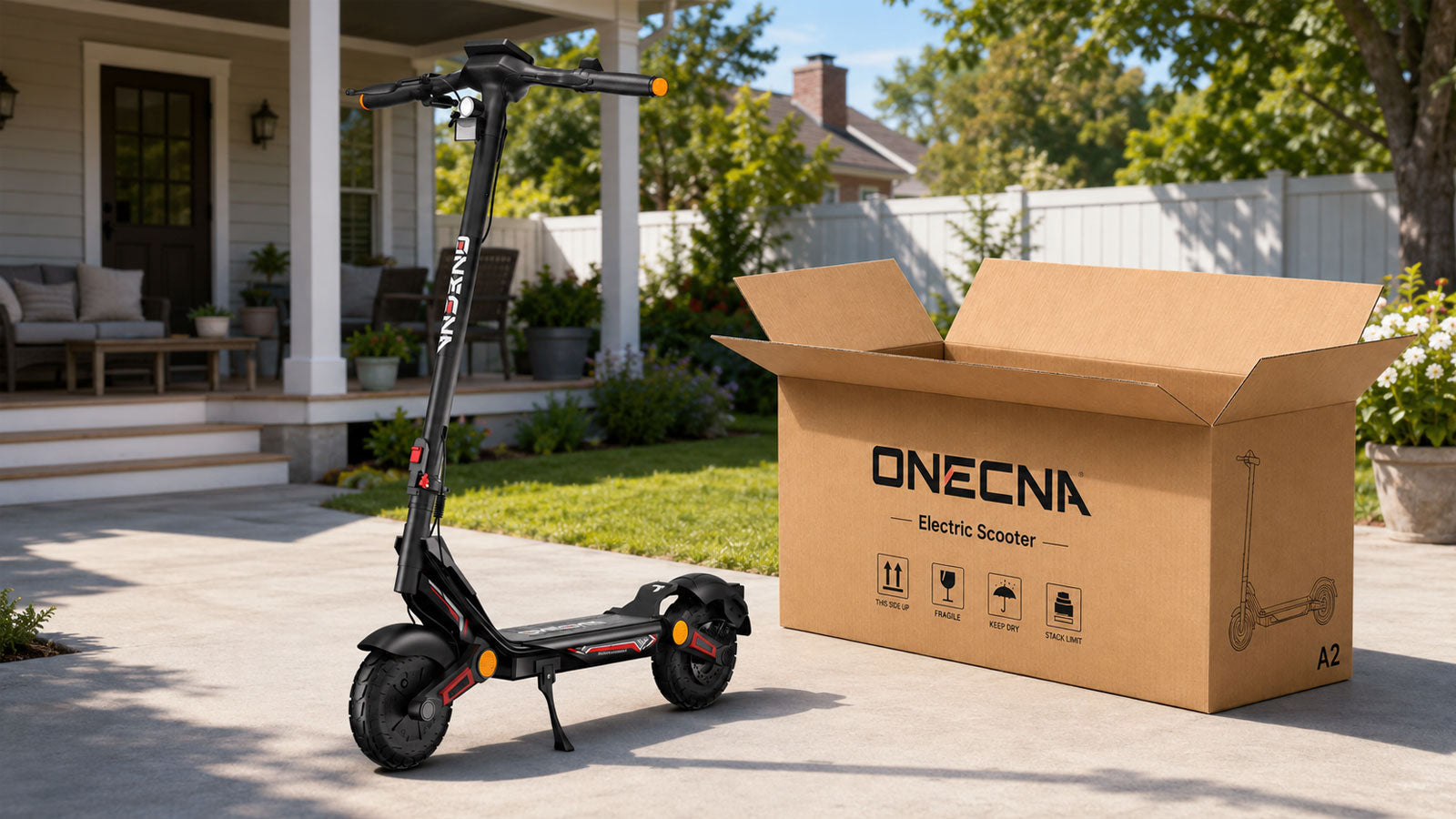
Riding Legal: GEO-Specific E-Scooter Rules for TX, NY, WA & IL Riders
E-scooter laws by state for TX, NY, WA, and IL riders differ in ways that can catch even experienced commuters off guard. Before you roll out, knowing your state's exact rules — speed caps, helmet mandates, where you're allowed to ride, and whether your scooter needs registration — isn't just smart. It's the difference between a smooth commute and a $250 fine. This guide gives you the full picture, state by state, no legal jargon.

📋 Article Outline
- Why E-Scooter Laws Vary So Much by State
- Texas (TX): What the Law Actually Says
- New York (NY): The Most Restrictive — and Recently Revised
- Washington (WA): One of the Most Rider-Friendly States
- Illinois (IL): Chicago Rules vs. State Rules
- Side-by-Side State Comparison Table
- What Makes an E-Scooter "Street Legal" Anywhere
- Gear, Visibility & Safety: What the Law Requires vs. What Protects You
- FAQ
Why E-Scooter Laws Vary So Much by State
The United States has no single federal law governing personal electric scooters. That means each state — and often each city within that state — writes its own rulebook. The result is a patchwork of regulations that can change the moment you cross a county line.
The core variables that differ state to state include:
- Maximum motor wattage allowed without registration
- Top speed limits on public roads and bike lanes
- Helmet requirements (age-based vs. universal)
- Where you can legally ride — sidewalks, bike lanes, roads
- Minimum rider age
- Lighting and reflector requirements for night riding
- Registration and insurance obligations
Understanding these variables isn't just about avoiding tickets. It's about knowing your rights as a rider — and knowing when a law is actually protecting you versus when it's simply outdated legislation that hasn't caught up with modern mobility.
🤠 Texas (TX): What the Law Actually Says
Texas is generally considered one of the more permissive states for e-scooter riders, but that permissiveness comes with specific conditions that many riders overlook.
How Texas Defines an E-Scooter
Under Texas Transportation Code §551.351, an electric scooter is a device with a floorboard, handlebars, and an electric motor producing no more than 750 watts. This is the legal ceiling — anything above that wattage may be classified differently and subject to motor vehicle laws.
Where You Can Ride in Texas
- Bike lanes: Yes, permitted
- Roads: Yes, on roads with a speed limit of 35 mph or less
- Sidewalks: Depends on local ordinance — Austin and Houston have specific rules
- Highways/freeways: Prohibited
Speed Limit
Texas state law caps e-scooters at 20 mph on public roads. Some municipalities set lower limits in high-pedestrian zones.
Helmet Law
Texas does not require helmets for adult riders (18+) at the state level. However, riders under 18 must wear a helmet. That said, wearing one is strongly recommended regardless of age — especially on roads shared with vehicles.
Registration & Insurance
No registration or insurance is required for e-scooters meeting the 750W definition. If your scooter exceeds that threshold, it may be classified as a moped or motor vehicle, triggering registration requirements.
Key Texas Cities to Know
- Austin: Allows scooters on most streets and bike lanes; sidewalk riding is restricted in the downtown core
- Houston: Follows state law with some local restrictions near parks and pedestrian zones
- Dallas: Has active shared scooter programs; personal scooters follow state rules
🗽 New York (NY): The Most Restrictive — and Recently Revised
New York has historically been one of the toughest states for e-scooter riders. That changed significantly in 2020 when the state legalized electric scooters statewide — but the rules remain among the most detailed in the country.
How New York Defines an E-Scooter
New York Vehicle and Traffic Law §114-d defines an electric scooter as a device with a motor of 750 watts or less and a maximum speed of 20 mph. Scooters exceeding these specs are not legal as e-scooters under state law.
Where You Can Ride in New York
- Bike lanes: Yes, required where available
- Roads: Yes, on roads with a posted speed limit of 30 mph or less
- Sidewalks: Prohibited statewide
- NYC specifically: NYC has its own overlay of rules — always check NYC DOT guidelines
Speed Limit
Maximum 20 mph statewide. In New York City, the practical limit in many zones is lower due to traffic and pedestrian density.
Helmet Law
New York requires helmets for riders under 18. Adults are not legally required to wear one, but NYC's Vision Zero initiative strongly encourages it. Given NYC traffic conditions, this is one case where the law and common sense diverge significantly.
Lighting Requirements
New York law requires a white front light and a red rear reflector or light when riding between dusk and dawn. This is a hard legal requirement, not a suggestion.
Registration & Insurance
No registration or insurance required for compliant e-scooters. However, NYC has specific rules about where scooters can be parked and stored — violations can result in fines.
🌲 Washington (WA): One of the Most Rider-Friendly States
Washington state has built a reputation as one of the most progressive states for micromobility. Its laws are clear, relatively permissive, and designed with modern urban commuters in mind.
How Washington Defines an E-Scooter
Under RCW 46.04.1695, Washington defines electric scooters as devices with a motor of 1,000 watts or less — a higher ceiling than most states — and a maximum speed of 20 mph.
Where You Can Ride in Washington
- Bike lanes: Yes, preferred
- Roads: Yes, on roads with a speed limit of 25 mph or less (some exceptions apply)
- Sidewalks: Permitted in most areas unless local ordinance prohibits it
- Trails: Permitted on most multi-use paths
Speed Limit
Washington caps e-scooters at 20 mph on public roads. On shared-use paths, riders are expected to yield to pedestrians and maintain a safe speed — typically interpreted as 15 mph or less in crowded areas.
Helmet Law
Washington requires helmets for riders under 16. Adults are not legally required to wear one, though local jurisdictions (like Seattle) may have additional requirements. Seattle specifically has a universal helmet law for all cyclists and scooter riders.
Registration & Insurance
No registration or insurance required for e-scooters meeting the 1,000W definition. This higher wattage ceiling makes Washington particularly accommodating for performance-oriented scooters.
Key Washington Cities to Know
- Seattle: Universal helmet law applies; strong bike lane infrastructure makes riding practical
- Spokane: Follows state law; growing micromobility infrastructure
- Tacoma: Active shared scooter programs; personal scooters follow state rules
🏙️ Illinois (IL): Chicago Rules vs. State Rules
Illinois presents a unique challenge for e-scooter riders: the state law and Chicago's municipal code operate somewhat independently, and Chicago — as the state's dominant urban center — has its own detailed framework that often matters more in practice.
How Illinois Defines an E-Scooter
Illinois law (625 ILCS 5/1-117.8) defines electric scooters as devices with a motor of 750 watts or less and a maximum speed of 20 mph. The law was updated in 2019 to formally legalize e-scooters statewide.
Where You Can Ride in Illinois
- Bike lanes: Yes, required where available
- Roads: Yes, on roads with a speed limit of 30 mph or less
- Sidewalks: Prohibited statewide
- Chicago specifically: Chicago has a pilot program framework; check CDOT (Chicago Department of Transportation) for current rules
Speed Limit
Illinois caps e-scooters at 20 mph statewide. Chicago's pilot program areas may have lower speed limits enforced via geofencing on shared scooters — personal scooters are subject to the state cap.
Helmet Law
Illinois requires helmets for riders under 18. Adults are not legally required to wear one at the state level. Chicago follows the same standard.
Lighting Requirements
Illinois requires a white front light visible from 500 feet and a red rear reflector for night riding. This is a legal requirement that many riders overlook until they receive a citation.
Registration & Insurance
No registration or insurance required for compliant e-scooters. Chicago's shared scooter operators handle their own permitting separately from personal scooter riders.
📊 Side-by-Side State Comparison
| Rule | Texas | New York | Washington | Illinois |
|---|---|---|---|---|
| Max Motor Wattage | 750W | 750W | 1,000W | 750W |
| Max Speed | 20 mph | 20 mph | 20 mph | 20 mph |
| Helmet Required (Adults) | No | No | No* | No |
| Helmet Required (Under 18) | Yes | Yes | Yes (under 16) | Yes |
| Sidewalk Riding | Local rules vary | Prohibited | Permitted* | Prohibited |
| Bike Lane Access | Yes | Yes (required) | Yes | Yes (required) |
| Night Lighting Required | Yes | Yes | Yes | Yes |
| Registration Required | No | No | No | No |
*Seattle has a universal helmet law. Washington sidewalk rules vary by municipality.
What Makes an E-Scooter "Street Legal" Anywhere
Across all four states, a few universal factors determine whether your scooter is legally compliant:
- Motor wattage within the legal ceiling — 750W in TX, NY, IL; 1,000W in WA
- Maximum speed of 20 mph — either mechanically limited or rider-controlled
- Functional brakes — required in all states
- Front white light + rear red reflector/light — required for night riding in all four states
- No modifications that exceed legal specs — tuning your scooter beyond factory settings can void its legal classification
One practical note: if you're riding a high-performance scooter like the ONECNA GT8 Pro (which is designed for off-road use), it's important to understand that off-road specs and street-legal specs are different categories. Always check your scooter's motor rating against your state's legal ceiling before riding on public roads.
Gear, Visibility & Safety: What the Law Requires vs. What Protects You
The law sets a floor, not a ceiling. Here's the honest breakdown:
What the Law Requires (in most of these states)
- Helmet for riders under 16–18 (varies by state)
- Front white light and rear red reflector for night riding
- Functional brakes
- Riding in designated lanes where available
What Actually Keeps You Safe
- Helmet — always. Head injuries don't check your age or your state's laws.
- Knee and elbow pads for higher-speed riding
- High-visibility clothing or a reflective vest, especially at dusk
- Integrated lighting — many modern scooters include front and rear lights; verify yours are bright enough to meet legal minimums
- Knowing your route — checking whether your planned path has bike lanes, road access, or sidewalk restrictions before you leave
The gap between "legally compliant" and "actually safe" is real. Riding legally is the baseline. Riding smart is the goal.
When Do These Laws Apply to You?
A few scenarios worth thinking through:
- You're commuting daily in Austin, TX: State law applies. No helmet required as an adult, but bike lane use is expected where available. Sidewalk rules depend on the specific street.
- You're visiting NYC for a week: NY law applies. No sidewalk riding. Use bike lanes. Lights required after dark. Your home state's rules don't travel with you.
- You're riding in Seattle, WA: Both state law and Seattle's universal helmet ordinance apply. Wear a helmet regardless of age.
- You're in Chicago, IL: State law applies for personal scooters. No sidewalk riding. Bike lanes required where available. Check CDOT for any active pilot zone restrictions.
- You're crossing state lines: The rules change at the border. If you're riding from IL into WI or from TX into NM, research the destination state's laws before you go.
❓ FAQ
Do I need a driver's license to ride an e-scooter in TX, NY, WA, or IL?
No. None of these four states require a driver's license to operate a compliant electric scooter. However, you must meet the minimum age requirement (typically 16 in most states) and follow all applicable traffic laws.
Can I ride my e-scooter on the highway or freeway?
No. All four states prohibit e-scooters on highways, freeways, and roads with speed limits above 30–35 mph. This is a universal restriction regardless of your scooter's top speed capability.
What happens if my scooter's motor exceeds the legal wattage limit?
Your scooter may be reclassified as a moped or motor vehicle, which triggers registration, insurance, and potentially a driver's license requirement. Always check your scooter's motor rating against your state's legal ceiling.
Are e-scooter laws the same in every city within a state?
No. State law sets the baseline, but cities can add restrictions. Chicago, NYC, Seattle, and Austin all have local rules that layer on top of state law. Always check both state and municipal regulations for your specific city.
Do I need insurance for my personal e-scooter?
In TX, NY, WA, and IL, no insurance is legally required for compliant personal e-scooters. However, some riders choose to add a rider to their homeowner's or renter's insurance policy for liability coverage — worth considering if you ride frequently in urban areas.
Can I ride an e-scooter at night legally?
Yes, in all four states — but only if your scooter has a white front light and a red rear reflector or light. Riding at night without proper lighting is a citable offense in all four states.
What's the minimum age to ride an e-scooter in these states?
Generally 16 years old in TX, NY, and IL. Washington state law sets the minimum at 16 as well, though local ordinances may vary. Riders under the minimum age are prohibited from operating e-scooters on public roads regardless of parental permission.
If I'm riding off-road, do these laws still apply?
No. State traffic laws apply to public roads, bike lanes, and paths. Private property and designated off-road trails operate under different rules. If you're using a high-performance scooter for off-road riding, you're generally outside the scope of these street-legal regulations — but always confirm with the specific trail or property owner.
Disclaimer: This article is for informational purposes only and does not constitute legal advice. E-scooter laws change frequently. Always verify current regulations with your state's DMV or local transportation authority before riding.
Share:
2026 Electric Scooter Compliance Guide: Texas, New York, Washington & Illinois
Electric Scooter State Laws Comparison: Speed Limits, Licenses and Helmet Rules